Logic
Hued
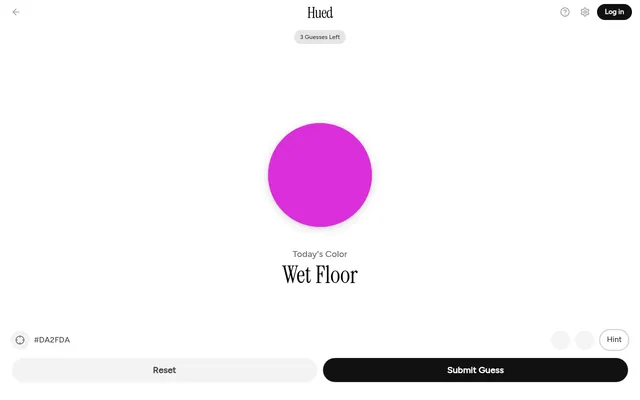
Match a named colour of the day in three guesses: the gentlest place to start.
Daily colour games give everyone the same shade or set of colours each day and score how close you get. Some ask you to match a colour you can see or name, some to rebuild one from memory, and some to spot a tiny difference between tiles.
Match a named colour of the day in three guesses: the gentlest place to start.
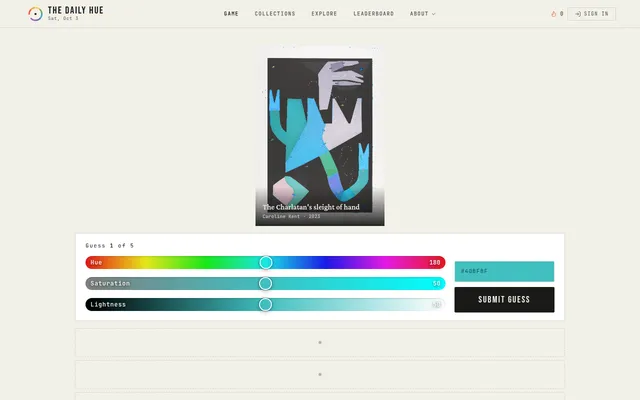
Find one hidden colour from the day's artwork with three sliders and five guesses.
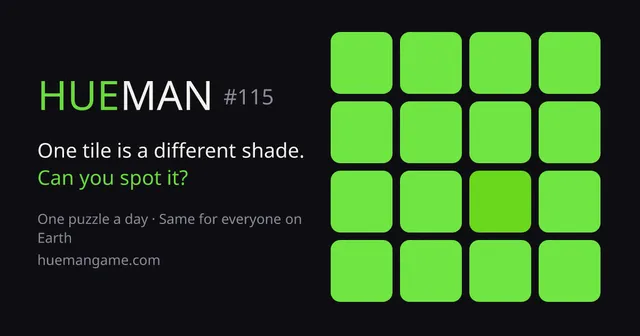
Spot the one tile in a slightly different shade as the grids grow and the clock shrinks.
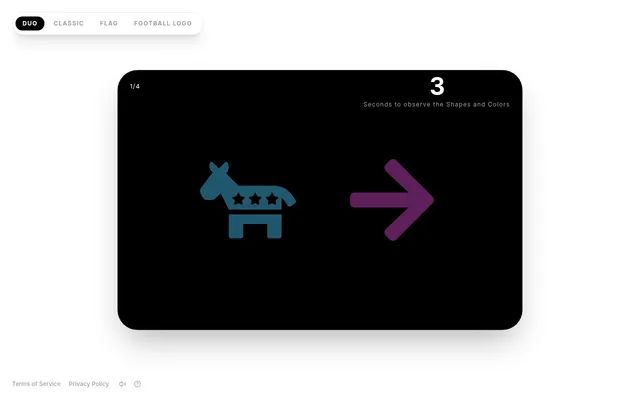
Remember two coloured shapes for five seconds, then rebuild one colour from memory.
Read a colour's name and dial in the shade you think it is.
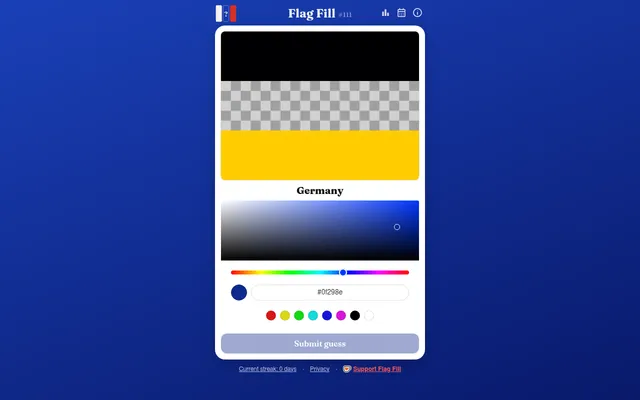
Choose the exact colour of one missing stripe of a named flag.
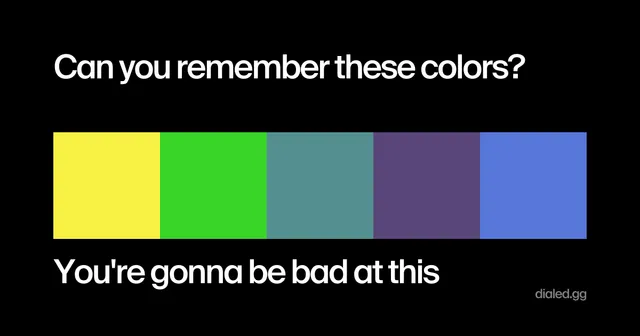
See five colours, then rebuild each one from memory.
A colour flashes for a moment; rebuild it, five times a day.
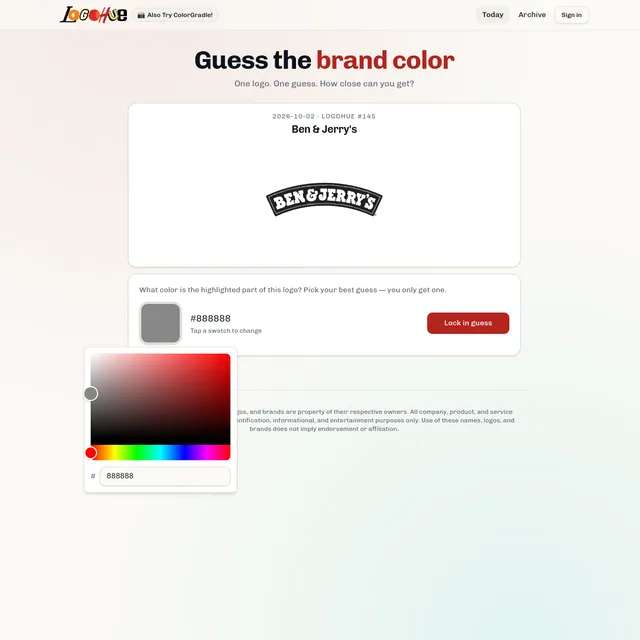
Guess a brand logo's exact colour from a black and white version.

Mix the masked colour of five flags with hue, saturation and lightness.
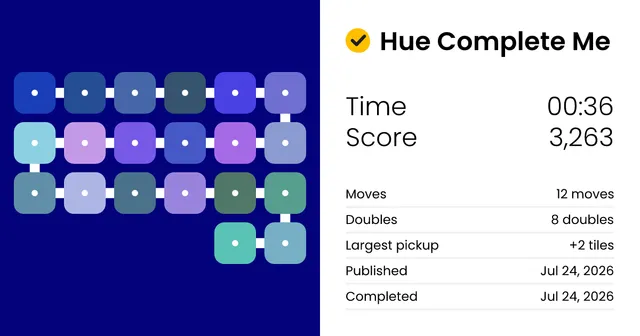
Swap scrambled colour tiles back into a smooth gradient.
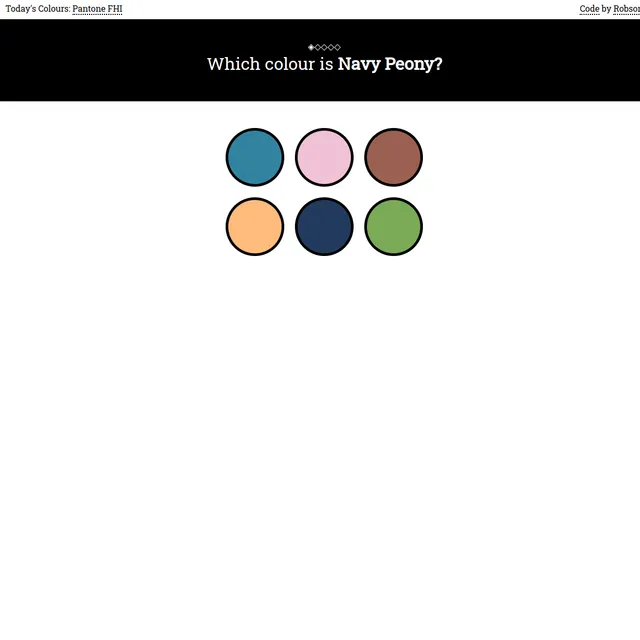
Match five colour names to the right swatches.
The games here split into three kinds. Matching games show or name a colour and ask you to recreate it. The Daily Hue hides one colour from an artwork and gives you sliders and five guesses; Hued names a colour (a famous one like Carolina Blue, or an everyday thing like a wet floor sign) and gives you three; Close Hue names a colour and asks you to dial it in; Logohue asks for a brand's exact colour from a black and white logo; and Flag Fill and GeoPaint ask for the exact shade of a flag's stripe.
Memory games are harder. Dialed's colour round shows five colours and asks you to rebuild each afterwards, Afterglow flashes one colour at a time, and Colorecall shows two coloured shapes for five seconds and asks for one of them back. Remembered colours drift toward a typical red or blue, so these reward paying attention to brightness and saturation, not just the hue.
Perception games test your eyes in the moment. Hueman shows a grid in the day's hue with one tile a shade off and shrinks the difference each level; Puzzmo's Hue Complete Me and HueSort ask you to put scrambled tiles back into a smooth gradient.
If you want one game to start with, pick Hued or The Daily Hue for a gentle match, Hueman for a quick test of your eyes, and Colorecall once you want a real challenge. Most of them take a minute or two, so they pair well with a word or logic daily.
Memory games are usually hardest, because remembered colours drift. Colorecall, which asks for a colour after showing two at once, and Dialed's colour round are the toughest here.
Yes. Each gives every player the same colour or set of colours that day, so scores can be compared.
No. Most use sliders or a colour picker, though Hued and Flag Fill also let you type a hex code.
Yes. Flag Fill asks for the colour of one missing section of a flag each day, and GeoPaint asks for the main colours of five flags.