Colorecall
Memorise two coloured shapes, then rebuild one colour from memory.
Every day: One daily set of four rounds with the same colours for everyone: see two coloured shapes for five seconds, then recreate one shape's colour from memory with hue, saturation and brightness sliders; scores go on a leaderboard. New puzzle: Once a day (the site does not state the time).
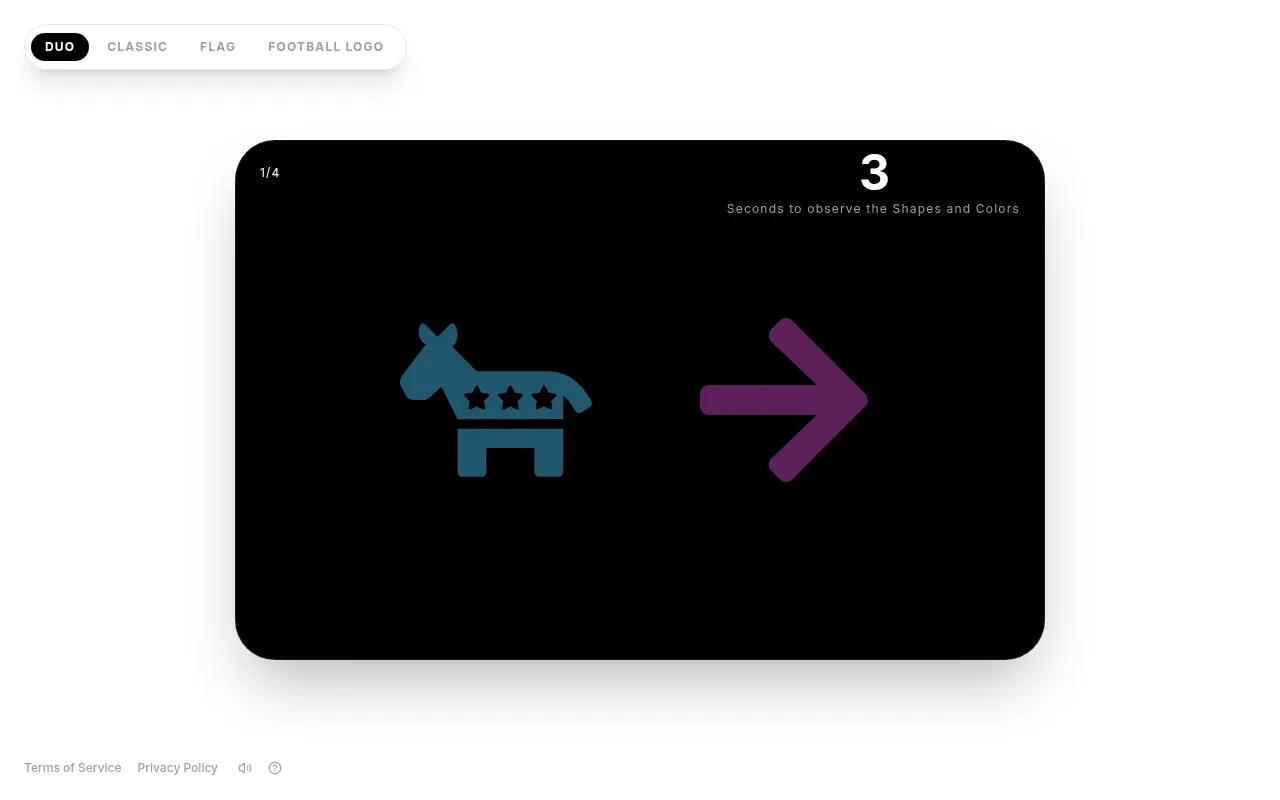
Colorecall is a daily colour memory game. In each of four rounds you see two shapes in two colours for five seconds; then one shape returns without its colour and you rebuild it with sliders. The daily uses the same colours for everyone, so scores can be compared on the leaderboard.
About Colorecall
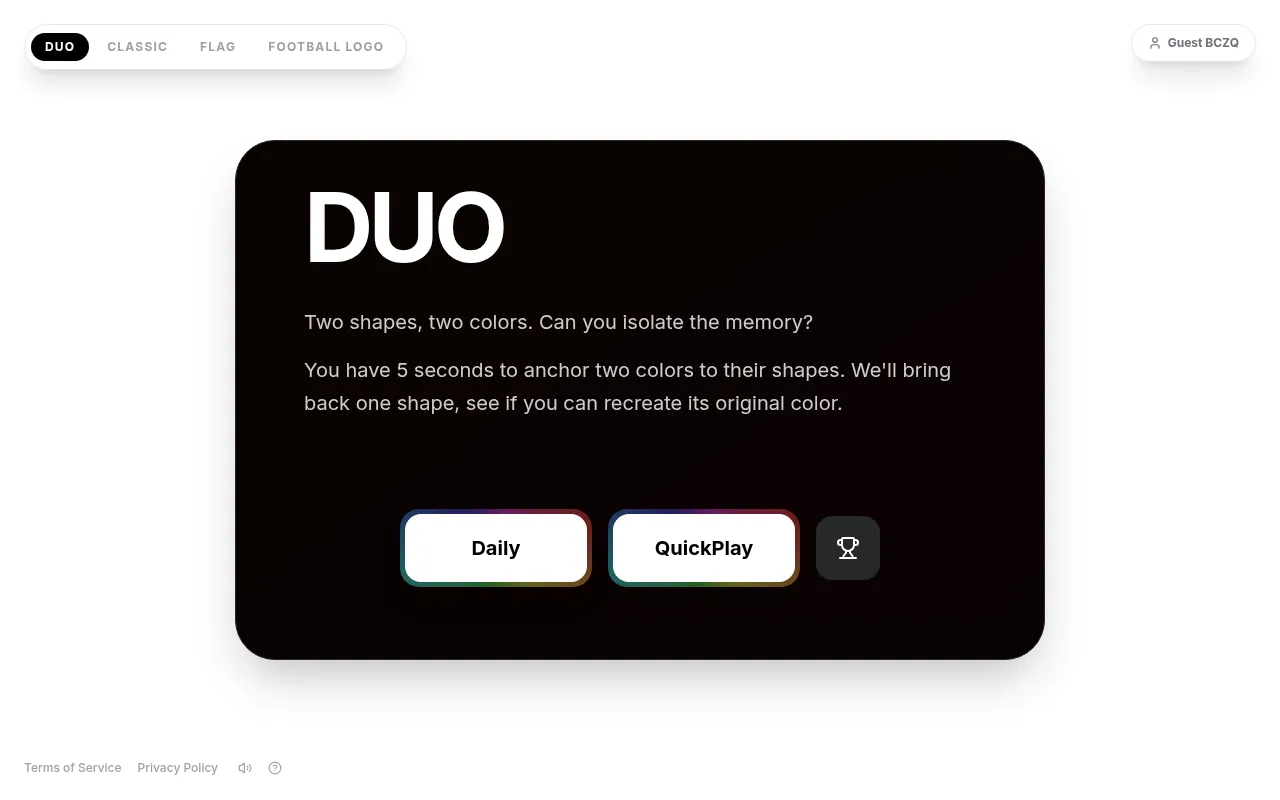
Colorecall tests how well you remember a shade, not just a colour name. Its main mode, Duo, shows two shapes (a donkey and an arrow, say) in two colours for five seconds. Then one shape comes back in grey and you recreate its colour with hue, saturation and brightness sliders. Holding two colours at once is the hard part: they blur together in memory.
The Daily has four rounds and the same colours for every player. Scoring compares your colour with the original in CIELAB, a colour space built to match human vision, so a score reflects how different the colours look rather than how far apart the numbers are. A leaderboard ranks the day's players. Besides Duo there are Classic, Flag and Football Logo modes, and a QuickPlay option for practice.
It is free in the browser with no download or sign-up.
It suits players of colour games such as Hueman or The Daily Hue who want a memory twist.
How to play Colorecall
- Open Colorecall and press Daily.
- Watch the two coloured shapes for five seconds and remember which colour belongs to which.
- When one shape returns without its colour, rebuild it with the hue, saturation and brightness sliders.
- Lock in your colour and see how close you were.
- Play all four rounds, then check the daily leaderboard.
Screenshots
Tips
- Name the colour to yourself with a detail: not just blue, but dark, greyish blue.
- Pay attention to brightness and saturation as well as hue; memory tends to drift toward typical colours.
- Look at both shapes during the five seconds, since you do not know which will return.
- Set hue first, then brightness, then saturation.
Questions
Is the daily the same for everyone?
Yes. The daily uses the same colours for every player, so scores can be compared.
How is it scored?
Your colour is compared with the original in CIELAB, a colour space that matches human vision; closer means more points.
How many rounds are there?
Four in the daily.
Is it free?
Yes, with no download or sign-up.
Games like Colorecall
Dialed Color
See five colours, then rebuild each from memory
Afterglow
See a colour for a moment, then rebuild it from memory, five times a day
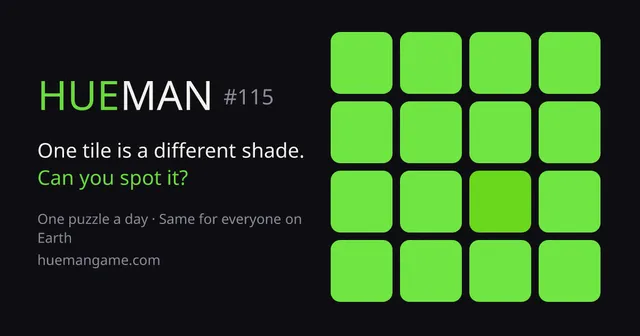
Hueman
A daily test of telling close shades apart
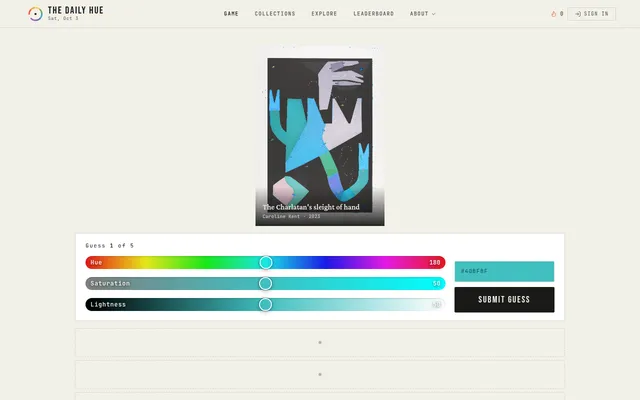
The Daily Hue
Match the day's hidden colour with sliders
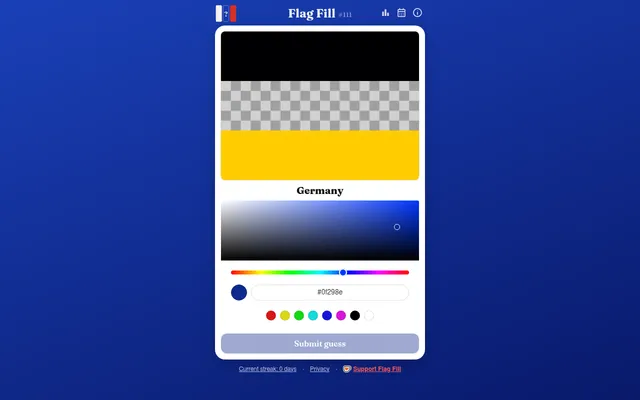
Flag Fill
Pick the exact colour of a flag's missing part

Color Memory Game
See a colour for four seconds, then rebuild it from memory, five times a day.
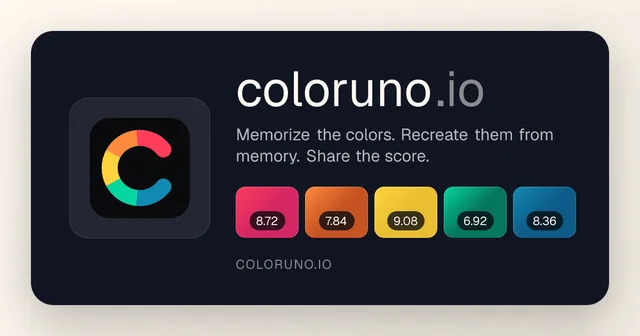
Coloruno
Memorise five colours, rebuild them from memory, and compare scores on the daily board.

Corflex
Twenty short memory, timing and perception tests, each with one shared challenge a day.