Sorting History
Place five events from a surprise category on a timeline, the same for everyone each day.
Every day: Five historical events a day from a surprise category, the same events in the same order for every player, placed on a timeline in one attempt. New puzzle: One new set a day; the maker does not say at what hour.
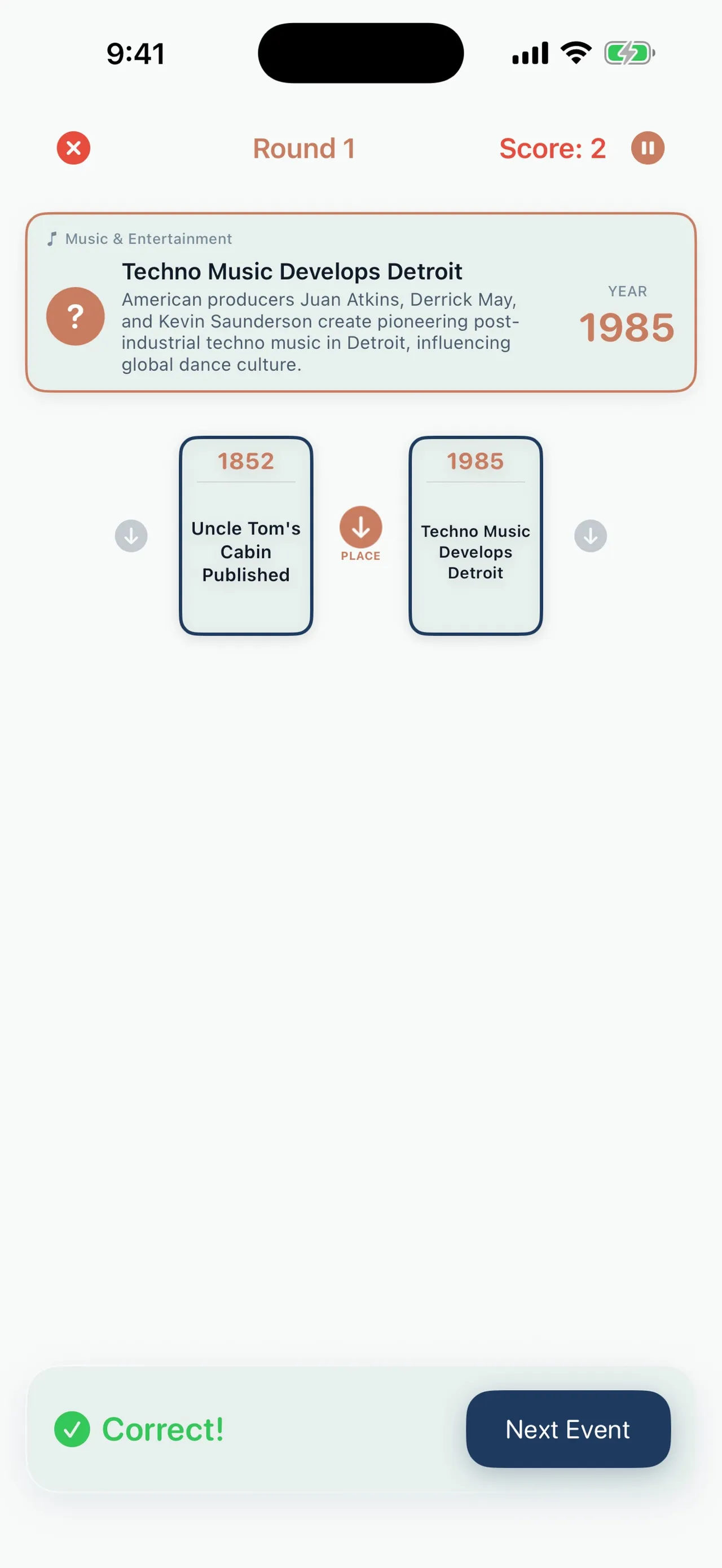
Sorting History is a timeline trivia game for iPhone and iPad. You get one historical event at a time and place it where it belongs among the events already on the timeline. The Daily Challenge is five events from a surprise category, the same events in the same order for every player, with one attempt a day.
About Sorting History
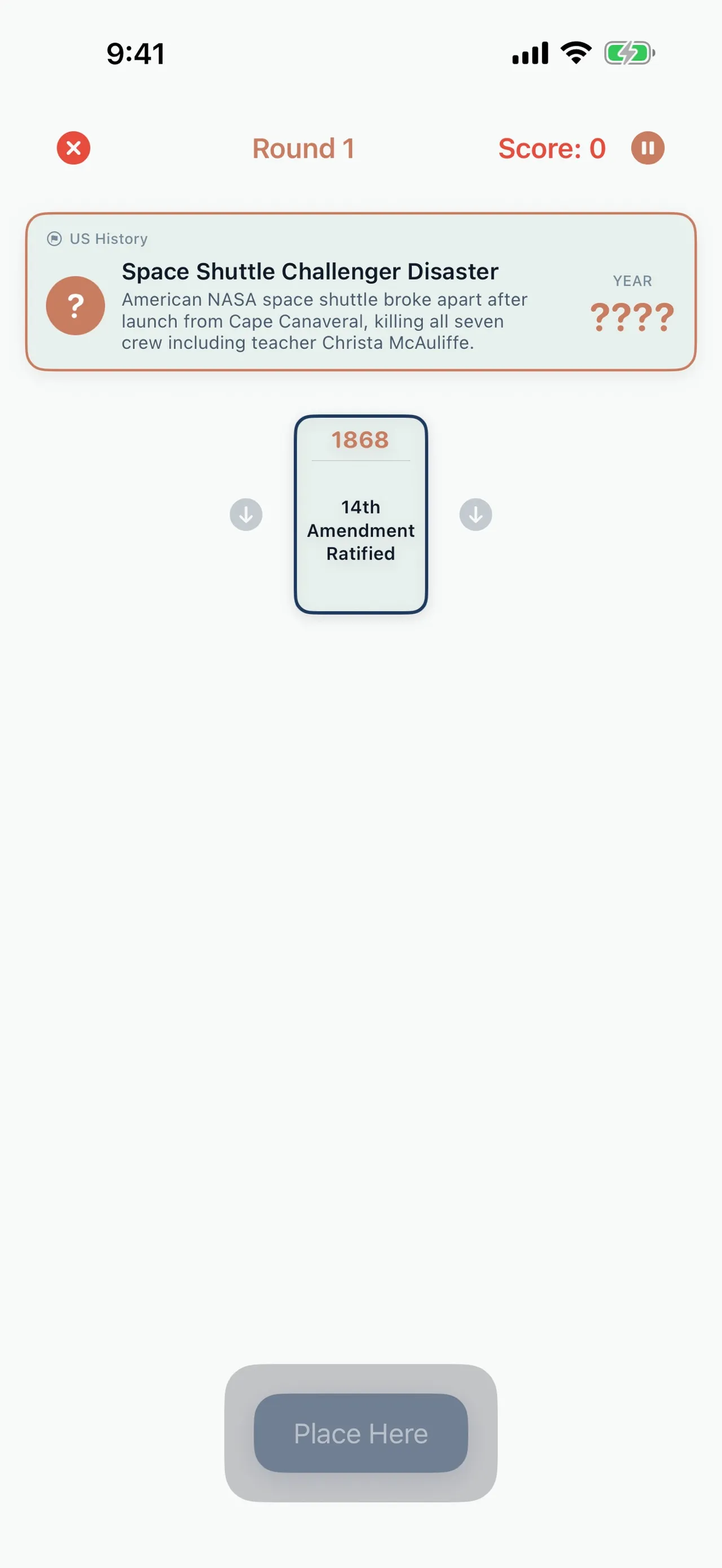
Each event comes as a card with a title, a short description and the year hidden. You scroll the timeline, tap an arrow between two cards and press Place Here, or drag the card into position; on iPad drag is the default. Get it right and the year is revealed and the timeline grows. A wrong placement shows you where it really goes. There is no timer, and the descriptions often mention people, places and technologies that hint at the era.
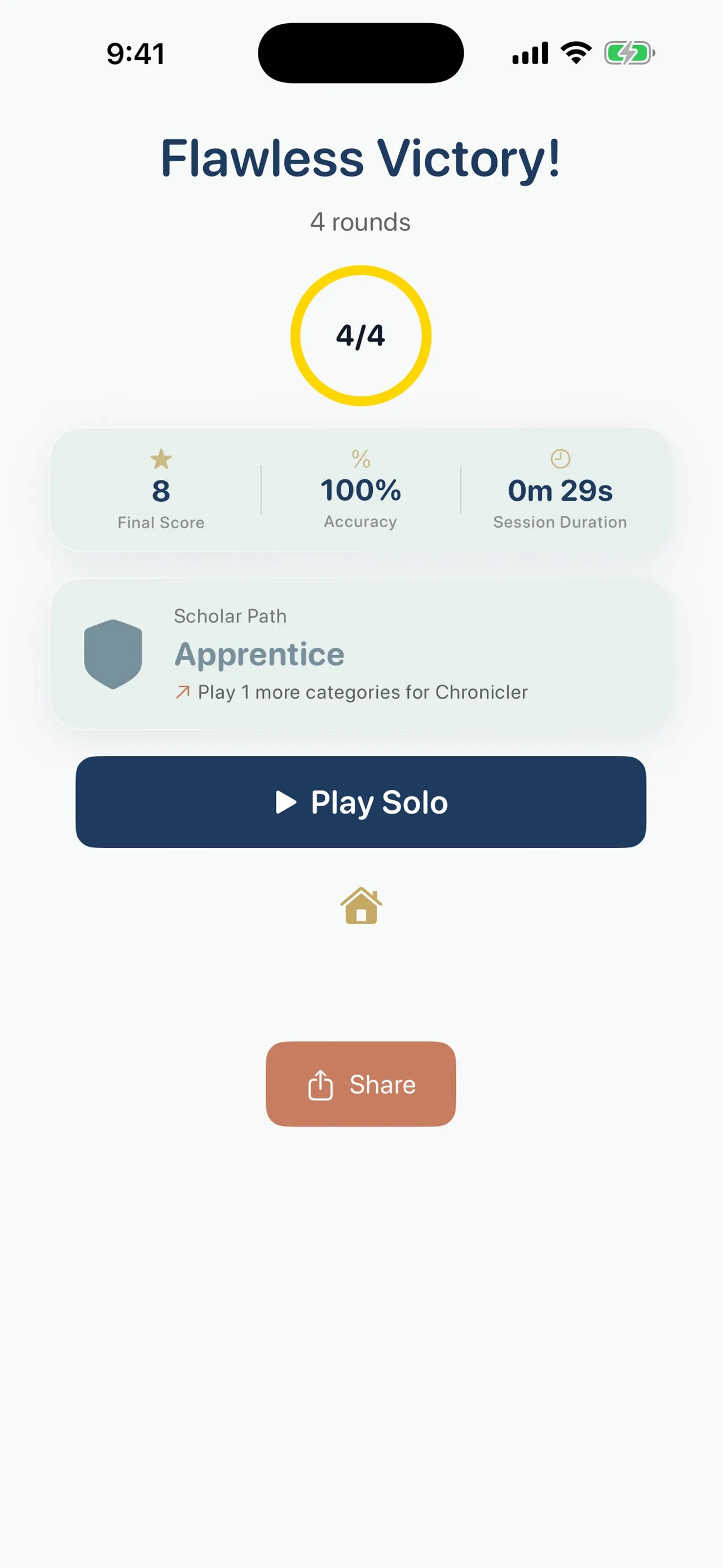
The Daily Challenge card sits on the main menu. The category and events are set by the date, so friends can compare results on equal terms, and the category rotates through all of them, so some days you get a topic you would not pick. It takes under two minutes, and the results screen shows your score, accuracy and time with a Share button. A daily streak marks 7, 14, 30, 100 and 365 days, and paid tiers add streak freezes. The Daily Challenge is free on every tier.
Sorting History comes from Empty Cup Media LLC; the developer says he built it for his wife, a fan of the board game Chronology. It came to the App Store in April 2026 and has 19 categories with more than 2,000 events, from US History and World Wars to Food and Drink and Japanese History. Outside the daily you can play solo games of 5 to 30 rounds, pass the phone between 2 to 6 players or play two teams over local Wi-Fi. It is free with ads; Explorer and Historian subscriptions or lifetime purchases remove ads and add categories, and Historian adds History Pinpoint, where you guess the exact year.
How to play Sorting History
- Tap the Daily Challenge card on the main menu to see today's category.
- Read the event card; its year is hidden.
- Scroll the timeline, tap the arrow where it belongs and press Place Here, or drag the card into place.
- See the year revealed and move to the next event; there are five in all.
- Check your score and accuracy, then share the result with friends who played the same events.
Screenshots
Tips
- Read the whole description: names, places and technology in it often narrow down the decade.
- Take your time, as there is no timer in the Daily Challenge and you only get one attempt.
- Turn on Learning Mode in solo games so events you miss come back until you know them.
- If you play every day on a free account, keep an eye on the streak, as only paid tiers have streak freezes.
Questions
Is the Sorting History Daily Challenge the same for everyone?
Yes. Every player worldwide gets the same events in the same order, chosen by the date.
How many times can I play the daily?
Once. After you finish, the next challenge comes the following day.
Is Sorting History free?
Yes, with ads, and the Daily Challenge is free for everyone. Explorer and Historian plans remove ads and add categories.
Can I play with friends?
Yes. Pass and Play takes 2 to 6 players on one device, and Network Play links two devices over local Wi-Fi.
Games like Sorting History
Deckades
Place each moment before or after the others on a growing timeline
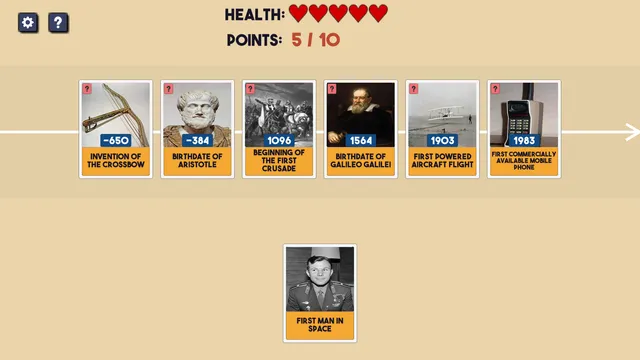
Chronosort
Daily history cards placed on a timeline
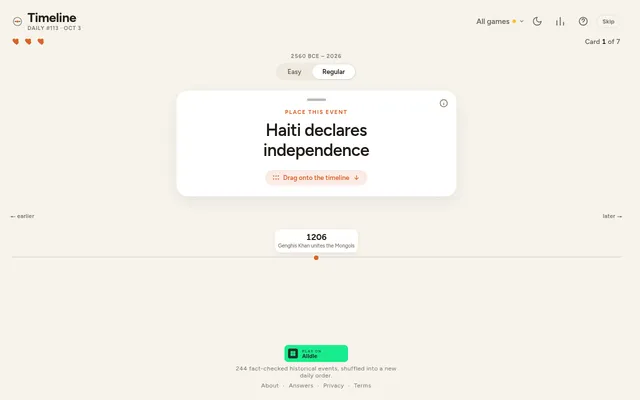
Hemiscope Timeline
Seven undated events dragged into order, also on iOS
Chronle
Drag the day's events into the order they happened

Chrono
Six historical events to put in order each day

Chrono Trivia
Put the day's real events in the order they happened.
Deckanno (GuessDash)
Build a timeline from a four-card hand, choosing which card to play next.
Guess The Timeline (Bored Panda)
Put the day's six events in order, from oldest to newest.