Chronicle Daily
Rate itFive historical events a day: slide to the year each one happened and score by how close you land.
Every day: One numbered round a day of five historical events, the same five for everyone in the world, with at least two of them from before 1800. Each guess scores up to 100 points, for a day's total out of 500 and a daily leaderboard. New puzzle: Midnight UTC.
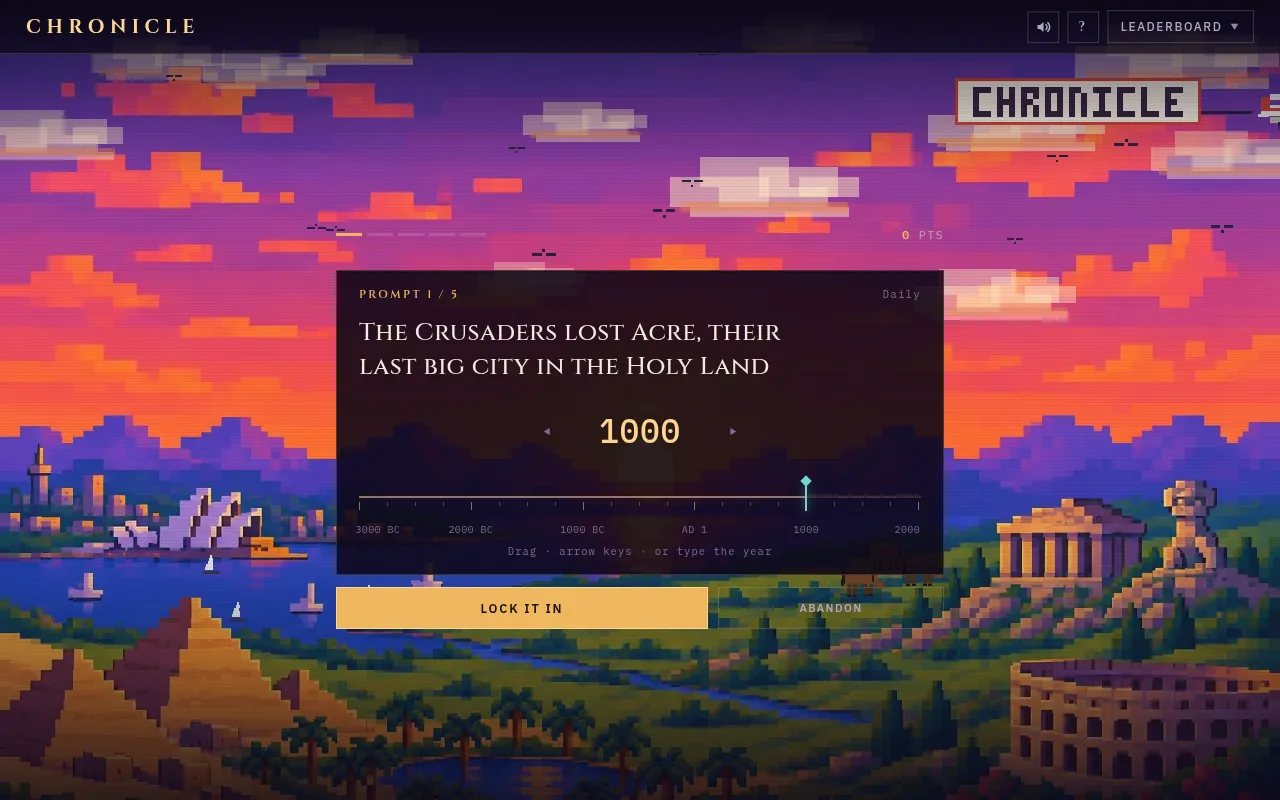
Chronicle Daily is a free guess-the-year history game. Each day's round gives everyone the same five events, and you drag a timeline from 3000 BC to the present to the year you think each happened, scoring up to 100 points per prompt depending on how close you get.
About Chronicle Daily
Chronicle Daily posts one numbered round a day, counted in UTC from its first round on 19 September 2026. Every round has five prompts, short descriptions of events such as the fall of Acre to end the Crusader states, picked from a bank of over a thousand, and every player in the world gets the same five. At least two of each day's prompts come from before 1800.
For each prompt you set a year on a single timeline running from 3000 BC to the present. Dragging is coarse, so you can nudge one year at a time with the arrow keys or type the year straight in, then lock it in. The answer appears beside your guess.
A guess that is dead on scores 100 points, and the score drops in a straight line to 0 the further off you are. The window is wider for old events than recent ones: you have up to 200 years of leeway at the ancient end of the scale and 50 at the modern end. Five prompts make a day's total out of 500.
After a round you can post your score to the Top 100 leaderboard, which also gives you a friend code to swap with others so you can race on a friends board. A share button copies your result, and Practice mode deals a random set of five whenever you want more. The whole game sits over a pixel-art landscape of pyramids, temples and an opera house under a sunset.
How to play Chronicle Daily
- Open chronicledaily.app and press Play today's round.
- Read the prompt, then drag the slider to the year you think it happened; use the arrow keys or type to set the exact year.
- Press Lock it in to see the true year and your points for that prompt.
- Do all five prompts, then see your total out of 500, post it to the leaderboard or share it.
Screenshots

Tips
- For ancient events, a guess in the right century still scores, since the window there is up to 200 years; for modern events aim for the right decade.
- Type the year directly instead of dragging when you know it, as the slider covers five thousand years and is coarse with a mouse.
- Post a score once to get your friend code, then swap codes so you can compare rounds with friends.
Questions
Does everyone get the same Chronicle Daily round?
Yes. The five prompts are chosen from the UTC date, so everyone in the world gets the same five that day.
How is Chronicle Daily scored?
Each prompt is worth up to 100 points for the exact year, falling to 0 the further off you are, with more leeway for ancient events. A full round is out of 500.
Can I play more than one round a day?
The daily round is once a day, but Practice mode gives you a random set of five prompts whenever you like.
Is there a leaderboard?
Yes. You can post your score to the daily Top 100 and use friend codes to compare with people you know.
Ratings and reviews
No ratings yet. Be the first to rate Chronicle Daily.
Games like Chronicle Daily
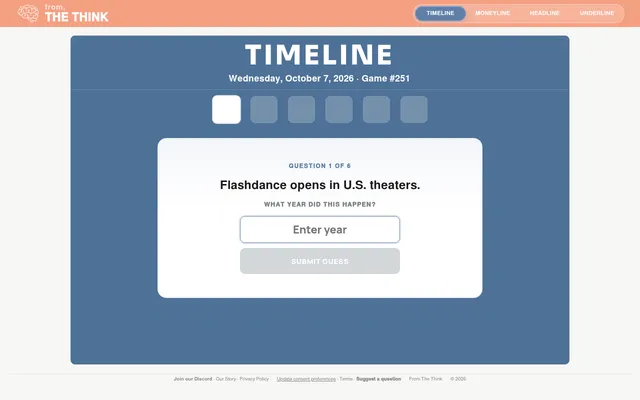
Timeline (From The Think)
Six major historical events a day to date, scored by how close your year lands
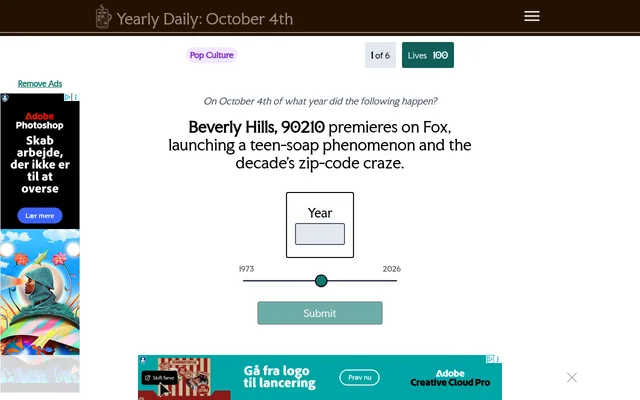
Yearly Daily
Several events that all happened on today's date, with the year of each to guess
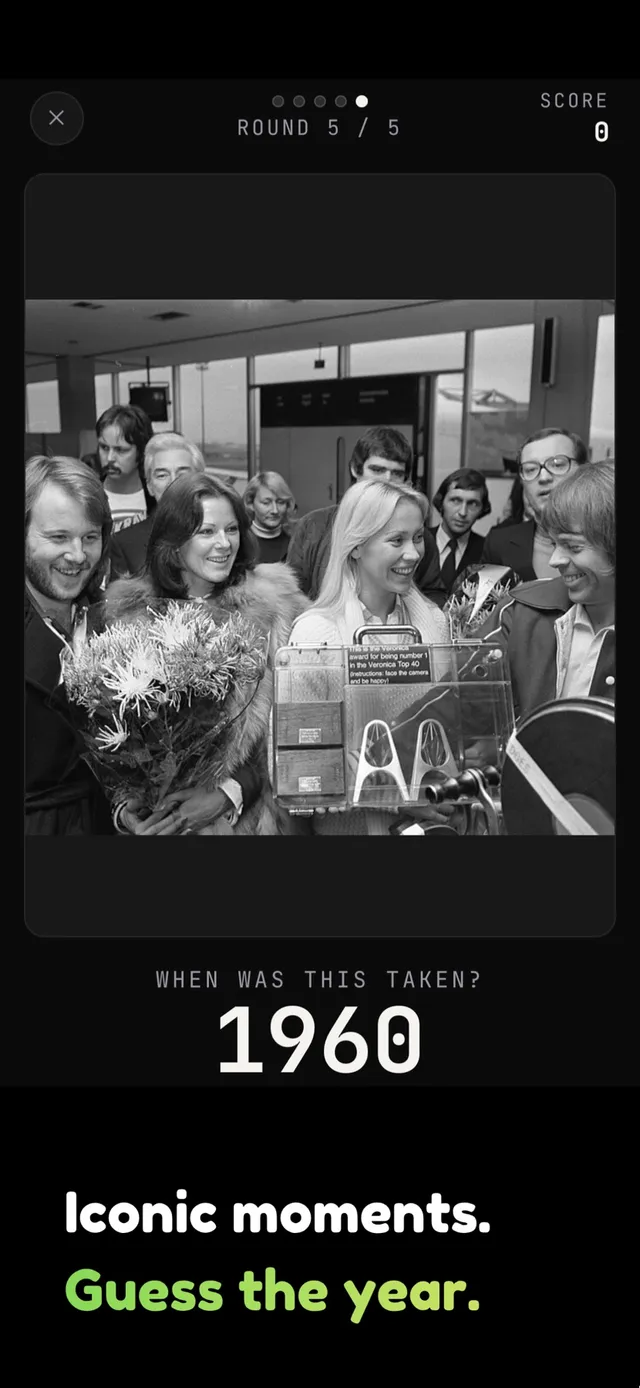
Chronophoto
Slide to the year a real photograph was taken, scored by how close you get
Headlines
Five real headlines a day with the dates removed: guess the year of each
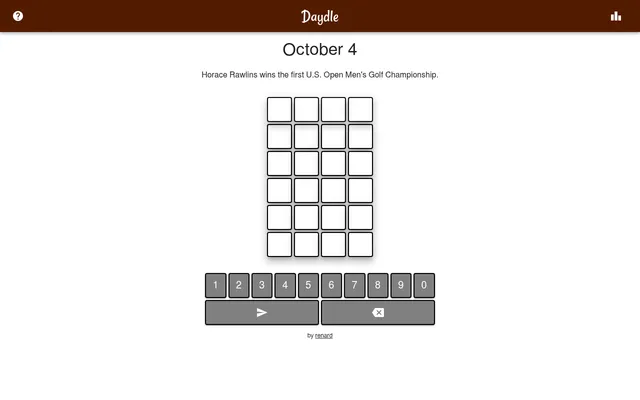
Daydle
Guess the year of an event that happened on this day in history
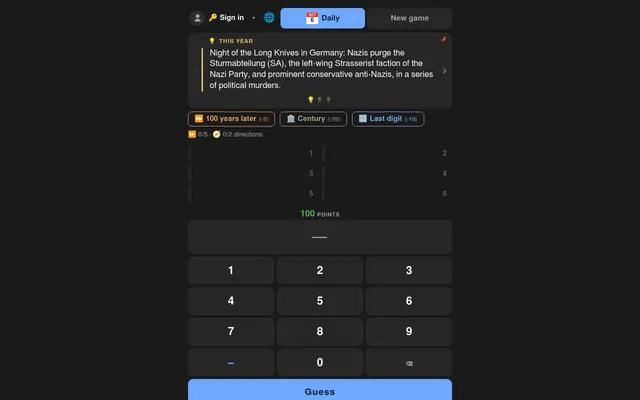
Jaardle
Guess the year of the day's historic event in six tries
Paintiquity (GuessDash)
Guess the year from a set of paintings made in it, scored by closeness

Chrono
Put six historical events in order instead of dating each one