Anthropeum
Ten museum objects a day: guess where and when each was made.
Every day: Ten museum artifacts a day, the same for everyone; after the tenth you see your score on a curve of everyone who played that day. New puzzle: Midnight in your local time zone (the game dates each set by your device's date).

Anthropeum shows you ten artifacts a day from museum open-access collections. For each one you drop a pin where you think it was made and pick a period on a timeline, and points come from how close you get on both. At the end you see how your total compares with everyone who played that day.
About Anthropeum
Anthropeum is a daily guessing game built on museum photography. Each day brings a set of ten objects drawn from the open-access collections of the Metropolitan Museum of Art and the Cleveland Museum of Art: pots, jade, masks, textiles, metalwork, paintings, spanning about 5,000 years of human history.
Every round has two guesses. You tap a world map to place the object's origin, then choose a block of time on a timeline. Points are scored for distance on the map and for how far your period is from the object's date. After the tenth round the game shows your total on a distribution of everyone who played the same set that day, and keeps your streak and past scores on your device.
You get three hints a day, which cost no points: a time hint narrows the date to a 1,000-year span and a place hint names the world region. The site says its set is weighted away from the European paintings that dominate museum collections, so expect plenty of ceramics, metalwork and objects from cultures you may not know well.
It suits players of photo games like TimeGuessr or WhenTaken who want objects instead of photographs, and anyone who enjoys wandering museum galleries.
How to play Anthropeum
- Open anthropeum.com and start the day's game.
- Study the photos of the first artifact; open them larger to see material and detail.
- Tap the map to drop a pin where you think the object was made.
- Pick a period on the timeline for when you think it was made, then submit.
- Use up to three free hints during the day if you are stuck: one narrows the date, one names the region.
- Finish all ten rounds and compare your total with everyone who played that day.
Tips
- Look at the material first: the site's own tips note that nephrite jade points to East Asia and jadeite to Mesoamerica.
- Wood, paper and wool rarely survive more than a few hundred years, so an organic object is often recent.
- Within one region, style moves over time; stiff formal Egyptian work tends to be older than flowing detailed work.
- Hints cost nothing, so spend them on the rounds where you have no idea rather than saving them.
Questions
How many rounds are there each day?
Ten. Every player gets the same ten artifacts that day.
When does a new game appear?
The game picks the day's set from your device's date, so a new set appears at midnight in your local time.
Do hints lower my score?
No. You get three hints a day and the site says they come at no penalty.
Where do the objects come from?
From the open-access collections of the Metropolitan Museum of Art and the Cleveland Museum of Art.
Do I need an account?
No. Your results, streak and past scores are kept in your browser's local storage.
Games like Anthropeum

HistoryGuesser
Also a where-and-when guess, set inside 360 degree scenes from the past

TimeGuessr
The same map pin and year guess, with photographs instead of objects

WhenTaken
Five photos a day to place on the map and in a year

Picle
The Times' single daily photo to locate and date

Chronophoto
Date a real photograph on a slider, without the map
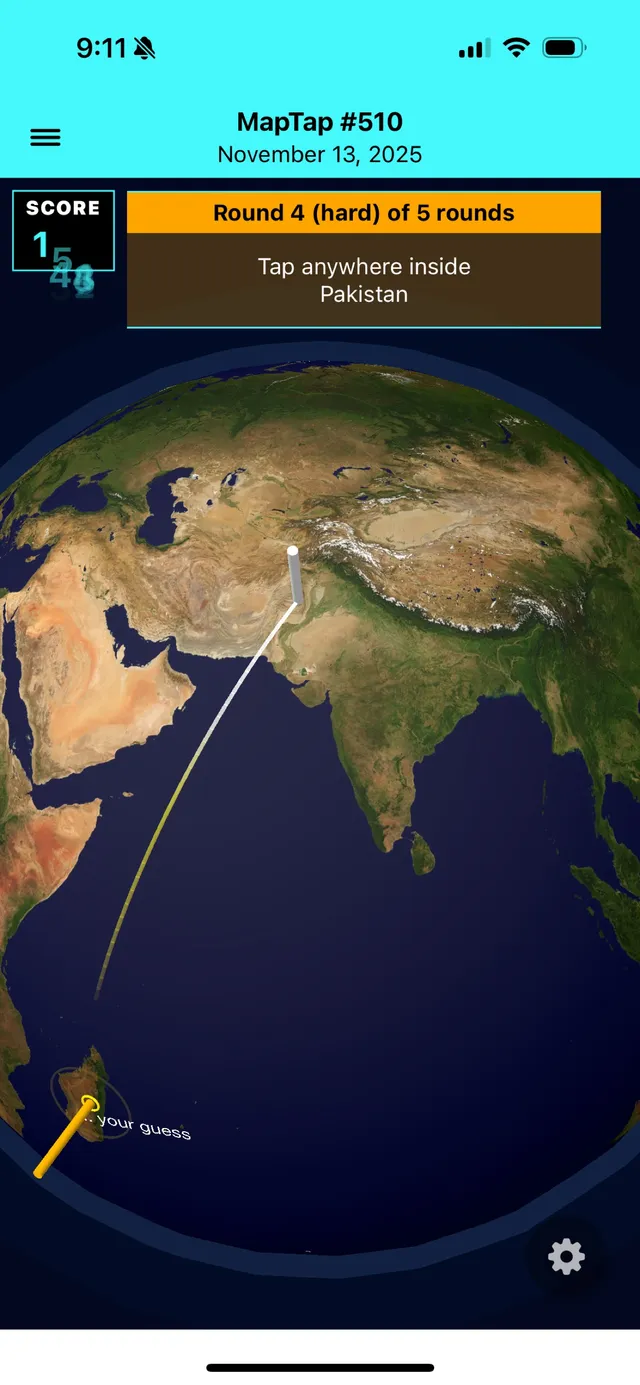
MapTap
A daily globe game where each place comes with a piece of history

Timdle
Dating events instead of objects: put nine on a timeline
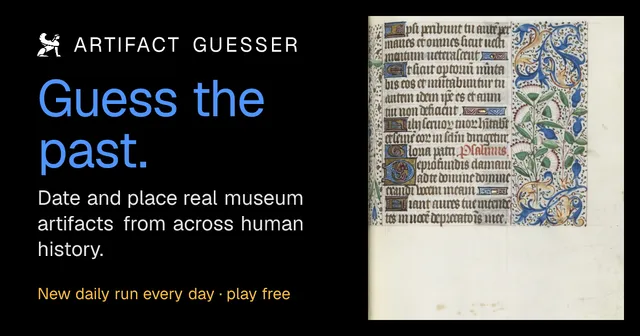
Artifact Guesser
Three real museum artifacts a day: place each on the map and in time.