PriceWarp
Rate itRead an old store receipt of real US prices and slide to the year it was printed.
on pricewarp.com
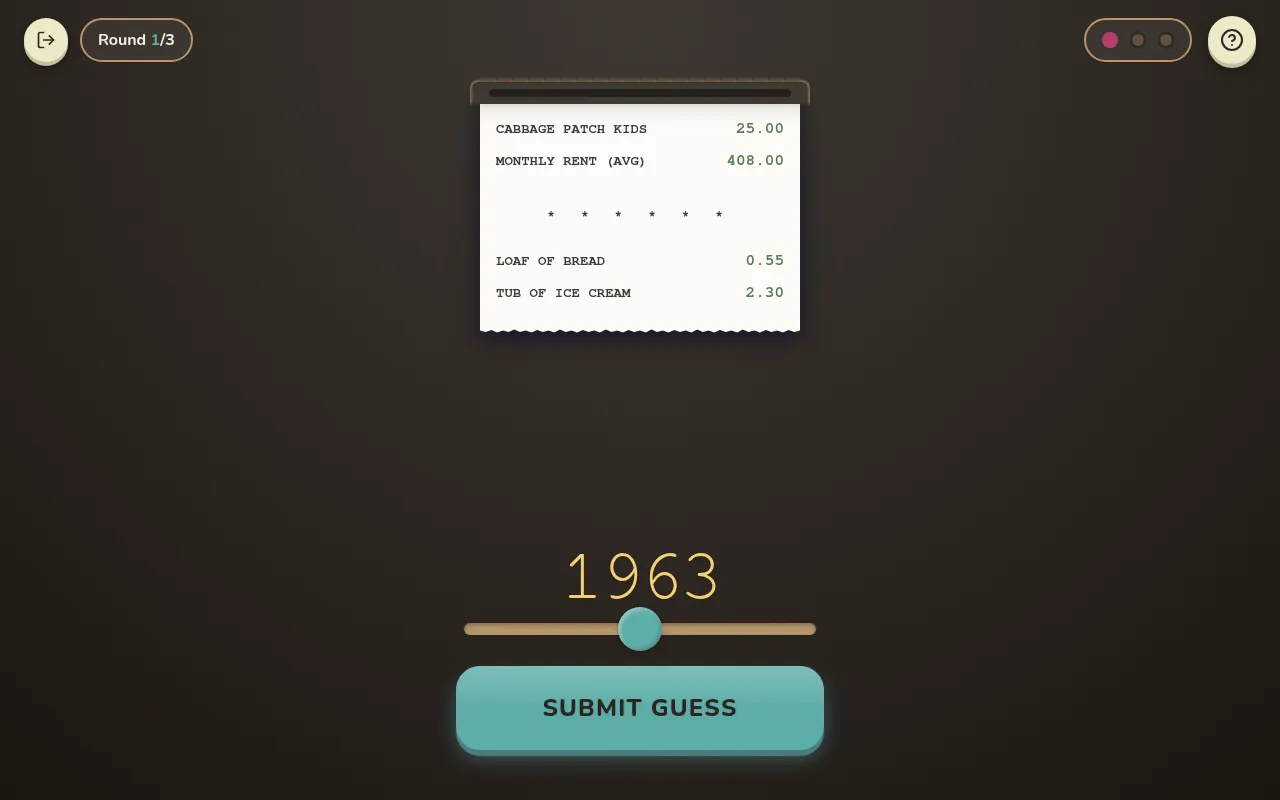
PriceWarp is a daily guessing game about prices and inflation. Each round prints a store receipt of real US prices, such as a loaf of bread or the average monthly rent, and you slide to the year it comes from. The Daily Challenge has three receipts, the same for everyone that day, and an Endless mode keeps going.
About PriceWarp
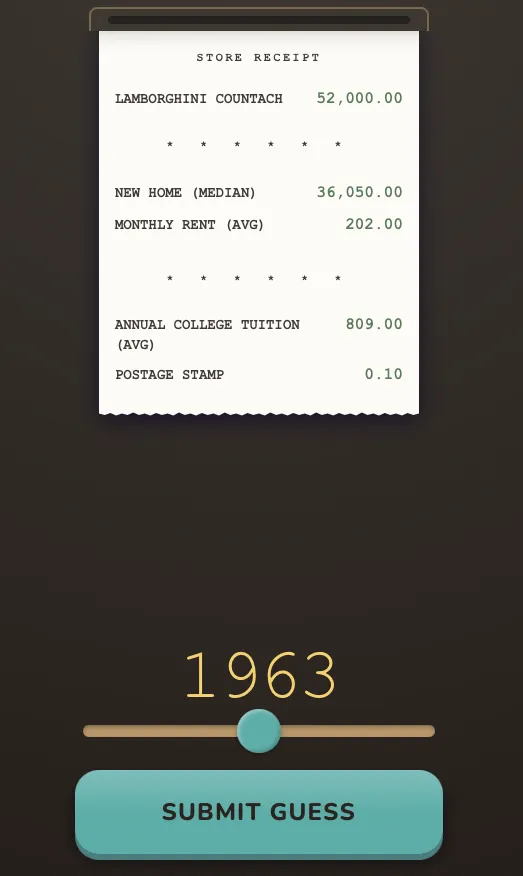
PriceWarp, made by ZucchiDev, casts you as a time-travelling shopper. Each round is a store receipt from one year between 1900 and 2026, listing everyday goods and bigger purchases with what they cost. The prices are US national averages from the Bureau of Labor Statistics and the FRED database, and consumer products use their historical list price.
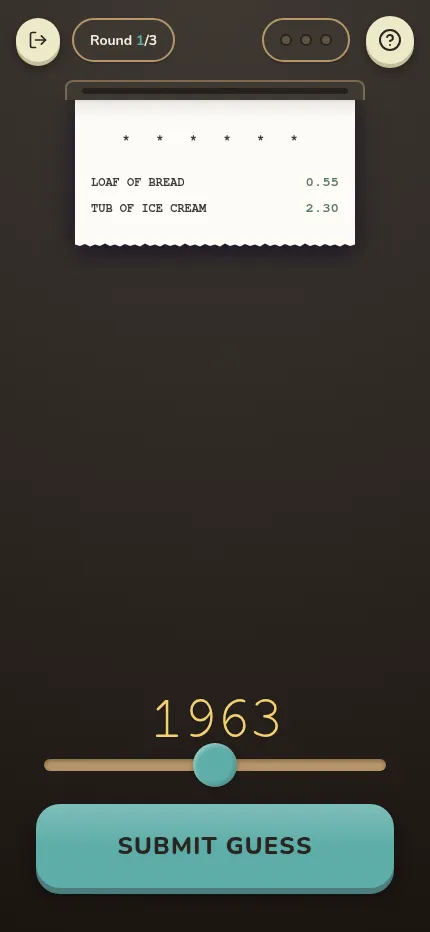
The receipt starts short. Today's first round opened with just a loaf of bread at 0.55 and a tub of ice cream at 2.30. You move the slider to a year and submit. A miss tells you whether you went too high or too low, or that you were close when within five years, and the receipt grows with more items: after one wrong guess it added a Cabbage Patch Kids doll and the average monthly rent. Each receipt holds five items in all, and you get three guesses.
A guess within two years of the real one counts. Getting it on the first try earns 5 points, the second 3 and the third 1, for a best of 15 across the day's three receipts. At the end you can copy a result with a green, yellow or red dot for each guess, and your daily streak is kept on your device.
The Daily Challenge takes the date in Pacific time and uses it to pick three years and the items on each receipt, so everyone gets the same three that day. Endless mode draws receipts at random for as long as you like to play. There is no account and no ads.
It suits people who like history quizzes and anyone who remembers what things used to cost. Knowing a few anchor prices, like a stamp or a gallon of gas, goes a long way.
How to play PriceWarp
- Open pricewarp.com and press "Daily Challenge".
- Read the items and prices on the receipt. Each one is a clue to the year.
- Drag the slider to the year you think it is and press "Submit Guess".
- If you miss, the receipt shows more items and tells you to go higher or lower. You have three guesses per receipt.
- Land within two years to score 5, 3 or 1 points, then go on to the next of the three receipts and share your result.
Screenshots

Tips
- Start from the item whose price you know best and check the rest against it.
- Rent and homes rose faster than many goods, so give them more weight in recent decades.
- A guess within two years scores, so pick the middle of the range you believe.
Questions
Is the PriceWarp daily the same for everyone?
Yes. The Daily Challenge picks its three receipts from the date in Pacific time, so every player gets the same ones that day.
When does a new Daily Challenge start?
At midnight Pacific time.
How close do I have to be?
Within two years of the real year. A guess within five years is marked as close but does not score.
Where do the prices come from?
From US national averages published by the Bureau of Labor Statistics and the FRED database, with list prices for consumer products.
Is PriceWarp free?
Yes. It is free in the browser at pricewarp.com, with no account and no ads, and it is also listed on itch.io.
Ratings and reviews
Games like PriceWarp
PricedIn
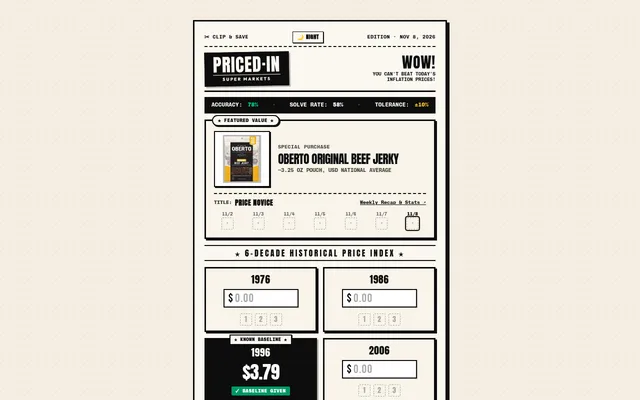
The other way round: PricedIn shows a product and asks what it cost in each decade from 1976 to 2026.
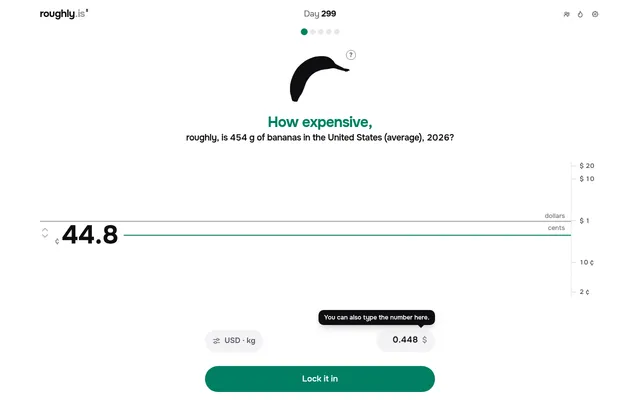
How expensive? roughly.
Another price history quiz. Its five daily rounds ask what an item cost in a given place and year.
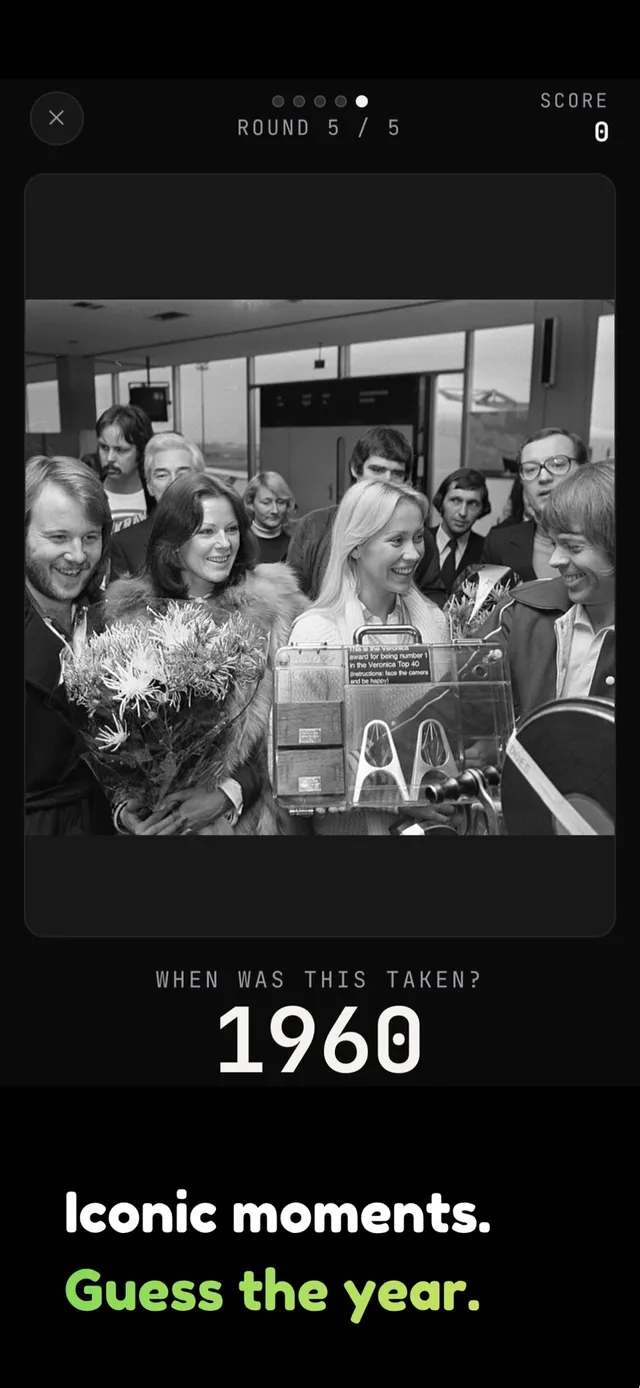
Chronophoto
If the year slider is the part you enjoy, Chronophoto has you date five real photos with it.
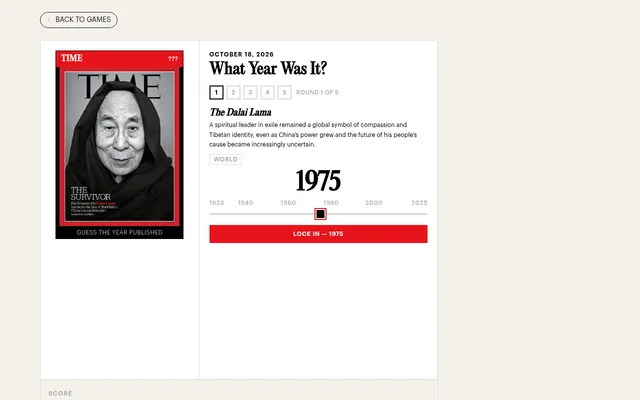
What Year Was It? (TIME)
TIME covers instead of receipts, dated on a slider.
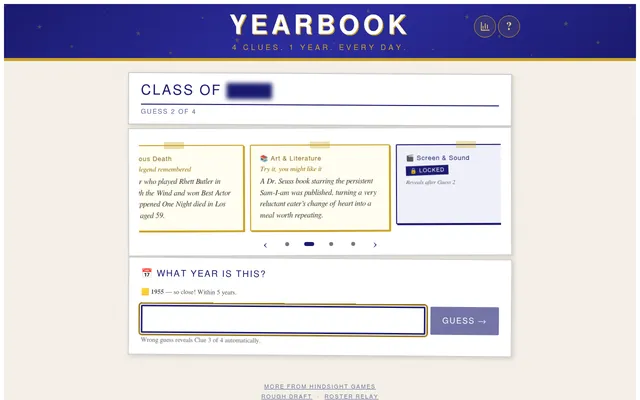
Yearbook
Clues from one year to name it in four guesses, much like a receipt that grows after each miss.
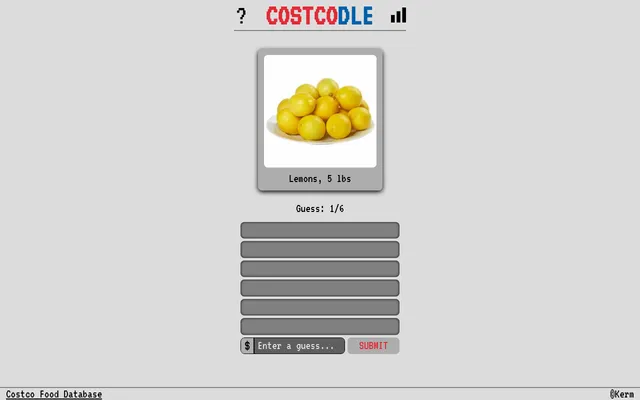
Costcodle
A daily price guess about one Costco food product, with higher or lower hints.

Chronicle Daily
Five historical events a day: slide to the year each one happened and score by how close you land.
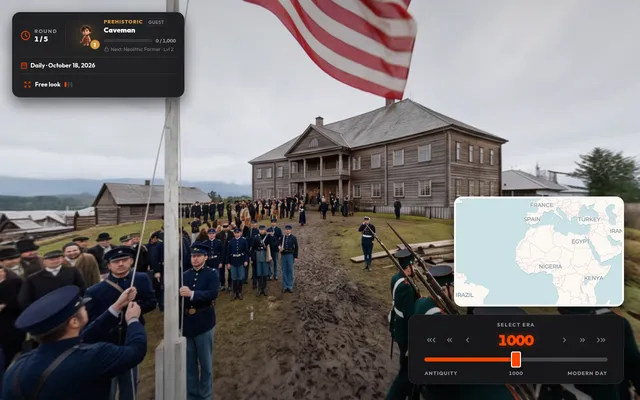
HistoryGuesser
Look around a 360 degree scene from the past, then guess where and when it happened.