How expensive? roughly.
Guess what a kilo of beef or a pound of sugar cost, in a given place and year.
Every day: Five prices each day, the same for everyone: guess what an everyday item cost in a given country and year. New puzzle: Midnight UTC.
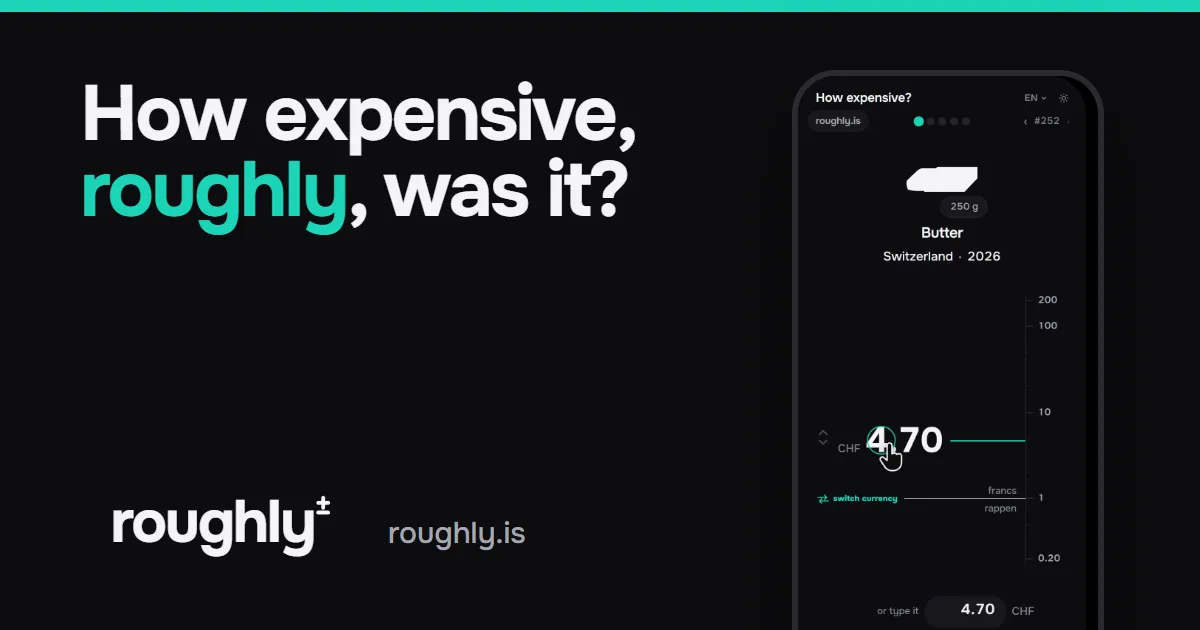
How expensive? roughly. gives you one item, one place and one date per round, such as a pound of white sugar in the United States in January 1980, and asks what it cost. The answers come from official price statistics, and you see how many times too high or low your guess was.
About How expensive? roughly.
How expensive? is one of the daily guessing games from roughly., a small site where every game asks for an estimate rather than an exact answer. In this one you guess prices, and the place and the year are part of the question: a kilo of beef in Switzerland this summer costs something very different from the same kilo decades ago in another country.
Each day brings five rounds, the same for every player. The items are ordinary things such as minced beef, apples, pears, sugar or a unit of household electricity, each with a quantity, a country and a month or year. You set your guess by sliding a finger up or down across the field, or type the amount, and you can switch the display to another currency if that helps. After you lock it in, the game shows the real price, how many times off you were, the share of players who got closer, and a short line on how you could have worked it out.
The prices are average prices published by statistics offices: the Swiss Federal Statistical Office, the US Bureau of Labor Statistics, the UK Office for National Statistics, Statistik Austria and Eurostat. New rounds arrive at midnight UTC. Today's rounds are free and need no account; past days need the paid roughly+ tier. You can challenge a friend or open a room to play together, in English or German.
How to play How expensive? roughly.
- Read the item, the quantity, the country and the date.
- Slide up or down on the field to set your price, or type it; switch currency if you prefer another.
- Press Lock it in to see the real price and how many times off you were.
- Read how you could have got there, then go on to the next item.
- After five rounds, share your average factor or challenge a friend.
Tips
- Mind the date: older prices are usually far lower than today's, so scale your guess back.
- Mind the unit too: per kilo, per pound and a single kWh lead to very different numbers.
- Compare with something you know, such as the price of a litre of milk where you live.
Questions
When does How expensive? roughly. reset?
New rounds arrive every day at midnight UTC, five per day, the same for everyone.
Where do the prices come from?
From average price statistics published by the Swiss Federal Statistical Office, the US Bureau of Labor Statistics, the UK Office for National Statistics, Statistik Austria and Eurostat.
How is it scored?
By the factor between your guess and the real price; the day's result is your average across five rounds, and lower is better.
Is it free?
Yes. Today's rounds are free and need no account. Past days need roughly+.
Games like How expensive? roughly.
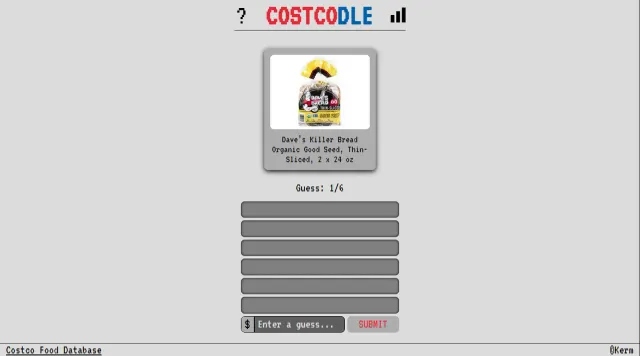
Costcodle
Another daily price guess, for one Costco product
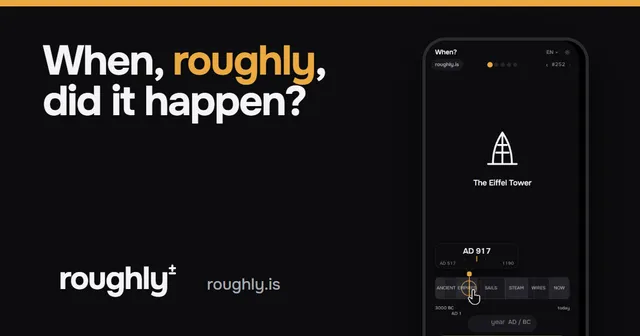
When? roughly.
The same site's timeline game: place five things from history, roughly
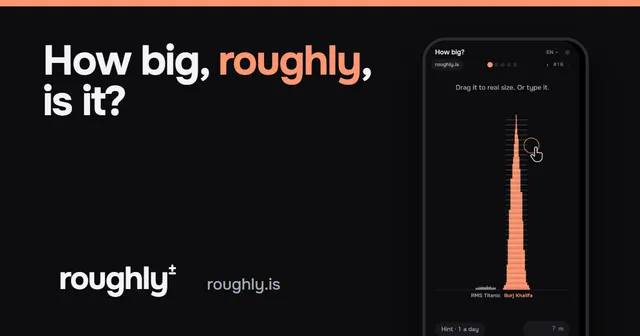
How big? roughly.
The same site's size game, scored the same way by how many times off you are

How many? roughly.
The same site's counting game: how many of you it takes to match an object

Geopolitix
Order five countries by one statistic
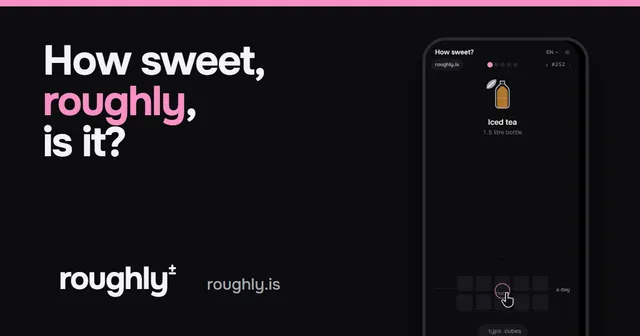
How sweet? roughly.
Stack the sugar cubes you think are in a glass of juice or a bowl of cereal.

Who? roughly.
Guess what share of people gave an answer in a real published survey.

How wide? roughly.
Resize one city's outline against another until the built-up area matches.