Nerdle
Guess the day's hidden eight-character equation in six tries.
Classic nerdle on nerdlegame.comnerdlegame on the App Storenerdle on Google Play
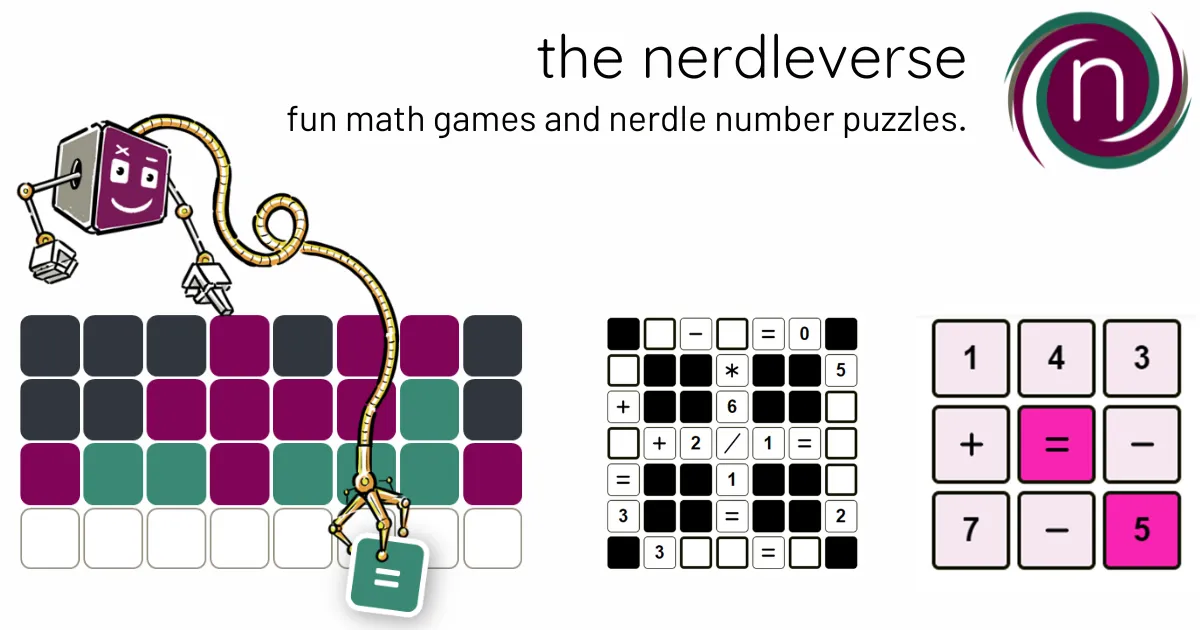
Nerdle is a daily maths puzzle in the style of Wordle. Instead of a word you guess an eight-character sum such as 12+35=47, and coloured tiles tell you which digits and signs are right. Everyone gets the same equation each day, and you have six guesses to find it.
About Nerdle
Nerdle was created by Richard Mann, a London data scientist, with his daughter Imogen, and built by software developer Marcus Tettmar. It launched in January 2022, a few weeks into the Wordle boom, as a version for people who like numbers more than letters. It has since grown into a family of games its makers call the nerdleverse, with mini, maxi, cross, speed and two-at-once versions among many others.
In classic nerdle the answer is eight characters long and made from the digits 0 to 9, the four arithmetic signs and a single equals sign. Every guess has to be a true equation in its own right, so you cannot just throw in random symbols to test them. After each guess, green tiles mark characters in the right place, purple tiles mark characters that are in the answer elsewhere, and grey tiles mark characters that are not in it.
The arithmetic adds a layer Wordle does not have. Normal order of operations applies, so multiplication and division happen before addition and subtraction, and the position of the equals sign tells you a lot about how big the numbers are. Swapped versions of the answer are accepted, so if the solution is 10+20=30, typing 20+10=30 also wins.
A new puzzle appears at midnight GMT so that the whole world plays the same one, though you can switch to local midnight in settings. Nerdle suits Wordle players who enjoy mental arithmetic, and the six-character mini version is a gentler start for children.
How to play Nerdle
- Enter an eight-character equation using digits, the signs + - x / and one equals sign, for example 48-36=12.
- Make sure it is mathematically true; invalid sums are not accepted as guesses.
- Read the tiles: green is the right character in the right spot, purple is in the answer but elsewhere, grey is not in the answer.
- Use those clues to build your next equation.
- Find the exact equation within six guesses.
Tips
- Open with an equation that uses many different digits and two operators, such as 9*8-7=65.
- Work out where the equals sign goes early; it tells you how many digits the result has.
- Remember multiplication and division are done before addition and subtraction.
- Watch repeated digits: if you use a digit twice and only one tile lights up, the answer has it once.
- If you know the numbers but not the order, try swapping the terms; commutative answers count as correct.
Questions
Is Nerdle free?
Yes. Classic nerdle is free in any browser at nerdlegame.com with no sign-up needed, and there are apps for iPhone and Android.
When does the new Nerdle come out?
At midnight GMT, so every player gets the same puzzle. You can change it to reset at midnight in your own time zone in the settings.
Does Nerdle use order of operations?
Yes. Multiplication and division are worked out before addition and subtraction.
Does 20+10=30 count if the answer is 10+20=30?
Yes. Commutative versions of the answer are accepted.
Can I play past Nerdle puzzles?
Yes, through nerdle replay on the same site.
Games like Nerdle
Mathler
Another daily equation guesser, where you find a sum that hits a target number

Wordle
The word game Nerdle borrows its tiles and six guesses from
Daily Sudoku
A daily number puzzle for players who like digits more than letters
Quordle
Wordle-style guessing across four boards, like Nerdle's multi-board modes
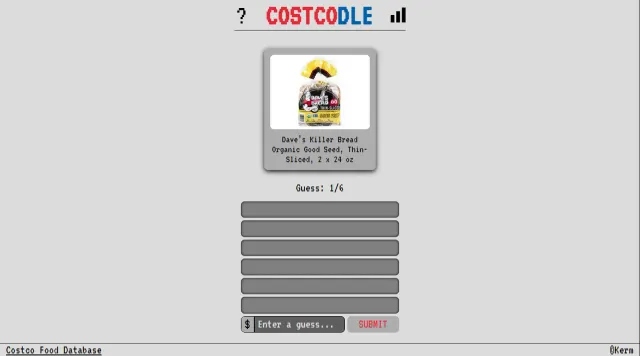
Costcodle
Guess what a Costco food product costs, within five percent, in six tries.
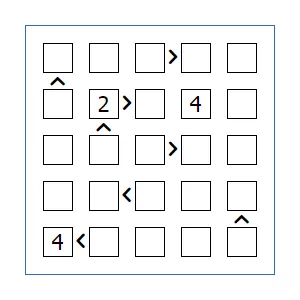
Daily Futoshiki
Fill a Latin square that obeys every greater-than and less-than sign, on one large grid a day.
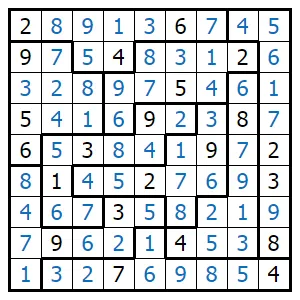
Daily Jigsaw Sudoku
Sudoku with irregular boxes, one dated puzzle a day.
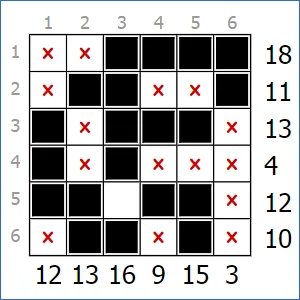
Daily Kakurasu
Blacken cells so each row and column adds up to its clue, counting each cell by its position.