Mathler
You know the answer; find the hidden equation that produces it in six tries.
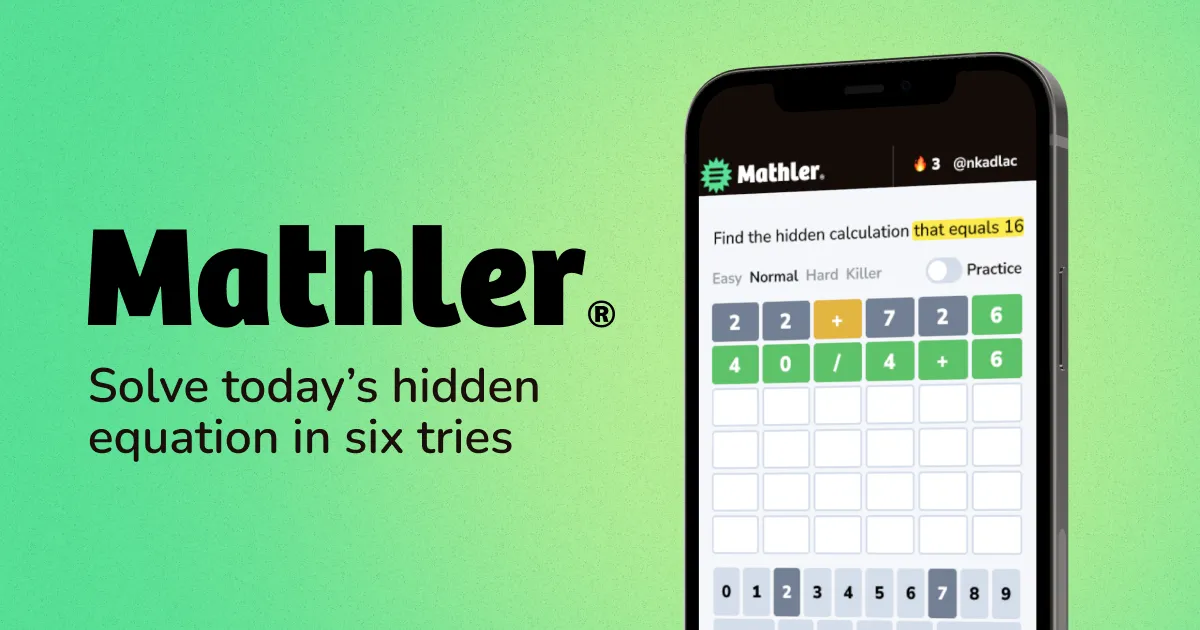
Mathler shows you a number and asks you to find the hidden calculation that equals it. Each guess must be a sum that really does make the target, and coloured tiles show which digits and operators are in the right place. You have six tries, with easier and harder versions alongside the normal daily puzzle.
About Mathler
Mathler was built by Daniel Tait in early 2022, when Wordle was spreading fast. He started from an open source Wordle clone, posted the game to Hacker News the day he made it, and it found its audience through people sharing their results. Tait later sold Mathler, along with his other games such as Crosswordle, to the studio Hey, Good Game, which runs it now.
The twist on Wordle is that you are given the answer up front. The screen tells you the hidden calculation equals, say, 16, and you have to work out which one. You fill the row with digits and the signs for adding, subtracting, multiplying and dividing, and every guess has to come out to the target. Tiles then turn green for a character in the right spot, yellow for one that is in the equation elsewhere, and grey for one that is not there.
Because every guess must equal the target, you cannot just test random digits; you have to find a true sum that also tests the characters you want, which makes even the first guess a small puzzle. Normal order of operations applies, so multiplication and division are done before addition and subtraction. The daily puzzle comes in several difficulties: the normal game uses six squares, an easy version is shorter, and the hard and killer versions ask for more. A practice switch gives you extra rounds.
Mathler suits people who like mental arithmetic and want a daily puzzle that takes a few minutes. Compared with Nerdle, where you must find both sides of the equation, knowing the result gives you a firmer place to start.
How to play Mathler
- Read the target number at the top: the hidden calculation equals it.
- Type a calculation using digits 0 to 9 and the operators + - * / that equals the target, then press Enter.
- Check the tiles: green is the right character in the right spot, yellow is in the calculation elsewhere, grey is not in it.
- Use the clues to build another calculation that still equals the target.
- Find the exact hidden calculation within six guesses.
Tips
- Start with a guess that uses two different operators and several different digits.
- Remember multiplication and division are worked out before addition and subtraction.
- Leading zeros are not allowed, so a number cannot start with 0, but 0 can appear later in a number.
- When you know most of the characters, list every arrangement that still equals the target before guessing.
- Try the easy level first if the normal puzzle feels like too much; switch up to hard once the normal one becomes routine.
Questions
Is Mathler free?
Yes. It plays in your web browser at no cost and is supported by ads.
How many guesses do you get in Mathler?
Six, and every guess must equal the day's target number.
Who made Mathler?
Daniel Tait created it in 2022. It is now owned and run by the studio Hey, Good Game.
Does Mathler use order of operations?
Yes. Multiplication and division are calculated before addition and subtraction.
Are there different difficulty levels?
Yes. Besides the normal game there are easy, hard and killer versions, and a practice mode for extra rounds.
Games like Mathler
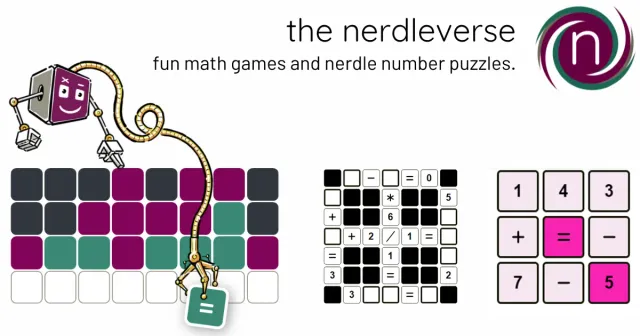
Nerdle
The other daily equation guesser, where you work out both sides of the sum
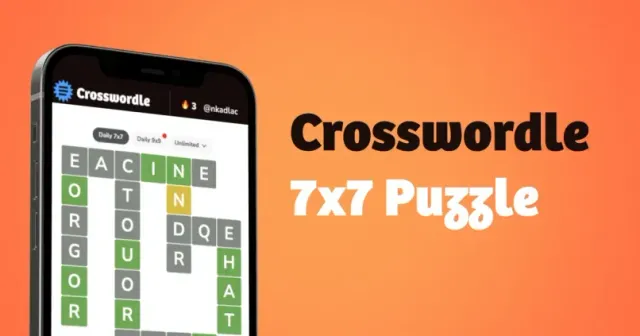
Crosswordle
Another daily puzzle by Mathler's creator, a Wordle grid laid out like a crossword

Wordle
The word game Mathler borrows its tiles and six guesses from
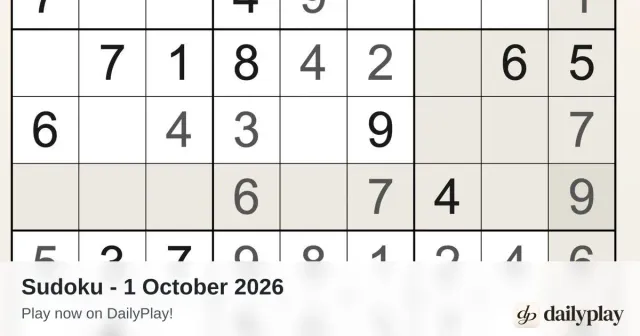
Daily Sudoku
A daily number puzzle for players who enjoy working with digits
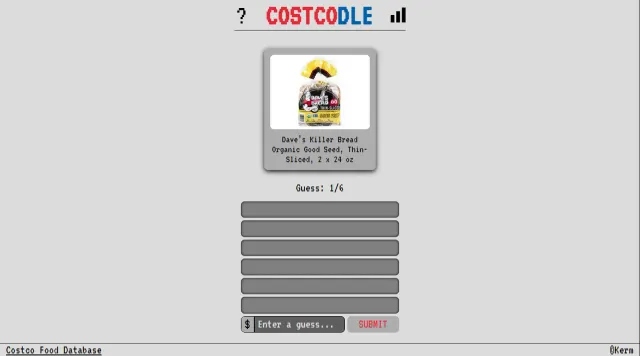
Costcodle
Guess what a Costco food product costs, within five percent, in six tries.
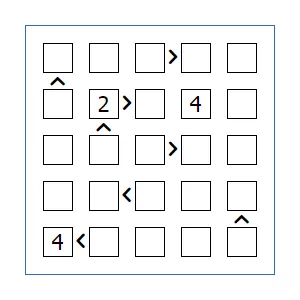
Daily Futoshiki
Fill a Latin square that obeys every greater-than and less-than sign, on one large grid a day.
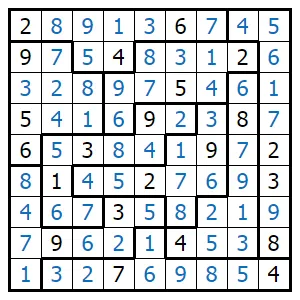
Daily Jigsaw Sudoku
Sudoku with irregular boxes, one dated puzzle a day.
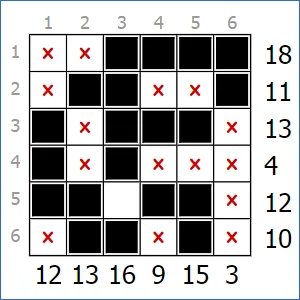
Daily Kakurasu
Blacken cells so each row and column adds up to its clue, counting each cell by its position.