Linguistle
Deduce the day's mystery language from its region, family and location.
Every day: One mystery language a day per difficulty, the same for everyone: deduce it Wordle-style from feedback on its region, family and location. New puzzle: Midnight UTC (stated in the game).
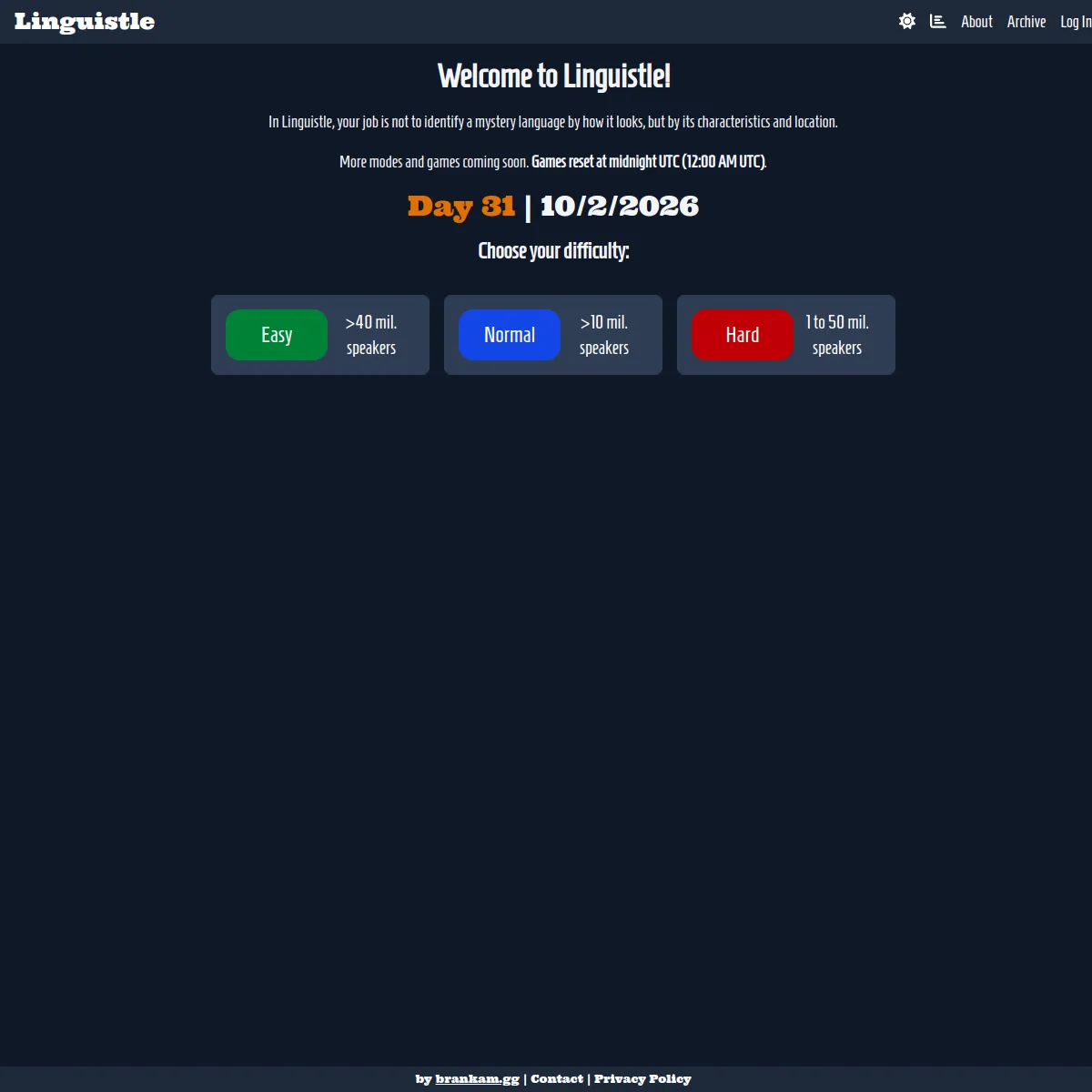
Linguistle is a daily language deduction game. You do not see the language; you guess languages and use the feedback on region, language family and location, with direction arrows, to close in on the answer. You pick a difficulty, and an archive holds past days.
About Linguistle
Linguistle is a daily deduction game about the world's languages, made by brankam.gg. The twist on the Wordle idea is that you never see the mystery language itself, not a word of it: you identify it from its characteristics and where it is spoken. You guess a language, and the game tells you how your guess compares with the answer.
Each guess is scored on attributes such as the region and continent, the language family, and the location, with direction arrows pointing from your guess towards the answer, the way Worldle nudges you across a map. Matching a family or a region greatly narrows the field, and the arrows help you walk geographically closer with each try.
You choose a difficulty before you start, set by how widely a language is spoken: Easy draws from languages with more than forty million speakers, Normal from those above ten million, and Hard reaches down to smaller languages of roughly one to fifty million. Each difficulty has its own mystery language for the day, the same for everyone, the puzzles are numbered by day, and an archive lets you play past days. Games reset at midnight UTC.
It is free. It suits anyone who likes maps, languages and the comparison-and-arrow style of geography guessing games, and it teaches you how the world's languages group and where they sit.
How to play Linguistle
- Choose a difficulty: Easy (languages with over forty million speakers), Normal (over ten million) or Hard (down to smaller languages).
- Guess a language; you will not see the mystery language, only how your guess compares.
- Read the feedback on region, continent and language family, and follow the direction arrows towards the answer's location.
- Use each comparison to rule out families and regions and close in.
- Name the day's language, and try another difficulty or the archive for more.
Tips
- Open with a widely spoken language from a big family, such as a major European or Asian one, to split the field fast.
- Treat the family match as the strongest clue: sharing a family rules out most of the world.
- Follow the arrows like Worldle: each one walks you geographically closer to where the language is spoken.
- Try Easy first to learn the feedback before taking on Hard's lesser-known languages.
Questions
Do I ever see the language?
No. You identify it from its characteristics and location, not from any sample of the language itself.
What do the difficulties mean?
They set how widely spoken the possible answers are: Easy over forty million speakers, Normal over ten million, and Hard down to smaller languages of roughly one to fifty million.
What feedback do I get on a guess?
Comparisons on region, continent and language family, plus direction arrows pointing from your guess towards where the answer is spoken.
Is there an archive?
Yes. Past days are kept in an archive, and each difficulty has its own daily language.
When does it reset?
At midnight UTC, with new mystery languages for each difficulty.
Games like Linguistle

Langle
Name the language from a sample text
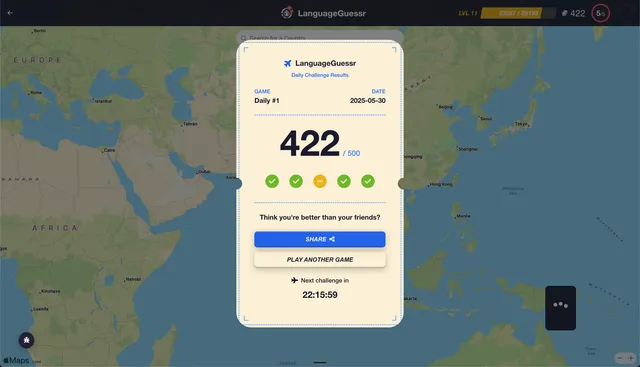
LanguageGuessr
Name where a language is spoken from audio

Countryle
Deduce a country from its attributes

Worldle
Distance and direction hints, with countries
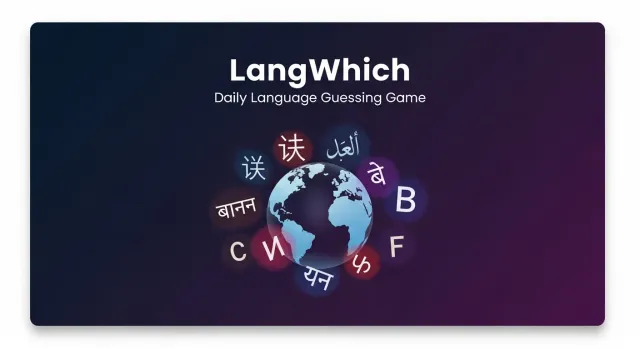
LangWhich
Five words, five languages, 30 seconds: name the language each one is written in.
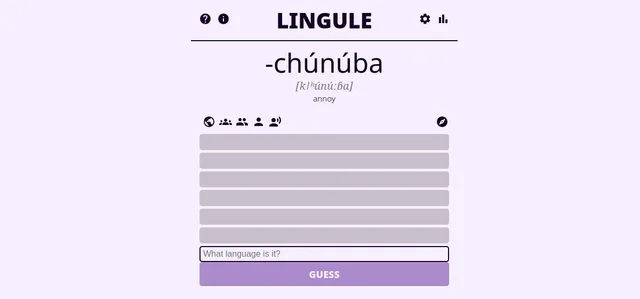
Lingule
See one word in a mystery language and work out which language it is, in six guesses.
Militarydle
Name the country from a chart of its armed forces, in six guesses.

ArchiGuesser
Name the day's building or architectural project from its pictures.