Learnle
Rate itGuess the number behind one new fact a day in five tries.
on learnle.net
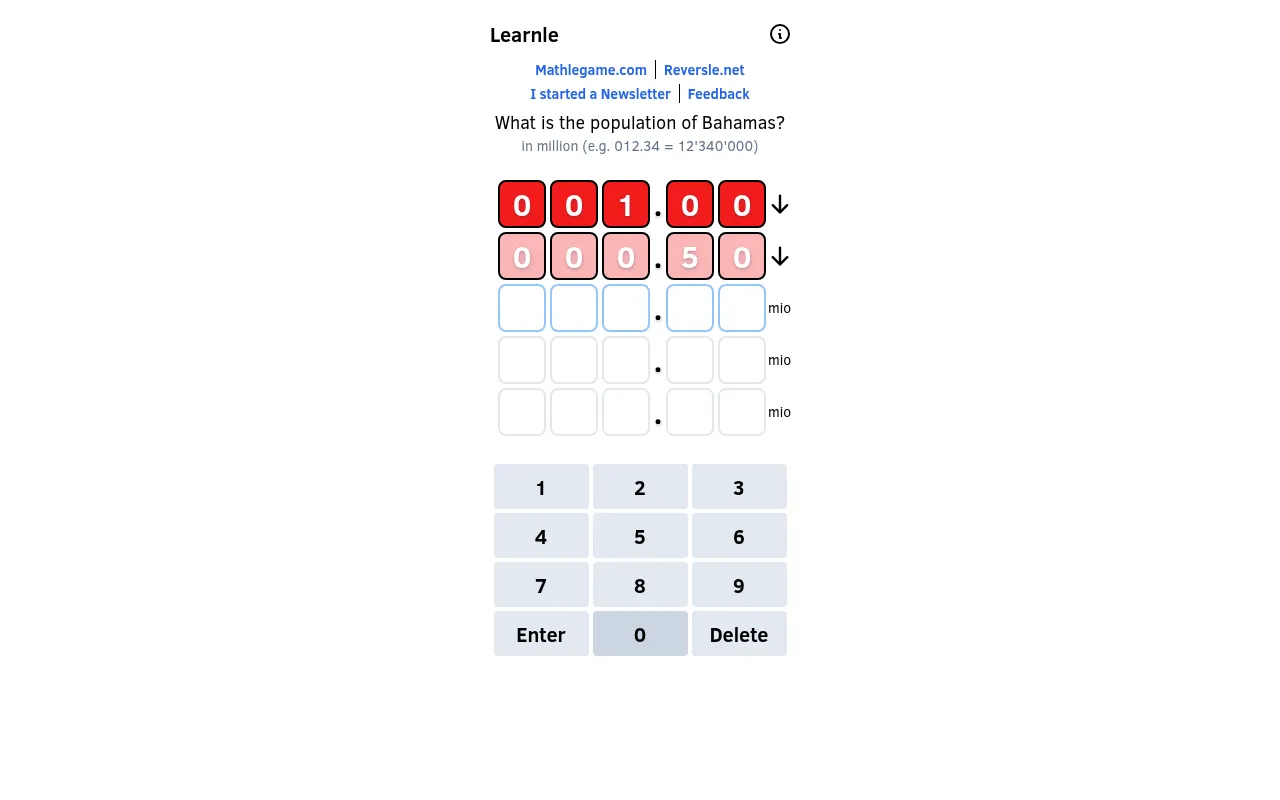
Learnle is a small daily estimation game. Each numbered puzzle asks one question whose answer is a number, and you have five guesses to get close. An arrow says go higher or lower, and the colour of the row shows how far off you are, so the exact figure is not required.
About Learnle
Learnle's idea is to learn one new fact a day by guessing it. Each puzzle asks a single question with a numeric answer, such as the population of the Bahamas on 5 November 2026, and gives you five guesses.
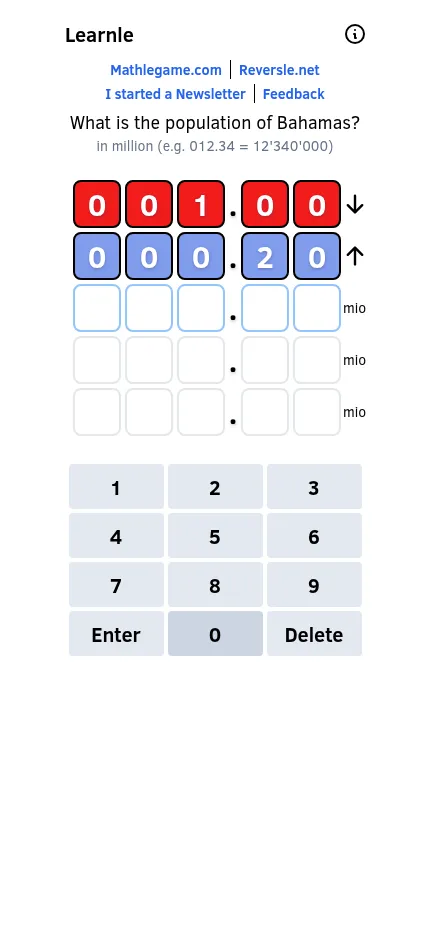
Answers are typed on an on-screen number pad into five boxes with a fixed decimal point, three digits before it and two after. For a population question the unit is millions, so 000.50 means half a million people. After each guess the row turns red when you are too high and blue when you are too low, deeper the further off you are, and an arrow beside it points the way to go.
You do not have to hit the exact number. The share card is headed with the puzzle number and shows your rows as coloured squares, and the game keeps your number of tries and average time on the device.
Learnle is made by Kiru, who also makes Mathle and Reversle, and its help page still calls it work in progress. It has no ads and no sign-up. It suits players who like quick estimates and want one real figure to think about each day.
How to play Learnle
- Open learnle.net and read today's question and its unit.
- Tap the digits of your first guess on the number pad, then press "Enter".
- Read the row. Red means too high, blue means too low, and a deeper shade means further off.
- Follow the arrow and narrow your guess, up to five tries in all.
- Share your coloured result card, which carries the puzzle number.
Screenshots

Tips
- Mind the decimal point. Populations are in millions, so a small country sits well below 001.00.
- Think in orders of magnitude first. Getting the number of digits right matters most.
- Use the shade, not just the arrow, to decide how big your next step should be.
Questions
How many guesses does Learnle give?
Five.
Do I need the exact number?
No. The colours show how close you are, and getting close counts.
What do the colours mean?
Red means your guess was too high and blue means too low. The deeper the colour, the further off you were.
Ratings and reviews
No ratings yet. Be the first to rate Learnle.
Games like Learnle
HowMany
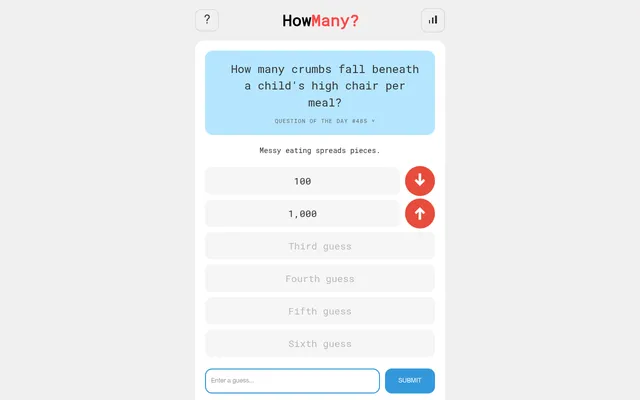
Also one numbered how-many question a day, with a one-line hint to steer your estimate.
Tenish
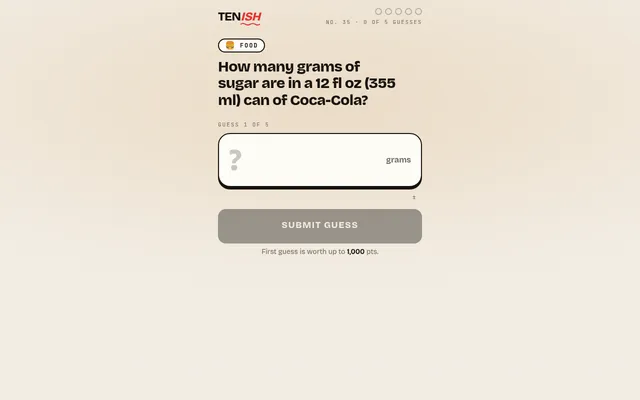
Tenish gives one number-answer trivia question daily and five guesses, which is about as close to Learnle as…
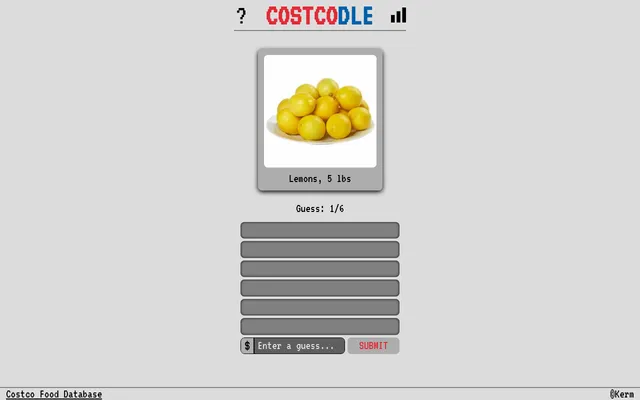
Costcodle
Higher or lower arrows on a single figure again, but the number is the price of a Costco food item.
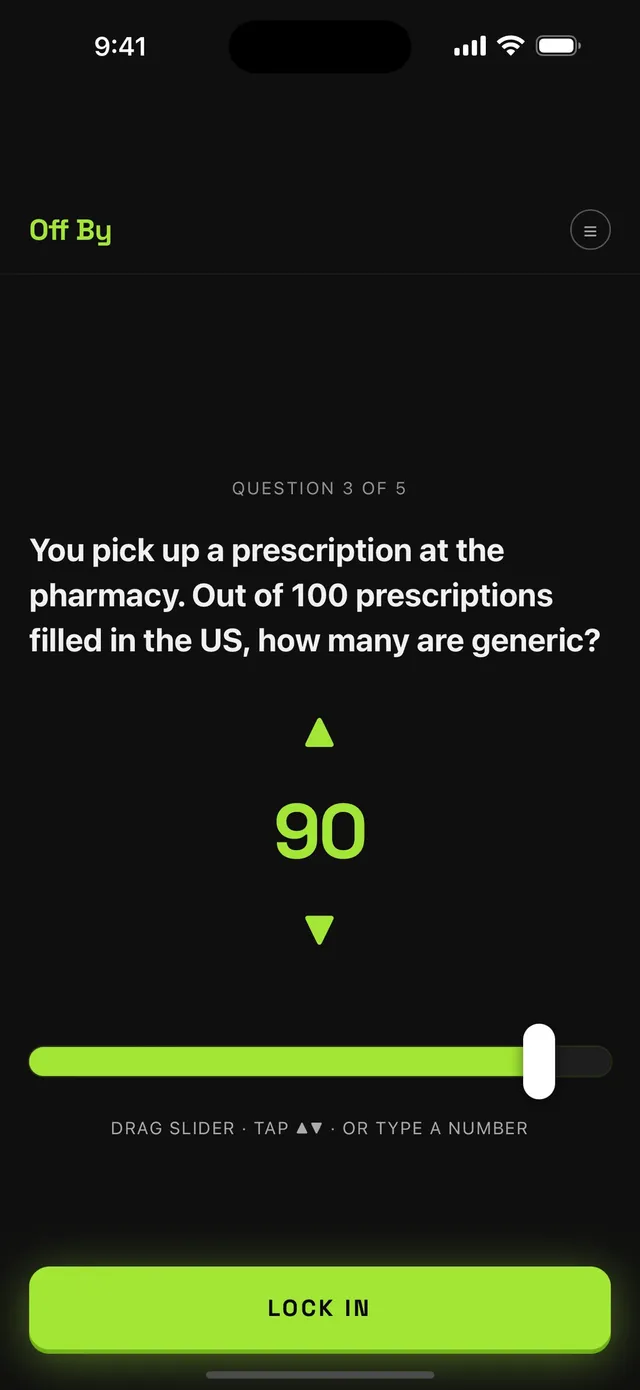
Off By
Five real-world number questions instead of one, scored out of 500 and set against the crowd's average.
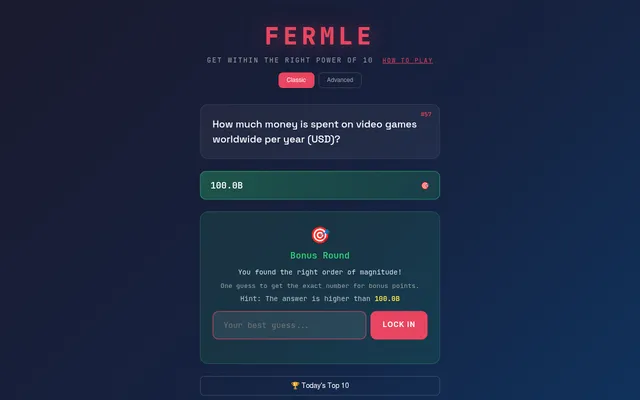
Fermle
For players who enjoy reasoning about scale. Its Classic mode asks for the right power of ten in five tries.
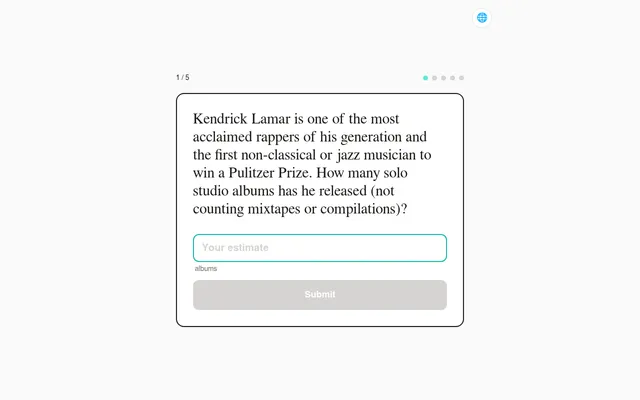
Estimania
Five numerical trivia questions a day on a log scale, with leaderboards.
Mathle
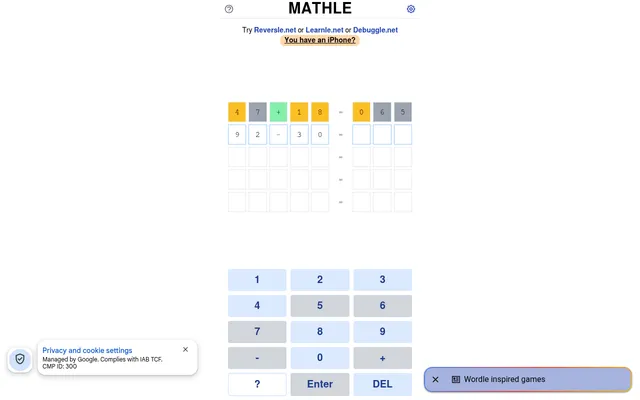
Made by the same developer. A hidden two-digit sum to find in five tries, in the same tidy layout.

How Close?
Five real-world numbers a day: slide to your guess and score by how close you land.