Plausible
Spot the real definition of an obscure word among five fakes written by other players.
Every day: One obscure word a day, the same for everyone: pick its real definition from six, the other five being fakes written by players the day before, and optionally write a fake definition for tomorrow's word. New puzzle: 23:00 UTC as of October 2026 (midnight UK time); the home page shows a countdown to the new word.

Plausible is a daily dictionary game in the spirit of Fictionary and Balderdash. Each day brings one obscure word with six definitions, and only one is real; the rest were written by players to fool you. Find the real one in as few tries as you can, then write your own fake for tomorrow's word.
About Plausible
Plausible puts one rare word on its home page each day, with its pronunciation, for example tupik /ˈtuːpɪk/. You are shown six definitions. One comes from the dictionary and five were written by other players the day before, each trying to sound like the real thing. You pick until you find the true one, and the fewer attempts you need, the better your score. Afterwards you see how you did against the day's other players.
The second half of the game is optional: writing a fake definition for tomorrow's word. Your fake is shown to players the next day, and the more of them pick it, the higher it ranks on the daily leaderboard. Because not every fake is shown to the same number of players, the site ranks them with a pairwise Elo system: each vote lifts the chosen definition and lowers the others it was shown beside.
The game runs in English and Dutch, and the home page counts down to the next word. Logging in or signing up is offered for keeping your scores and submitting definitions.
It suits players who like word trivia and party games such as Balderdash, and anyone who enjoys writing a convincing bluff.
How to play Plausible
- Open plausiblegame.com and press Play this word to see the day's word and its pronunciation.
- Read the six definitions and pick the one you think is real.
- If you are wrong, pick again until you find it; fewer attempts means a better score.
- Compare your result with the day's stats for other players.
- If you like, write a fake definition for tomorrow's word and check the leaderboard the next day to see how many players it fooled.
Tips
- Look at the word's pronunciation and spelling for hints of its language of origin, then ask which definitions fit that origin.
- Player-written fakes often sound too neat or too funny; dictionary definitions tend to be dry and specific.
- When writing a fake, copy dictionary style: a plain, short definition with a precise detail is more convincing than a joke.
- Check the leaderboard to see which fakes fooled the most players; it shows what works.
Questions
Where do the fake definitions come from?
Other players write them the day before, for that day's word. The five most convincing sit beside the real one.
Do I need an account?
You can play the day's word from the home page. Logging in or signing up is offered for keeping your scores and submitting your own definitions.
When does the word change?
Once a day. As of October 2026 the countdown on the home page ends at 23:00 UTC, which is midnight UK time.
Is Plausible in other languages?
Yes. Besides English there is a Dutch version.
Games like Plausible
Bluffpedia
Also a daily game of telling the real text from convincing fakes, with Wikipedia summaries.

Cluno
A short daily word riddle for players who enjoy definitions and clue reading.
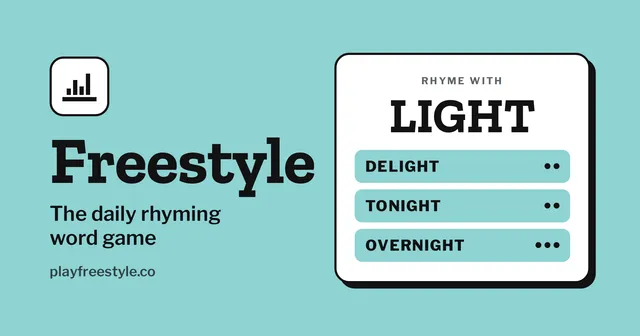
Freestyle
Another daily game built around one word, where you write answers rather than only guess.
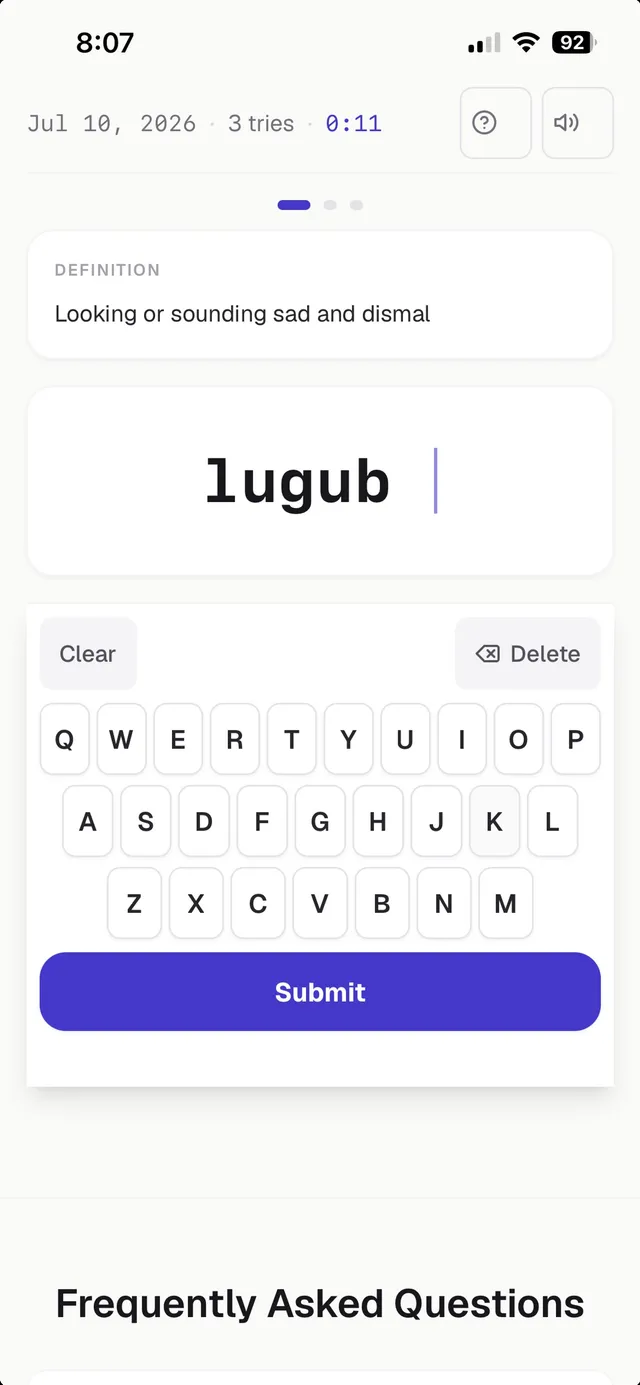
No Spell Check
Hear a hard word, then spell it with no hints and no autocorrect.
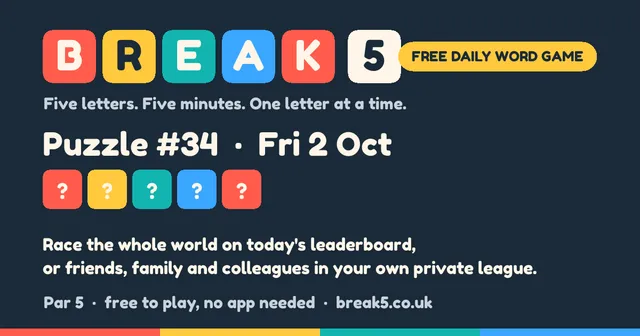
Break 5
Turn one five-letter word into another, one letter at a time, against the clock.

CHN LNK
Reveal a chain of linked words one letter at a time, with five lives.
ClueDay
Six letters, five clues: name the day's mystery word as early as you can.
Cobble
Use up all of the day's letters with two short words.