Propagandle
Rate itJudge real conspiracies, debunked claims and invented cover stories in a five round daily briefing.
on propagandle.com
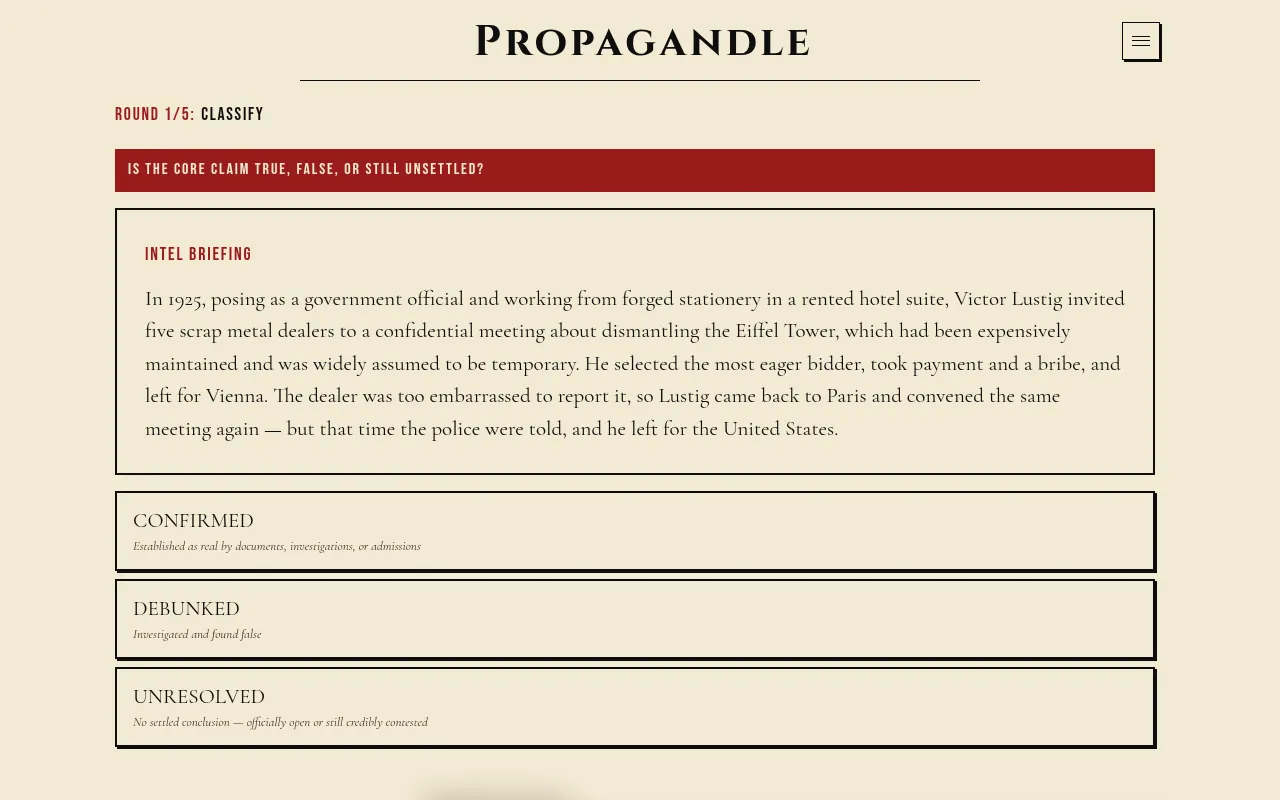
Propagandle is a free daily trivia game about conspiracies, cons and cover-ups. Each day's numbered briefing has five rounds: you rule on whether claims were confirmed, debunked or never settled, tell a real case from an invented one, and name the subject of a secret file from its clues.
About Propagandle
Propagandle is styled as an intelligence briefing on cream paper with red stamps. Each day opens a numbered file, and the first briefing went out on 1 July 2026. The archive lists every day since then without a gap, so No. 123 fell on 31 October 2026.
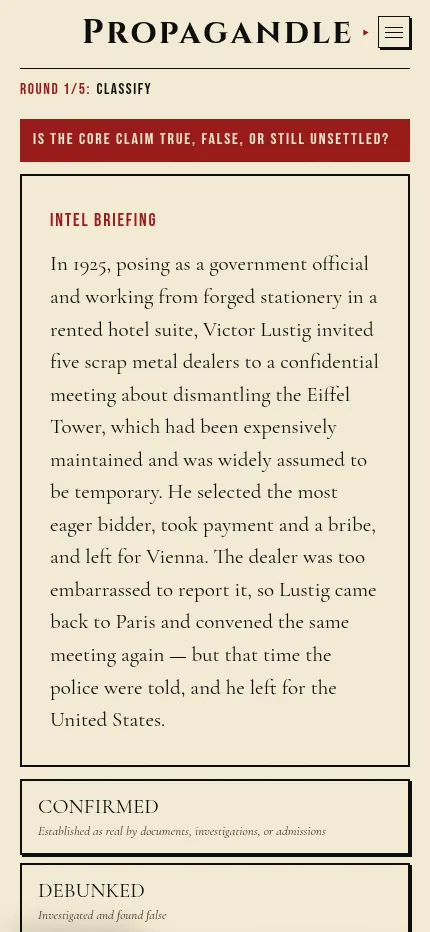
The first three rounds are "Classify" rounds. You read a short intel briefing about a claim, such as a con man selling the Eiffel Tower for scrap in 1925, and decide whether its core is "Confirmed" by documents or admissions, "Debunked" after investigation, or "Unresolved" because it is still open or credibly contested. Round four is most often "Real or Fabricated": two case summaries, one from the record and one written for the game, and you pick the one that happened. The game also has a "Sequence" round that asks you to put events in order with the earliest first. The closing "Dossier" round unseals clues one at a time about a single subject. Naming it by the third clue scores two points and by the fifth scores one.
After each answer a "Rabbit Hole" panel opens with the story behind the case and a link to a source. The site says real cases come from declassified documents, FOIA releases, investigative journalism and official archives. Invented ones are written to be odd enough that nobody leaves misinformed, and none ties a living person to anything outside the public record.
There is no account. Scores and streaks are kept under an anonymous ID, the end screen gives a result to share and teases tomorrow's case, and the case file archive lets you replay earlier briefings. It suits readers of Cold War history, intelligence stories and odd footnotes who like a quiz that rewards a sceptical eye.
How to play Propagandle
- Open the site and press "Begin Daily Briefing".
- In each of the three "Classify" rounds, read the intel briefing and mark the claim "Confirmed", "Debunked" or "Unresolved".
- In round four, read both case summaries and pick the one that actually happened (or order the events, earliest first, on a "Sequence" day).
- In the "Dossier" round, unseal clues one at a time and submit the subject's name. By clue three it is worth two points, by clue five one.
- Open the "Rabbit Hole" after each answer for the story and its source, then share your result.
Screenshots
Tips
- "Unresolved" is for cases that are officially open or still argued over. A claim that was looked into and found false is "Debunked".
- Invented cases often have tidy outcomes and neat programme names. Real ones tend to be messier.
- In the dossier round, commit once a clue narrows the field to one subject, since waiting past clue three halves the points.
Questions
Is Propagandle free?
Yes. It runs in the browser with no account, no charge and no ads.
Are the conspiracies real?
Some are and some are not. The real ones come from documents, investigations and admissions. The invented ones are written for the game, and each round's Rabbit Hole panel tells you which was which with a source.
When does a new briefing arrive?
Once a day, numbered from 1 July 2026. The site does not state the hour.
Can I play past days?
Yes. The case file archive lists every earlier briefing to replay.
Ratings and reviews
Games like Propagandle
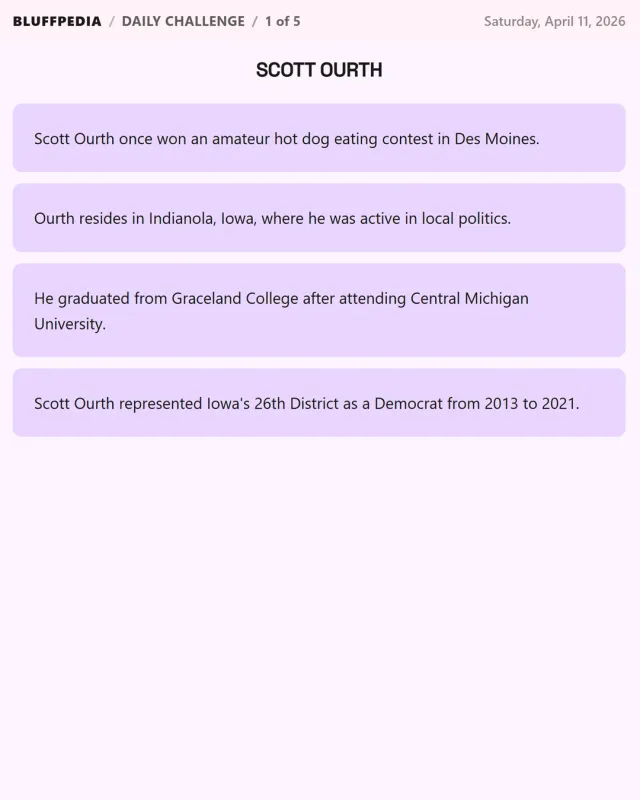
Bluffpedia
Its daily rounds often ask you to pick the real Wikipedia summary or spot the fake article among real ones…
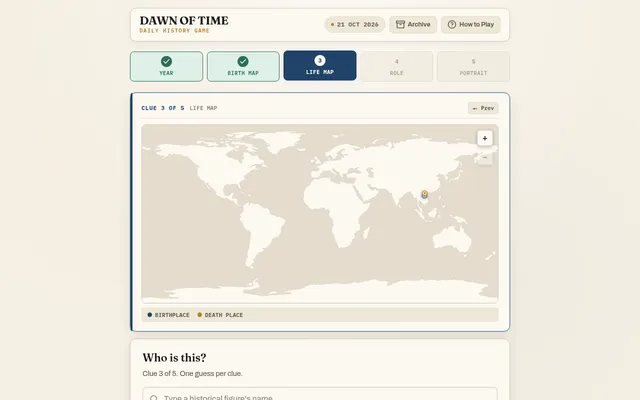
Dawn of Time
Name one historical figure a day from up to five clues, much like the dossier round.
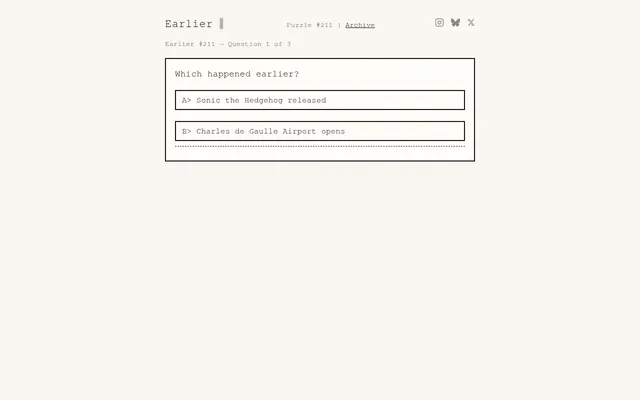
Earlier
Three quick history judgments a day on which event came first.
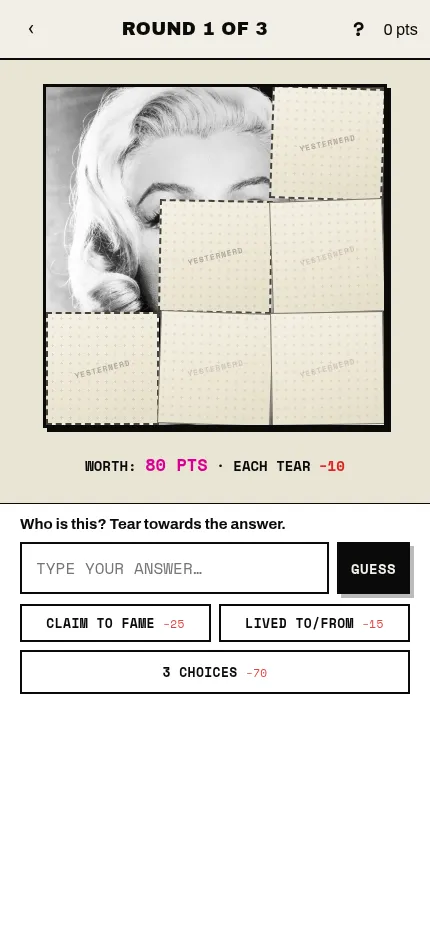
Yesternerd
For a longer history session: four small games a day on faces, lifelines, relics and threads.
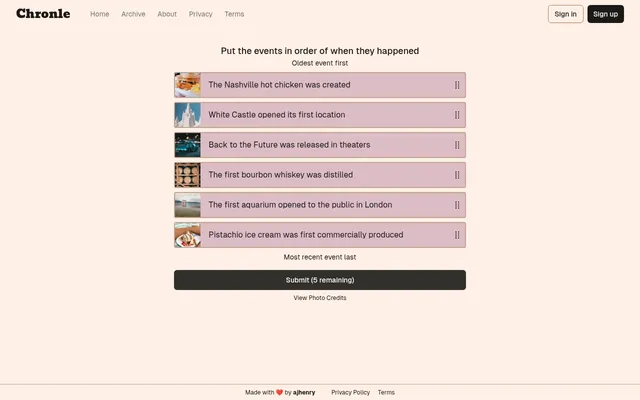
Chronle
Six events with photos to drag into order. Try it if the sequence round was your favourite.
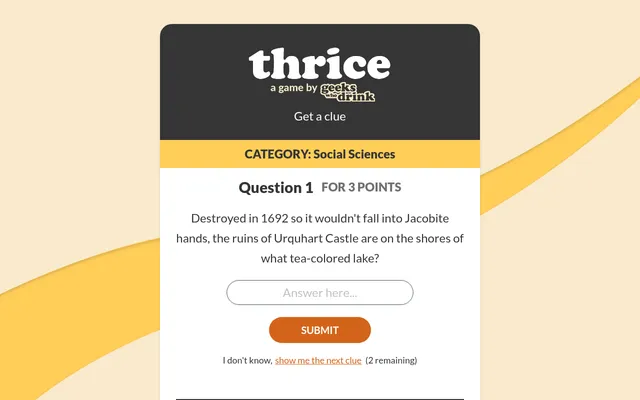
Thrice
Five trivia rounds a day where each answer has up to three clues, so an early guess pays.
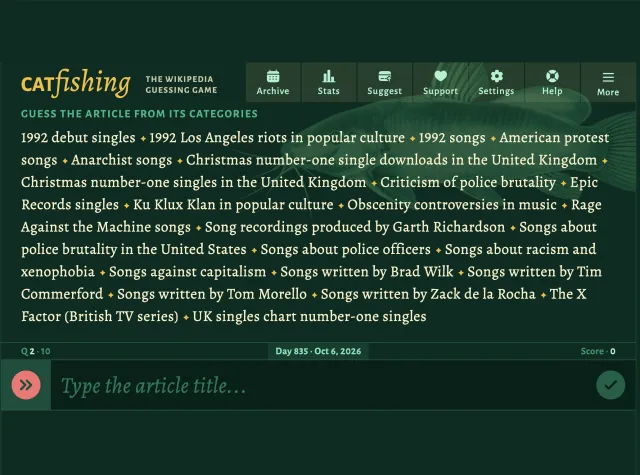
Catfishing
Guess Wikipedia articles from their categories alone, which rewards the same reading between the lines.

Chrono Trivia
Put the day's real events in the order they happened.