WhereTaken
Rate itName the country or territory where today's photo was taken, then earn stars in the bonus rounds.
on wheretaken.teuteuf.fr
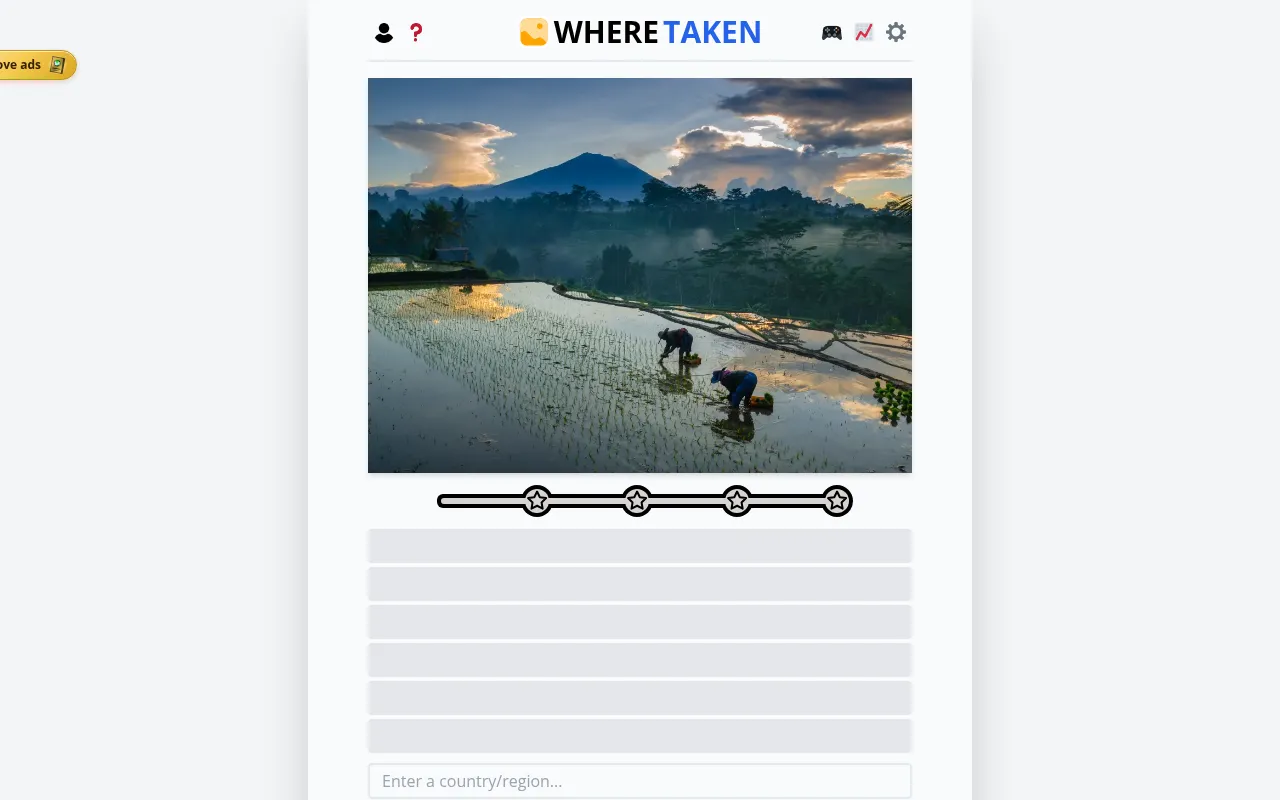
WhereTaken shows one photograph a day and asks which country or territory it was taken in. You get six guesses, and each miss shows the distance, a direction arrow and a proximity percentage. Solve it and up to four bonus rounds ask about the same place.
About WhereTaken
WhereTaken is one of the Teuteuf Games, the family of daily geography games that grew out of Worldle. Its rules page credits it to Ryan and Praveen. The game at this address now calls itself WhereTaken Classic, since Teuteuf launched a newer WhereTaken at wheretaken.com where you pin five photos on a map. There is also a US edition that asks for states.
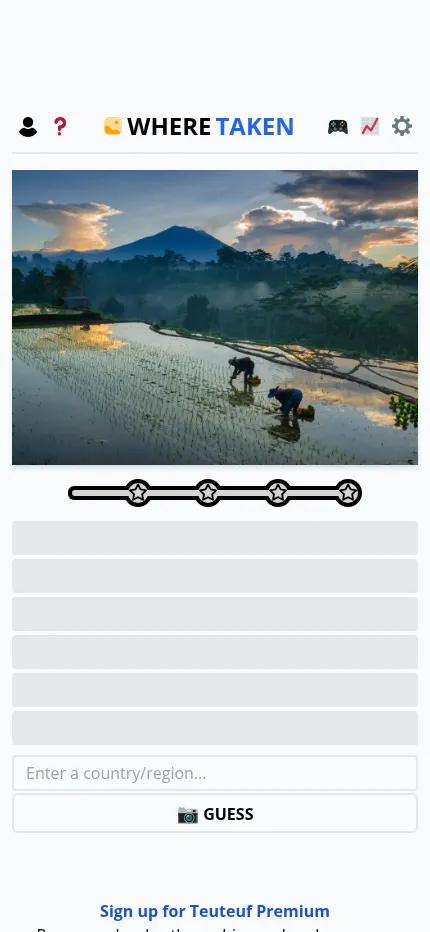
Each day you get one photo, such as a street, a coastline, a market or terraced fields with a volcano behind them. You type the country or territory you think it shows and have six tries. A wrong answer shows how far away the right one is, an arrow pointing toward it and a proximity percentage, which reads 100 on target and 0 on the far side of the world. Distances run between the centres of the two territories, so even neighbours show a gap, and that gap hints at how big the answer is.
Answers follow the ISO 3166-1 list, so Scotland is no valid guess but the United Kingdom is. Once the main round is done, a row of four stars opens bonus rounds one after another. They ask which city in the country the photo was taken in, which landmark belongs to it, where it sits on a map and what its capital is. The game's FAQ says the place is picked at random every day. A free Teuteuf account saves your stats across devices, and the paid Premium membership removes the ads and opens the archive.
WhereTaken suits players who enjoy reading a photo for clues like signs, plants, cars and buildings, and who would rather name a country than place an exact pin.
How to play WhereTaken
- Look at the day's photo for clues such as signs, plants, vehicles and buildings.
- Type the country or territory you think it shows and press "Guess".
- After a miss, read the distance, the direction arrow and the proximity percentage.
- Narrow it down within your six guesses.
- Finish the main round to open the bonus rounds, then play them in order to collect up to four stars.
Screenshots

Tips
- Read every sign and number plate; the language and script narrow things fast.
- Look at which side of the road traffic uses.
- Remember distances are between country centres, so a large gap to a neighbour means a big country is involved.
- Use broad guesses first and let the arrow steer you; a central country splits a continent well.
- Territories such as islands count as separate answers when they have their own ISO code.
Questions
When is a new WhereTaken available?
Every day at midnight in your device's local time.
What is the difference between WhereTaken Classic and the new WhereTaken?
Classic, at wheretaken.teuteuf.fr, asks you to name the country of one photo and adds bonus rounds. The newer game at wheretaken.com has five photos a day and scores you on how close your map pin is.
How are distances worked out?
Between the centre of the country you guessed and the centre of the answer, not between borders.
Why is Scotland not accepted?
Answers follow the ISO 3166-1 country list, where Scotland is part of the United Kingdom.
Can I play past games?
Yes, with a Teuteuf Games account and a premium membership, which also removes ads.
Ratings and reviews
Games like WhereTaken
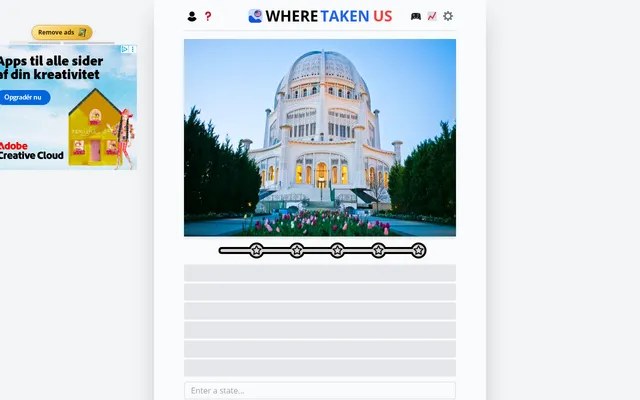
WhereTaken US
The same photo game from Teuteuf with US states as answers, plus four bonus rounds about the state.
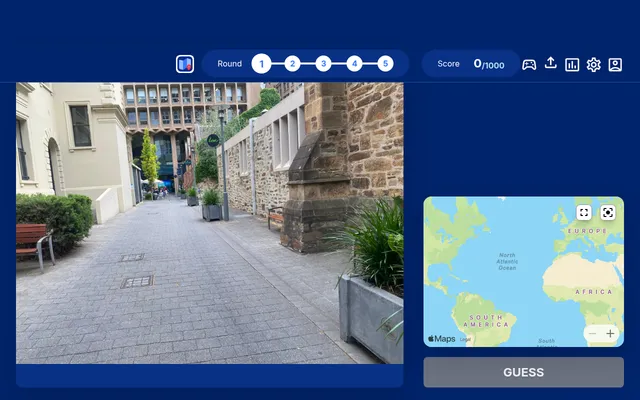
WhereTaken (pin on the map)
Teuteuf's newer WhereTaken. Five photos a day, and you pin each one on a world map for points.
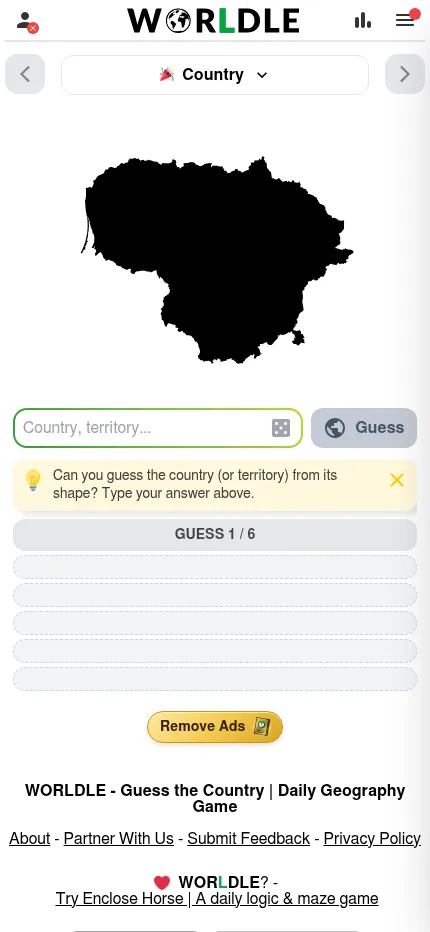
Worldle
Where this family began: name the country from its outline with the same distance and arrow hints.
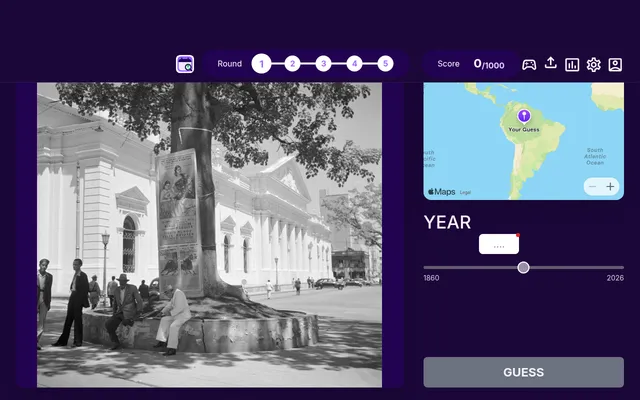
WhenTaken
Five photos to pin on the map, each with a year to set on a slider.
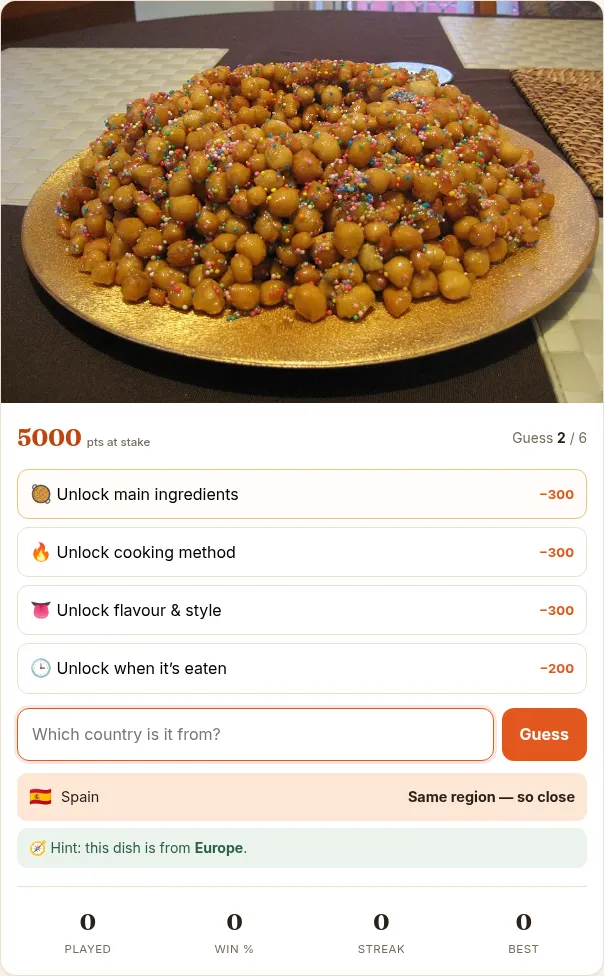
Tastedle
A photo of a dish instead of a place, and six guesses to name its country.
Picle
For fans of reading old photographs, this one uses The Times' archive and asks for the year too.
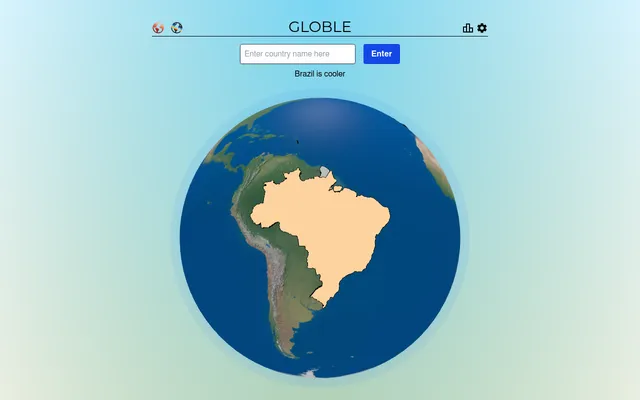
Globle
Hunt a mystery country on a globe that colours each guess by closeness.
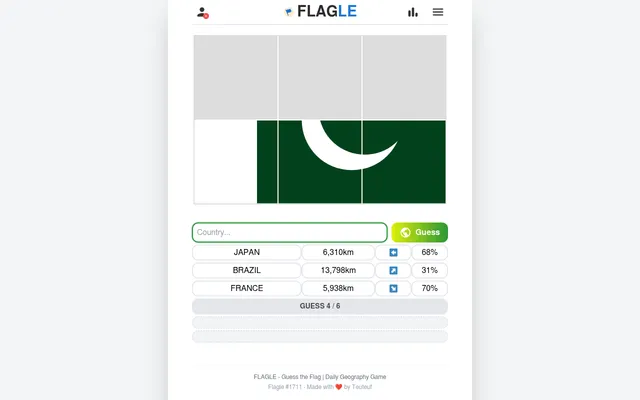
Flagle
Name the country from its flag in six guesses as the flag is uncovered piece by piece.