Ordo
Swap coloured tiles and read the marks around them until the grid falls into place.
Every day: One coded grid of coloured tiles each day, the same for everyone; swap tiles and read the clues until the hidden arrangement is found, then compare guesses and swaps with friends. New puzzle: Once a day, in the morning (the listing does not state the time).
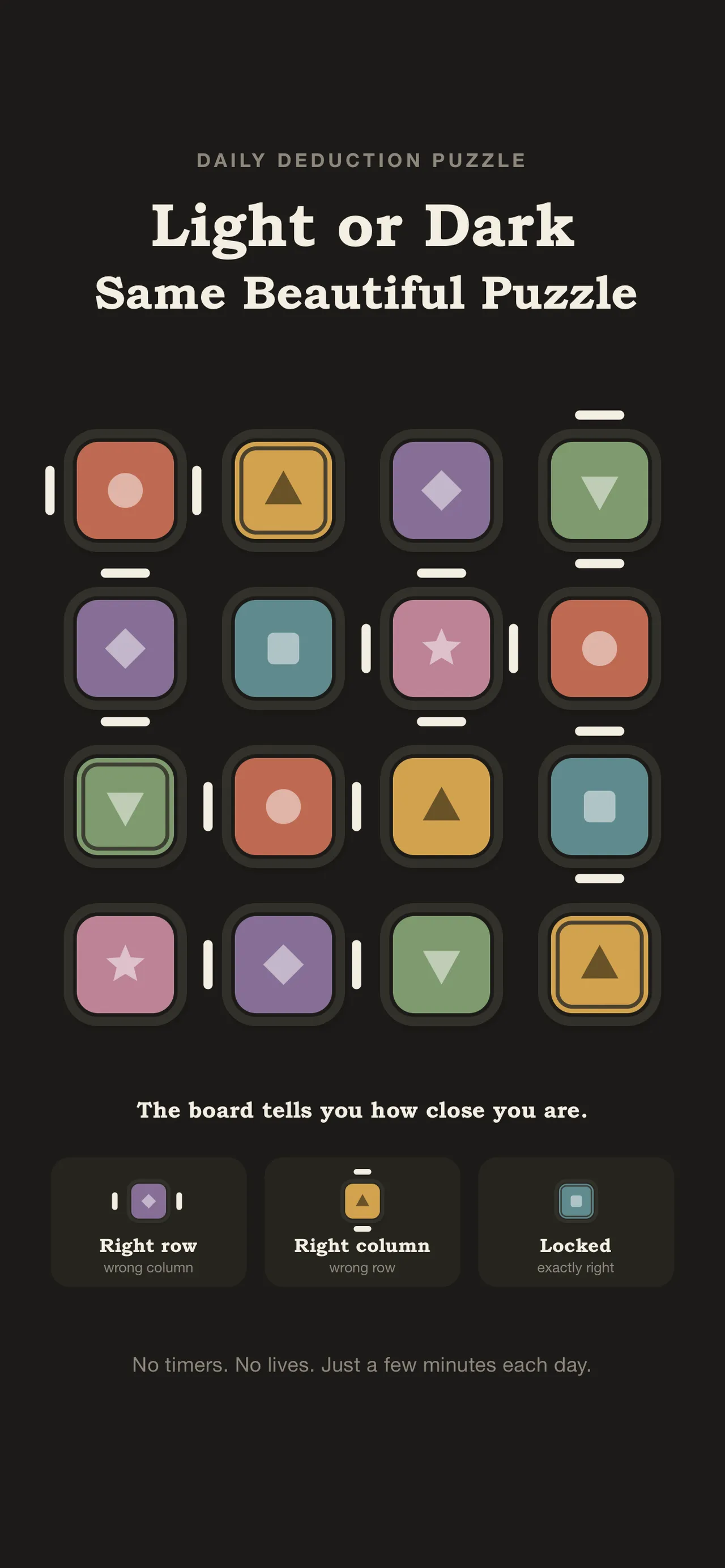
Ordo is a daily deduction puzzle on iPhone and the web. Each day brings one shuffled grid of coloured, shaped tiles with a single hidden solution, the same for everyone. You swap tiles and submit guesses; correct tiles lock, and small marks show whether a tile is in the right row or the right column.
About Ordo
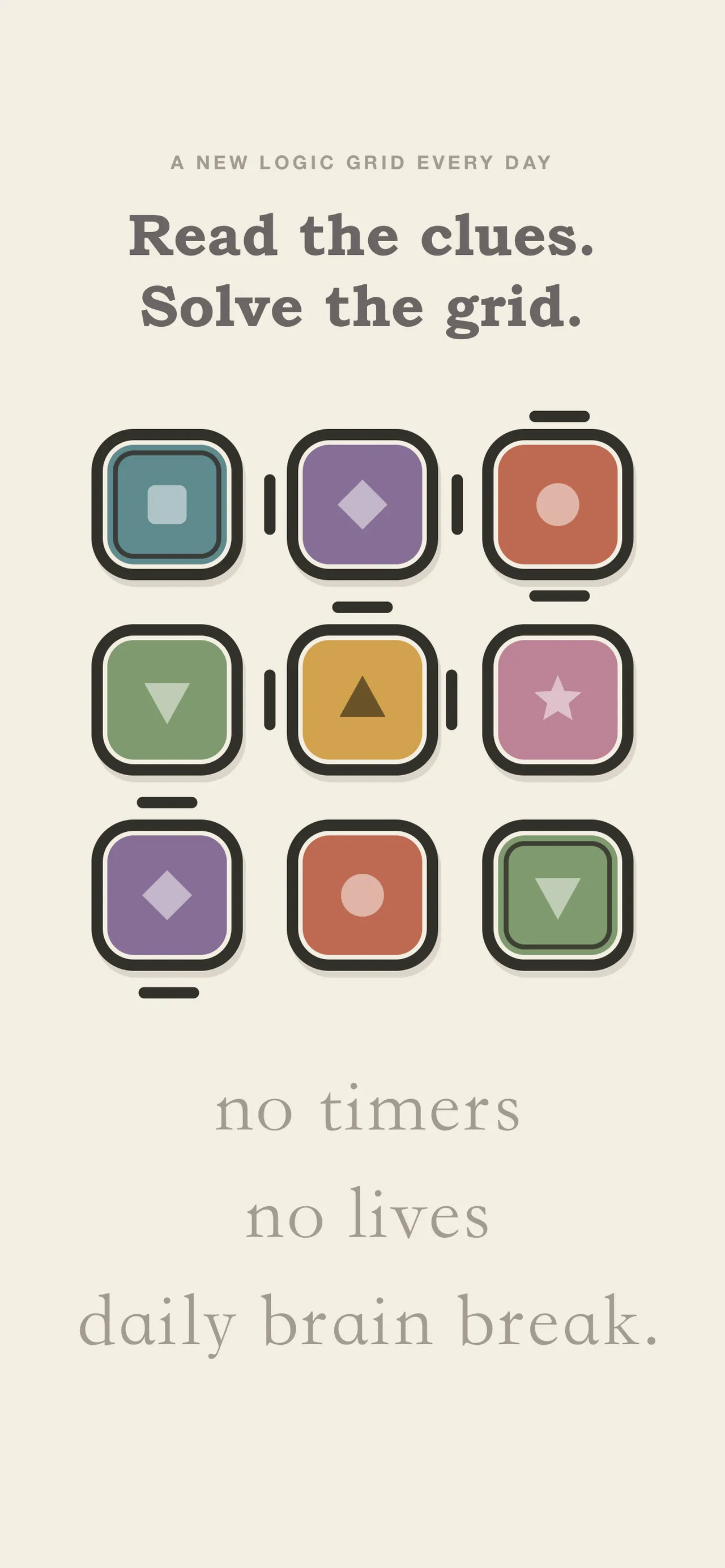
Ordo works like Mastermind laid out on a grid. The day's puzzle is a square of coloured tiles, each with a simple shape, shuffled out of order. Somewhere there is one correct arrangement. You swap tiles to try a layout, and each guess gives feedback right on the board: a tile in exactly the right place locks with a heavy border, short bars beside a tile mean it is in the right row but the wrong column, and bars above and below mean the right column but the wrong row.
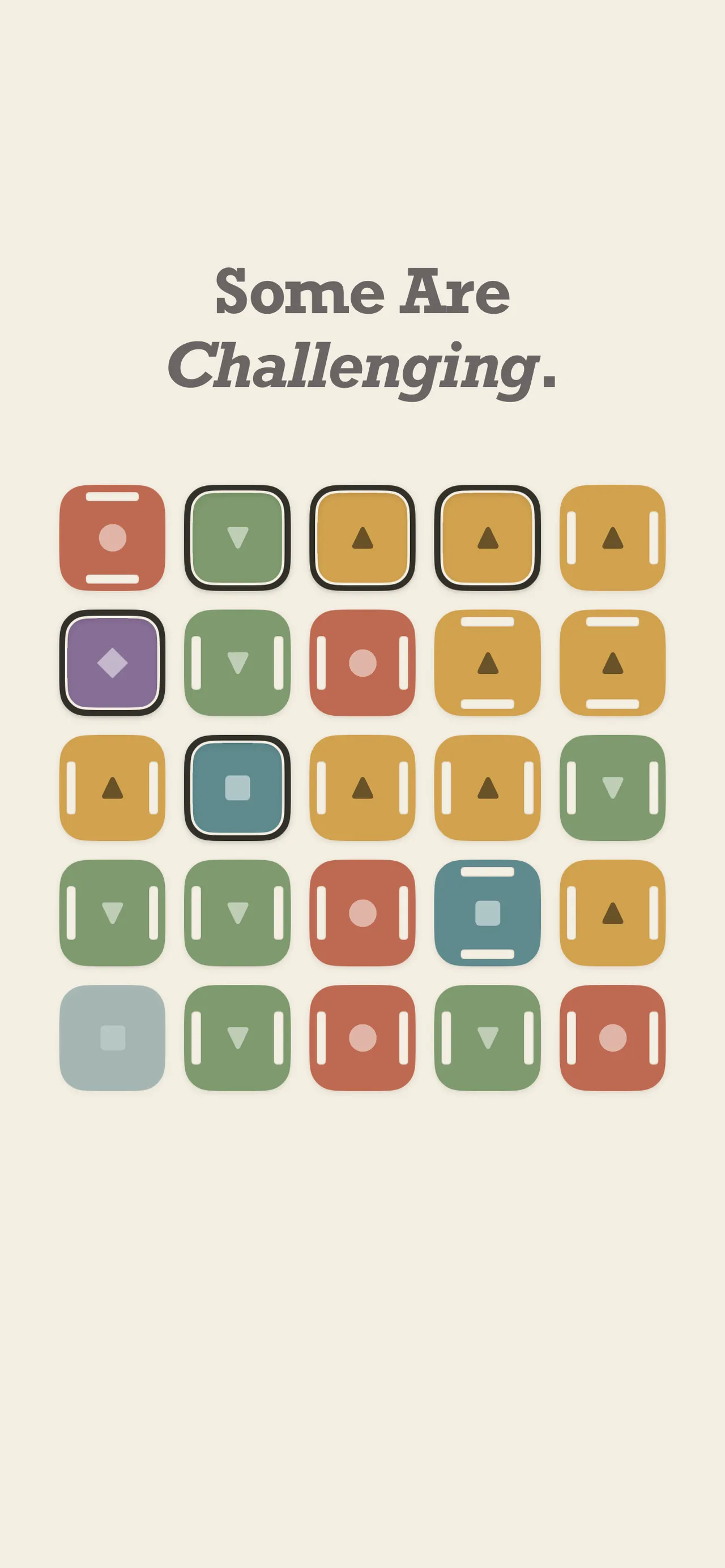
From those marks you reason out where everything belongs. A single locked tile can settle a lot, because it rules that colour out of the rest of its row and column. The daily has no timers, no lives and no penalty for experimenting; the score is how few guesses and swaps you needed, or a perfect first attempt. Grids range from small 3x3 boards to larger ones that the listing calls challenging.
Everyone receives the same puzzle each day, so results can be shared without revealing the answer. The app tracks guesses, swaps, streaks and perfect solves. An optional unlock adds the archive of missed days, a second, harder daily called Ordo Export with a guess limit, and advanced stats.
Ordo is made by John Davenport and came out on the App Store in July 2026; the day's puzzle can also be played on ordopuzzles.com. It has no ads, accounts or sign-ups. It suits players of code-breaking dailies who like a calm, visual puzzle.
How to play Ordo
- Open today's Ordo puzzle in the app or on ordopuzzles.com.
- Swap tiles to set up the arrangement you want to test, then submit it.
- Read the board: locked tiles are correct, side bars mean right row, top and bottom bars mean right column.
- Swap again using what the marks tell you, and repeat.
- Solve the grid in as few guesses and swaps as you can, then share your result.
Screenshots
Tips
- Treat each locked tile as a fixed point: no other tile of that kind can sit in its row or column.
- A tile marked right row only has to move sideways; one marked right column only up or down.
- Change several unknowns at once early on to gather more information per guess.
- Keep track of which marks a tile had in earlier guesses: a tile that was right row in one spot and wrong in another narrows its place.
Questions
Is the Ordo puzzle the same for everyone?
Yes. Everyone receives the same puzzle each day.
Is there a time limit?
No. The daily has no timers, lives or fail states.
Is Ordo free?
Yes, with no ads or account. An optional unlock adds the archive, the harder Ordo Export daily and advanced stats.
Can I play on the web?
Yes. Today's puzzle can be played on ordopuzzles.com as well as in the iPhone app.
Games like Ordo
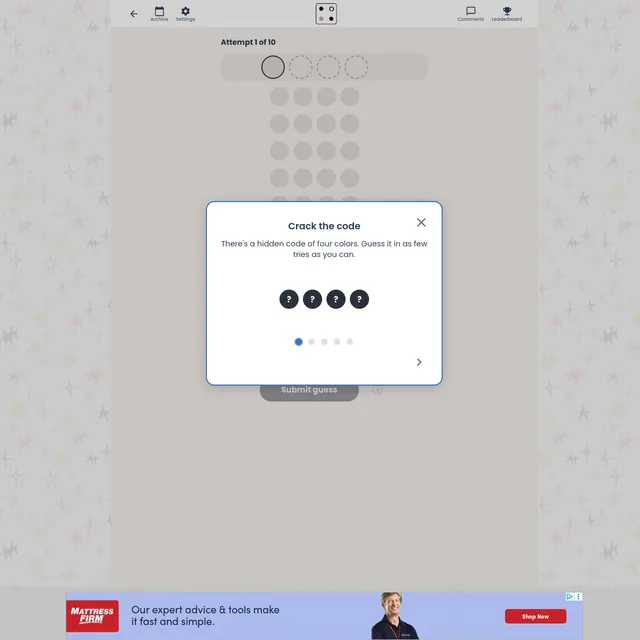
Code Breaker (Ponder Club)
Crack the day's colour code from feedback, Mastermind style

CodePop
Daily four-colour Mastermind in eight guesses
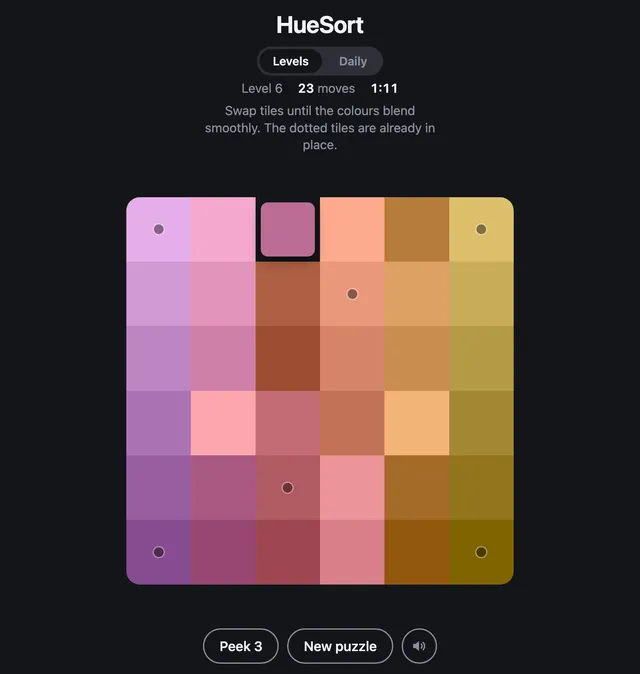
HueSort
Swap colour tiles into place, one board a day
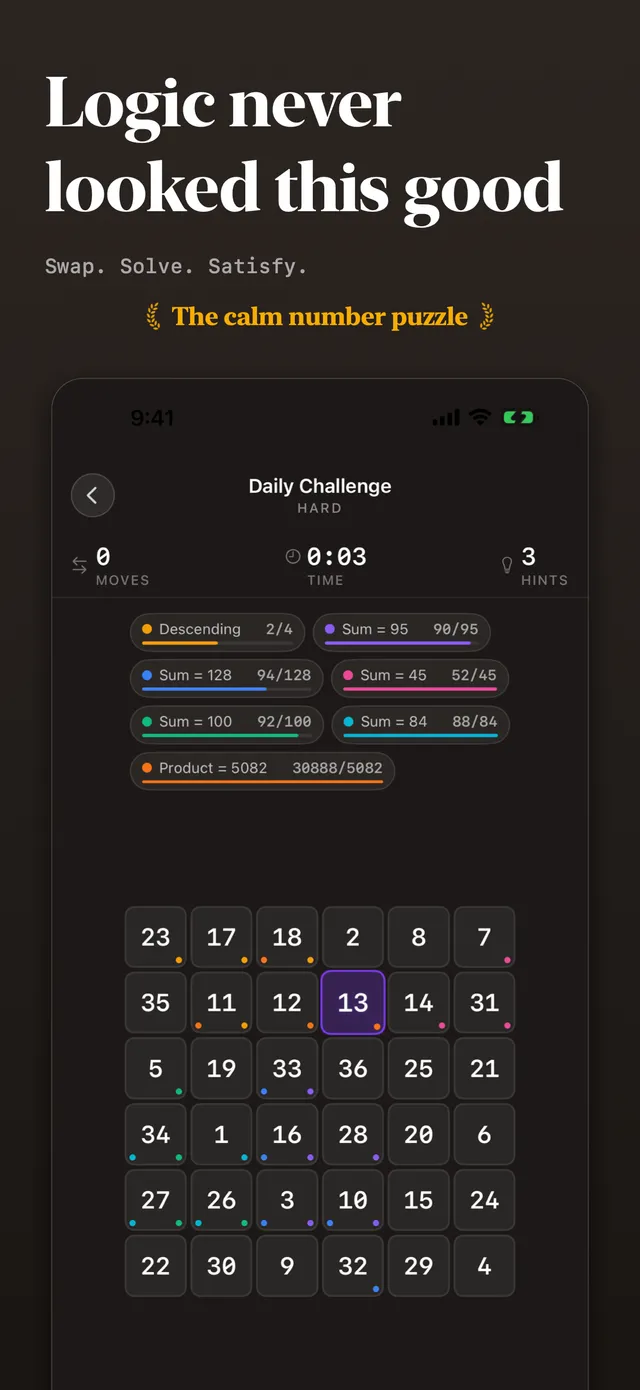
Mathlip
Swap tiles on a grid until every rule holds
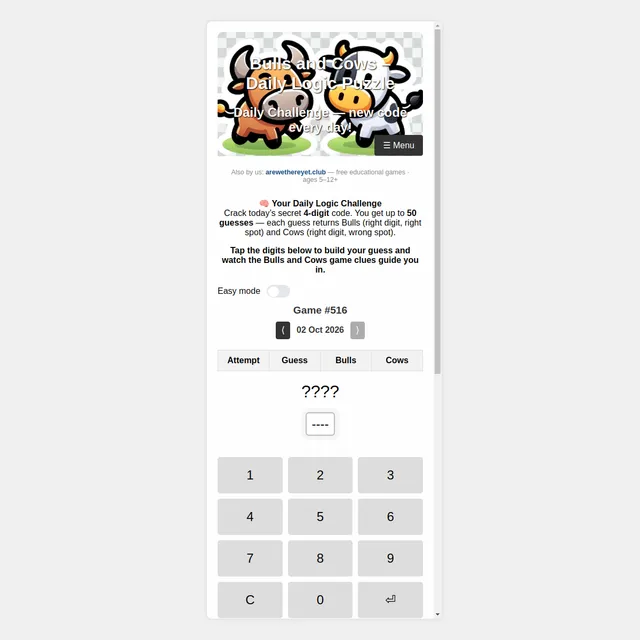
Bulls and Cows Game (bullsandcowsgame.com)
Deduce the day's shared code from clues

Ballast
Five crates weigh 1 to 5 kg: find which is which with as few weighings as you can.
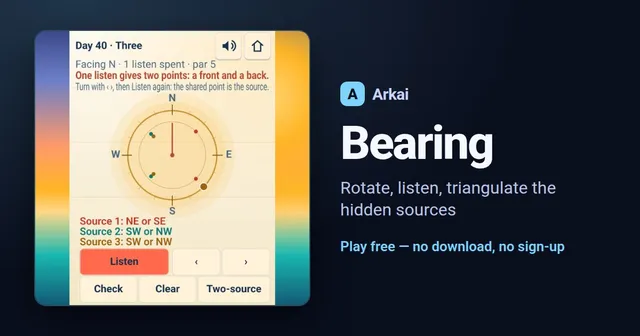
Bearing (Arkai)
Turn, listen, and triangulate two or three hidden sound sources around a 16-point compass.
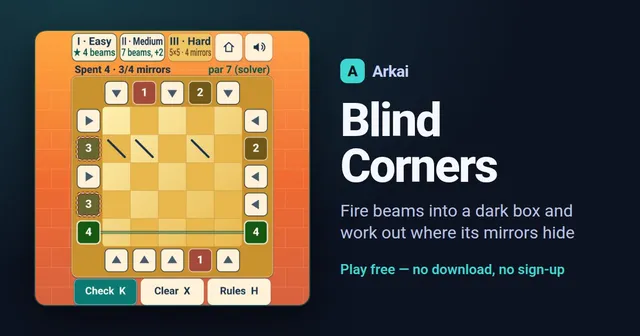
Blind Corners (Arkai)
Fire beams into a dark box and work out where its hidden mirrors sit.