MathGrid (PuzzleMadness)
Move the numbers and signs under the grid into place so every sum works.
Every day: A new dated MathGrid puzzle every day at each difficulty (Easy, Medium, Hard and Tough, plus a Mixed page), the same for every player, with scores on monthly and all-time leaderboards and earlier days in the archive. New puzzle: Once a day (the site does not state the time).
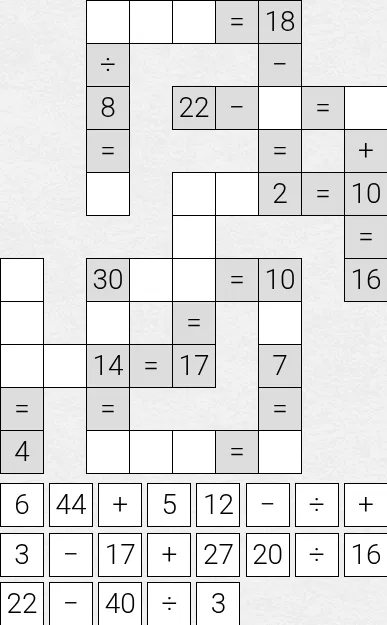
MathGrid on PuzzleMadness is a crossword of equations. The grid shows a few numbers, signs and equals marks, and a pile of number and symbol tiles waits underneath; you move every tile into the grid so each sum across and down is correct. Five MathGrid puzzles are published daily, from Easy to Tough plus a Mixed bonus.
About MathGrid (PuzzleMadness)
A MathGrid looks like a small crossword in which every entry is a sum such as 10 / 5 = 2, reading across or down, with the entries crossing at shared cells. Some cells are filled in from the start. The rest are blank, and the numbers and operators you need (plus, minus, times and divide) sit in a row of tiles under the grid. Every tile has to be used, and there is only one way to place them all so that every calculation is right.
It rewards a mix of mental arithmetic and crossword-style cross-checking: a tile that fits one sum also has to suit the sum it crosses. Today's Medium grid, for example, has 21 tiles to place, numbers from 3 to 44 among them.
PuzzleMadness is a free puzzle website run by Dewi, a software developer who started out making games for the PlayStation 2, Nintendo Wii and DS and now builds the site as a hobby. It carries dozens of puzzle types, from classic sudoku to newer logic grids, and each one gets its own dated puzzle every day at each difficulty. MathGrid comes in Easy, Medium, Hard and Tough versions plus a Mixed page, and the same day's MathGrid puzzle is shared by everyone who opens it.
The site checks your grid as you go and tells you when it is finished; it does not publish solutions. Each completed puzzle earns a score, and scores feed a monthly and an all-time MathGrid leaderboard, where only your best attempt at a puzzle counts. Older days stay in the archive, so a missed puzzle can still be played later and still counts toward the current month. Playing needs no account; a free registration gives you a username on the leaderboards and a cloud save. The pages carry adverts.
How to play MathGrid (PuzzleMadness)
- Open today's MathGrid page on PuzzleMadness and choose a difficulty from the menu above the grid.
- Pick a number or sign from the tiles under the grid and place it in an empty cell.
- Fill every blank so that each equation, across and down, is correct.
- Use every tile; when all the sums work, the puzzle is solved.
- The site tells you when the grid is complete and adds your score; registered players appear on the leaderboards.
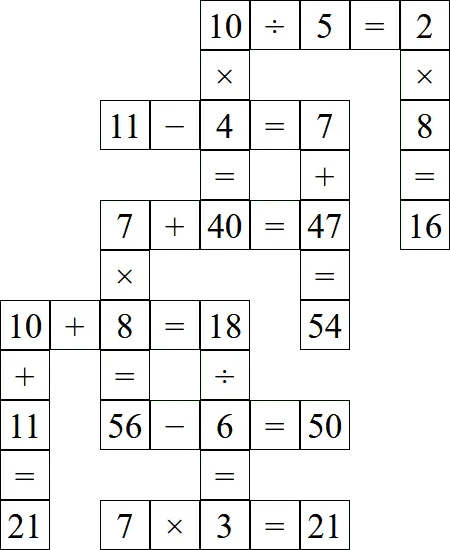
Screenshots
Tips
- Begin with sums that already have two of their three numbers: the missing one is a quick calculation.
- Watch the crossing cells, since one number often has to satisfy two equations at once.
- Count the operator tiles: if only one divide sign is left, it can go in only one equation.
- Missed a day? Earlier puzzles are in the archive, and finishing one still counts toward this month's leaderboard.
Questions
Can a MathGrid have more than one answer?
No. PuzzleMadness says there is only one correct way to place all the tiles.
When does a new MathGrid puzzle appear?
Once a day: each difficulty gets its own dated puzzle. PuzzleMadness does not state the exact changeover time.
Where can I see the solution?
PuzzleMadness does not publish solutions. The page tells you when your grid is correct and finished, or when you have made a mistake.
Is MathGrid on PuzzleMadness free?
Yes. It is free to play in a browser with adverts on the page, and registering for the leaderboards is free too.
Games like MathGrid (PuzzleMadness)
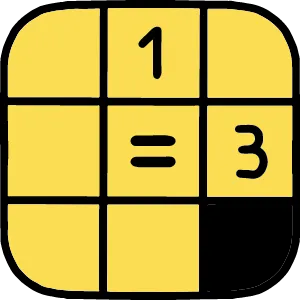
Crucimates (La Vanguardia)
La Vanguardia's daily crossword of sums made with number tiles
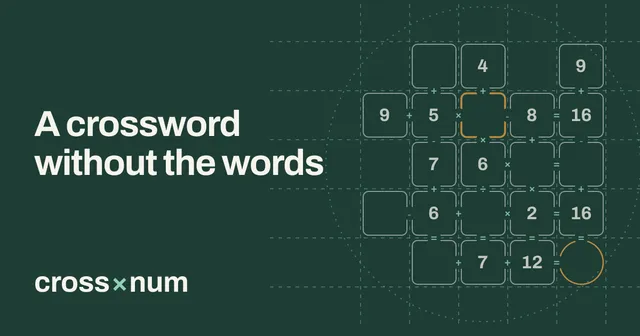
Crossnum
A daily grid of interlocking equations solved by deduction
Cross Number (Daily Mail)
A daily crossword with numbers instead of words
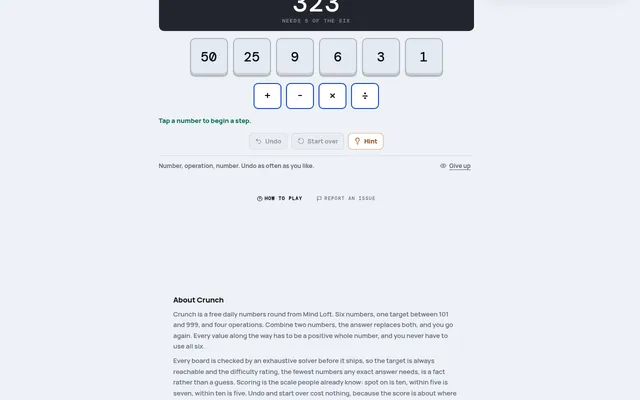
Crunch (Mind Loft)
Mind Loft's daily arithmetic target puzzle with four operations
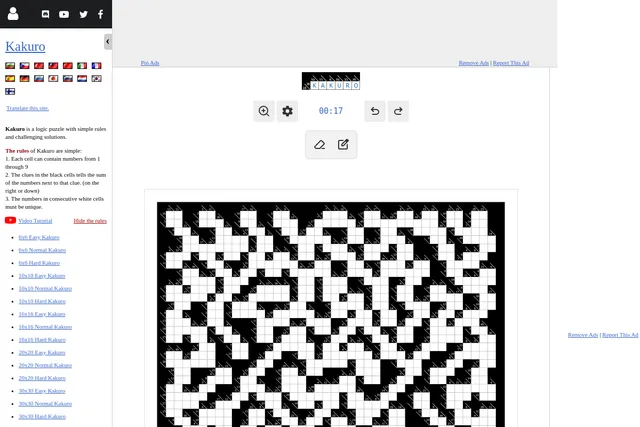
Daily Kakuro
A daily grid of sums where crossing runs check each other
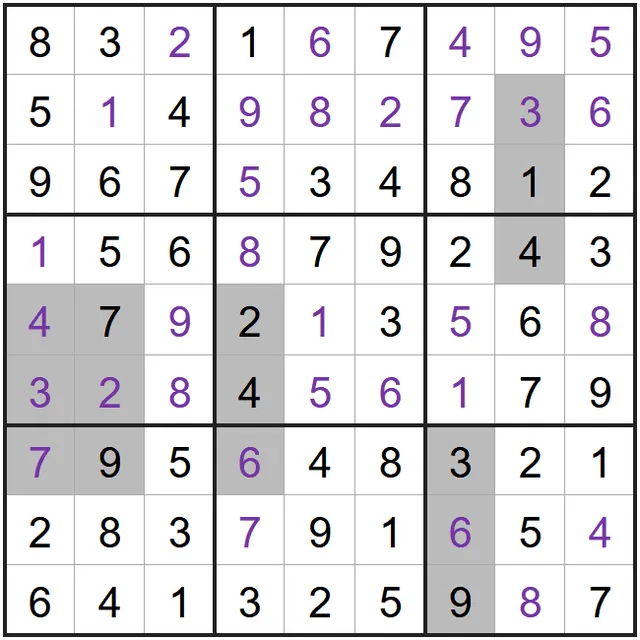
Addition Sudoku (PuzzleMadness)
A sudoku with grey blocks of cells that work as written-out addition sums.
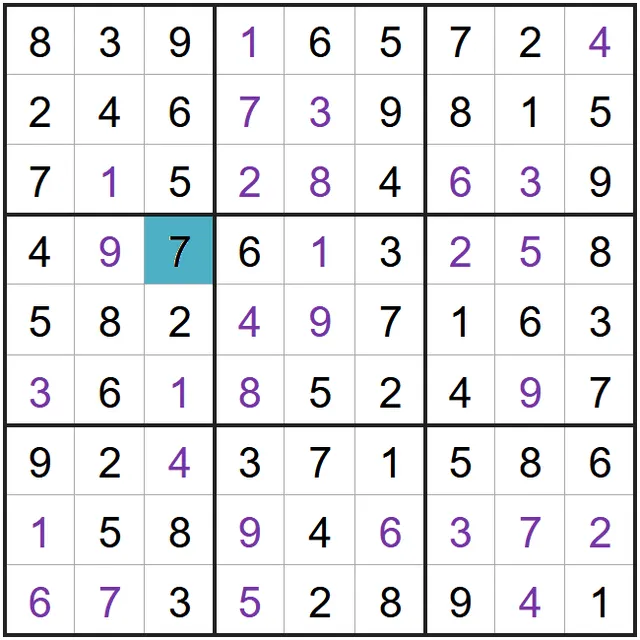
Anti King Sudoku (PuzzleMadness)
A sudoku where the same digit may never sit in two cells that touch, not even diagonally.
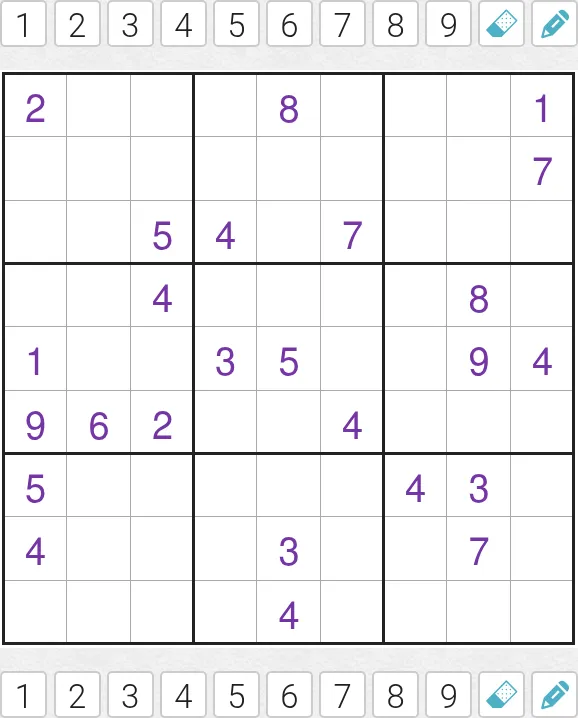
Anti Knight Sudoku (PuzzleMadness)
A sudoku where the same digit may never sit a chess knight's move away from itself.