Kakuro (PuzzleMadness)
A daily cross-sum grid: make every run add up to its clue with no repeated digit.
Every day: A new dated Kakuro puzzle every day, the same for every player, one for each size (Small, Medium, Large and Mixed); completed puzzles score on monthly and all-time leaderboards and past days stay in the archive. New puzzle: Once a day (the site does not state the time).
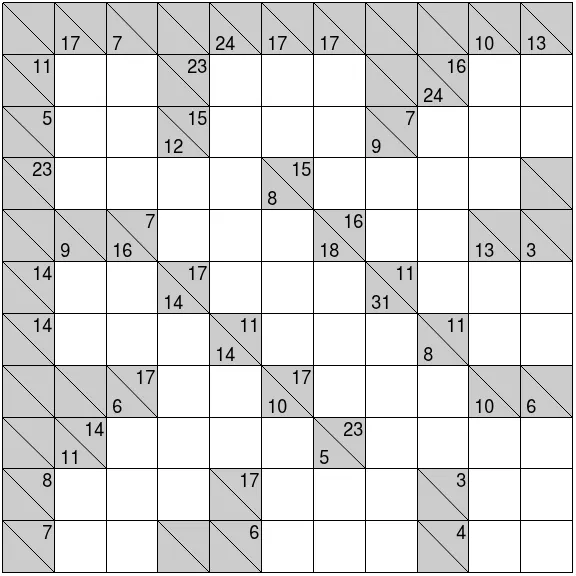
PuzzleMadness posts a new Kakuro puzzle every day, the same grid for every player, at several sizes. Fill the white squares with 1 to 9 so each run across or down adds up to the clue at its start, with no digit repeated in a run. Finished puzzles score points on the site's monthly and all-time leaderboards.
About Kakuro (PuzzleMadness)
Kakuro is a crossword made of numbers. The grid starts empty except for the clue squares, and each clue gives the total of the run of white squares to its right or below it. You fill the runs with digits 1 to 9 that add up to the clue, never repeating a digit within one run (a digit may appear again in a different run of the same row).
The daily page opens today's puzzle on its own, and its title carries the date (on 3 October 2026 it read "Daily Medium Kakuro Puzzle for Saturday 3rd October 2026 (Easy)"). There is a separate dated puzzle for each size: Small, Medium, Large and Mixed. Past days stay in the archive, so a missed puzzle can be played later, and there is a print version and an image download of the grid. PuzzleMadness does not publish solutions: the site tells you when you have finished a grid correctly or made a mistake. Each completed puzzle adds to your total on the Kakuro monthly and all-time leaderboards, where only your best score on any one puzzle counts.
The rules page starts with short runs that have only one way to make their total: 3 in two squares is 1 and 2, 4 is 1 and 3, 16 is 7 and 9, 17 is 8 and 9. Where a forced across run crosses a forced down run, the shared square is often the only digit both allow.
PuzzleMadness is a British puzzle site with dozens of daily puzzle types in the browser, from many sudoku variants to logic grids such as Nurikabe, Hashi and Slitherlink. It is free to play and carries ads. A free account keeps track of the puzzles you have finished and puts your name on the leaderboards, and the badges next to usernames mark how many puzzles a player has completed.
How to play Kakuro (PuzzleMadness)
- Open the day's Kakuro page and choose Small, Medium, Large or Mixed.
- Find runs whose total can only be made one way and note their digits.
- Use crossings: a square must fit both its across run and its down run.
- Fill every run to its total with no repeats; the site marks the grid solved.
Screenshots
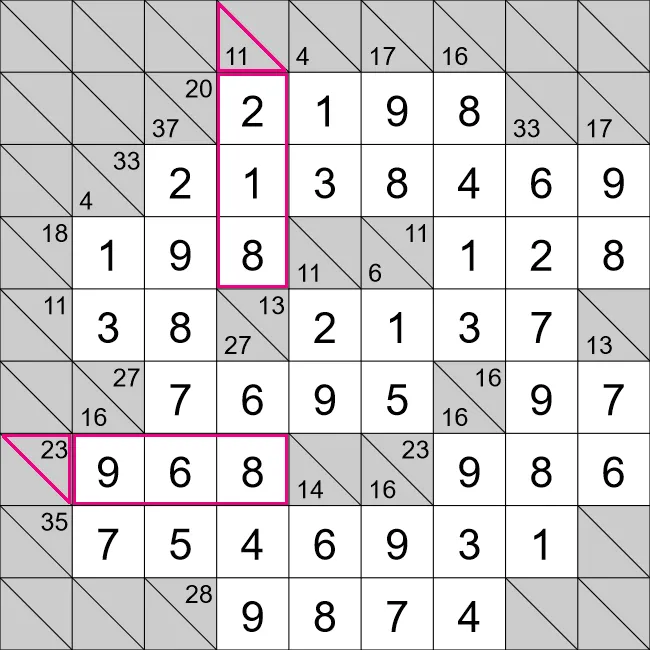
Tips
- Learn the unique sums for two, three and four squares; they unlock most grids.
- The largest and smallest totals for a run length are always unique.
- A digit can repeat in a row as long as it is in a different run.
Questions
Can a digit repeat in Kakuro?
Not within a single run. The same digit can appear elsewhere in the row or column if it is in a different run.
When does the PuzzleMadness Kakuro change?
Once a day: each puzzle is dated, and the daily page opens the current day's grid. The site does not say at what time the new one appears.
Is PuzzleMadness Kakuro free?
Yes. You can play without an account; the site shows ads. A free account records which puzzles you have finished and enters your scores on the leaderboards.
Where can I find the answers?
PuzzleMadness does not publish solutions. It tells you when your grid is complete and correct, and when you have made a mistake.
Can I play earlier Kakuro puzzles?
Yes, older puzzles are in the archive, and puzzles completed on any day count toward that month's leaderboard.
Games like Kakuro (PuzzleMadness)
Daily Kakuro
puzzle-kakuro.com's daily Kakuro
Daily Kakuro (SudokuWiki)
SudokuWiki's daily Kakuro
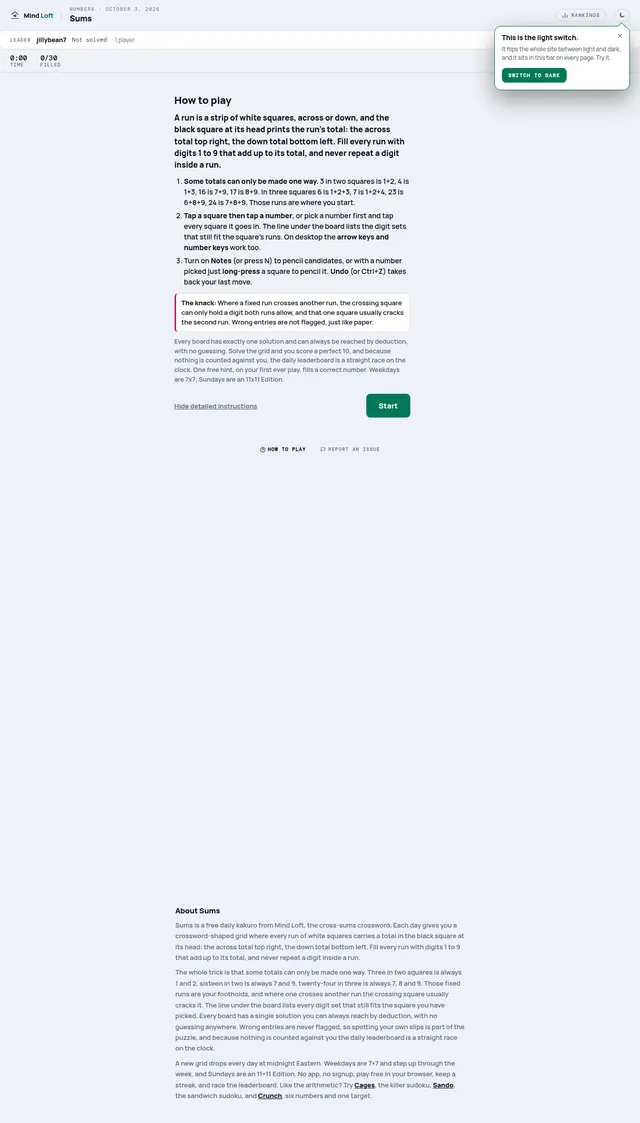
Sums (Mind Loft)
Mind Loft's daily kakuro

Kakuro (Daily Mail)
Daily Mail Kakuro
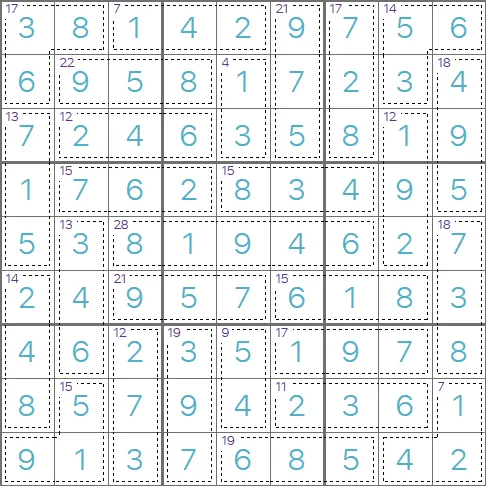
Killer Sudoku (PuzzleMadness)
PuzzleMadness's Killer Sudoku, also built on sums
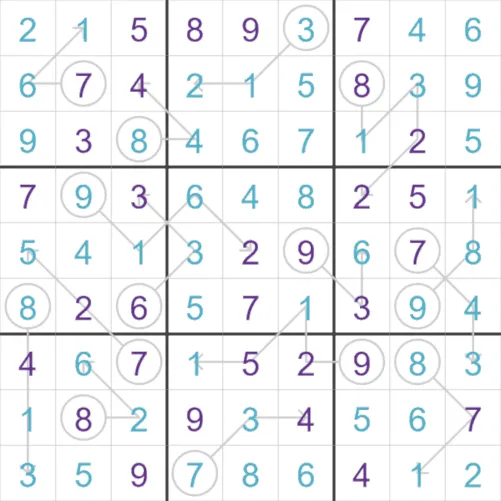
Arrow Sudoku (PuzzleMadness)
Sudoku with arrows: the circled digit equals the sum along its stalk.
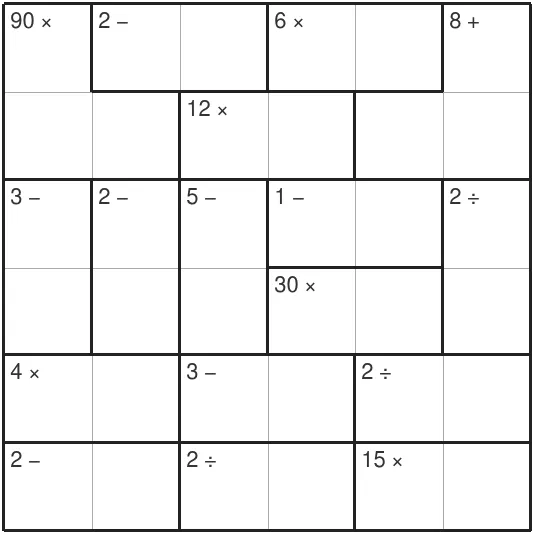
Mathdoku (PuzzleMadness)
A daily KenKen-style grid: fill each row and column and hit every cage's target.
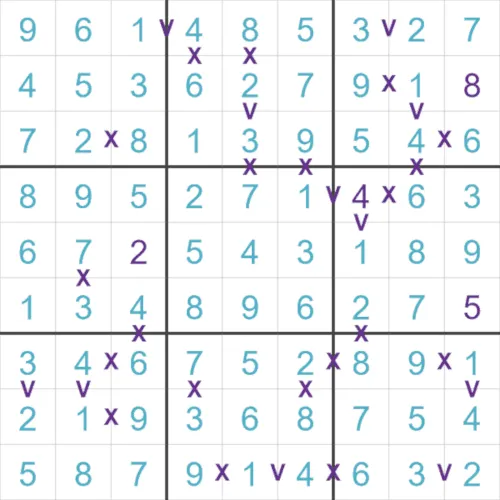
SudokuXV (PuzzleMadness)
Sudoku where a V joins two digits that sum to 5 and an X two that sum to 10.