Daily Kakuro
A daily cross-sum grid: make every run add up to its clue without repeating a digit.
Every day: One Special Daily Kakuro a day, dated and the same for every player. New puzzle: Midnight UTC, by the date on the site's own clock.
Special Daily KakuroAll sizes on puzzle-kakuro.comPuzzleGym on the App StorePuzzleGym on Google Play
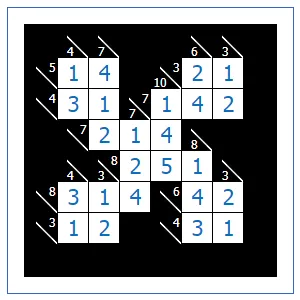
Kakuro, also called Cross Sums, is a number crossword where each run of white cells must add up to the clue beside it. Puzzle-kakuro.com posts a Special Daily Kakuro each day, the same for everyone, alongside practice grids from 6x6 to 30x30 and weekly and monthly specials.
About Daily Kakuro
Kakuro looks like a crossword filled with numbers instead of letters. Black cells hold clues, and each clue gives the total of the white cells to its right or below it. Every white cell takes a digit from 1 to 9, and a single run may not use the same digit twice, so a clue of 3 over two cells can only be 1 and 2. The answer is found by arithmetic and elimination rather than guessing.
On puzzle-kakuro.com the daily game is the Special Daily Kakuro, a page headed with the date that shows the same grid to every player that day. The site also has Easy, Normal and Hard grids from 6x6 to 30x30 at any time, plus a weekly and a monthly special, a Hall of Fame of solve times for the standard sizes, and a statistics page. The puzzles are free with ads; patrons can remove them, and the site links to the PuzzleGym app for iPhone and Android, which carries Kakuro and the family's other puzzle types. Patrons of the site can go back through the last 30 daily puzzles; everyone else plays the current day's.
The player options are generous for a number puzzle: pencil notes, a helper that lists the digit combinations for a sum, highlighting of wrong sums and duplicates, and a night mode. It suits people who like sudoku but want some arithmetic in it, and anyone who enjoys learning the small set of sums that have only one possible combination.
How to play Daily Kakuro
- Open the Special Daily Kakuro on puzzle-kakuro.com; the date of the puzzle is shown under the grid.
- Each clue in a black cell gives the sum of the white cells running right of it or down from it.
- Fill every white cell with a digit from 1 to 9 so that each run adds up to its clue.
- Do not repeat a digit within one run; the same digit may appear again in a different run.
- Use pencil notes for cells with several candidates, and the combinations helper to list the sets of digits that make a sum.
- Press Done when the grid is full to check it and see your time.
Tips
- Learn the sums with only one combination: 3 in two cells is 1 and 2, 4 in two cells is 1 and 3, 16 in two cells is 7 and 9, 17 in two cells is 8 and 9, and 6 in three cells is 1, 2 and 3.
- Look at where an across run and a down run cross: the cell can only hold a digit allowed by both sums.
- A run of nine cells always adds up to 45, so in long runs work out the missing digits instead of the present ones.
- If a two-cell run must be 1 and 3 and its crossing run cannot use 1, the cell takes 3 and the other cell takes 1.
Questions
When does the daily Kakuro change?
Once a day, at midnight UTC, by the date on the site's own clock.
Can I play an earlier daily Kakuro?
Only patrons of the site can go back, through the last 30 daily puzzles. Everyone else plays the current day's puzzle.
Is it free?
Yes. The site is free and shows ads; becoming a patron removes them. The PuzzleGym app linked from the site has Kakuro too.
Games like Daily Kakuro
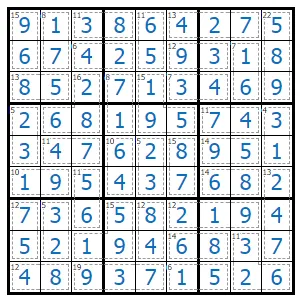
Daily Killer Sudoku
Cage sums on a sudoku grid, from the same family of sites
NYT Sudoku
A daily digit grid with a hard level for longer sessions
Mini Sudoku
A small daily sudoku for days without time for a full Kakuro
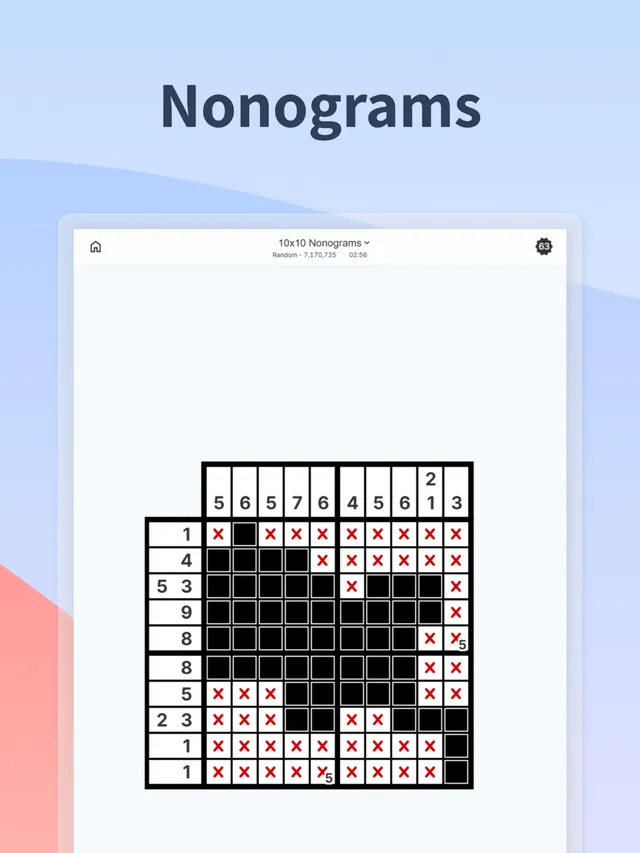
Nonograms
The same site family's daily nonogram, with the same date picker
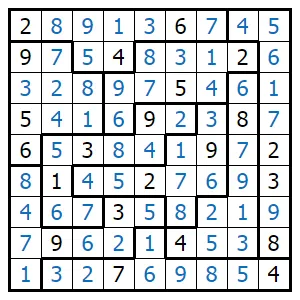
Daily Jigsaw Sudoku
Another number grid from the same family, with irregular boxes

Pips
A daily puzzle where regions have to meet sum and equality rules
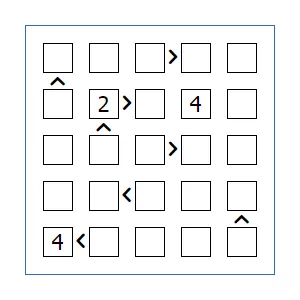
Daily Futoshiki
Fill a Latin square that obeys every greater-than and less-than sign, on one large grid a day.
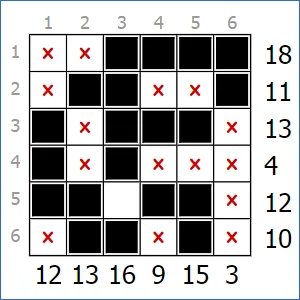
Daily Kakurasu
Blacken cells so each row and column adds up to its clue, counting each cell by its position.