DSMdle
Read a patient's clues one at a time and name the DSM-5 diagnosis in six guesses.
Every day: One patient case a day for everyone: clues about a patient revealed one at a time, and six guesses at the most likely DSM-5 diagnosis, in Classic or Hard mode. New puzzle: Once a day (the site does not state the time).
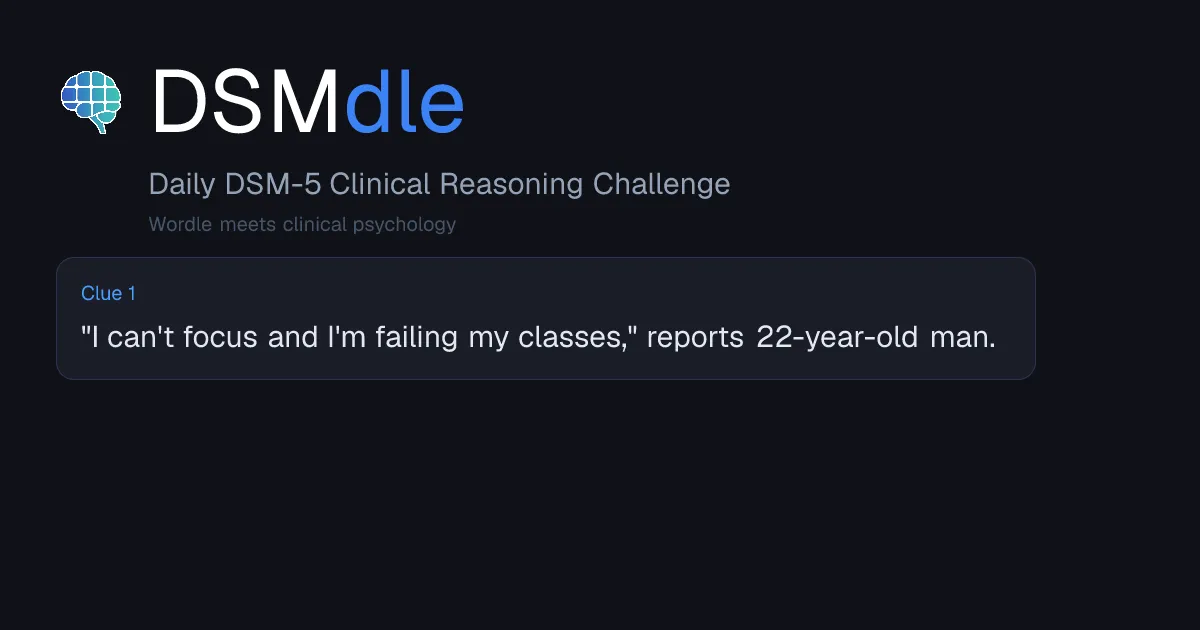
DSMdle is a daily clinical psychology guessing game for students, clinicians and the curious. Each day's case starts with one line about a patient, and each wrong guess reveals another clue, until you name the DSM-5 diagnosis or run out of six guesses.
About DSMdle
DSMdle borrows Wordle's daily rhythm for a psychology case. The first clue is a short quote and a detail about a patient: on 3 October 2026, "I can't focus and I'm failing my classes," reports a 22-year-old man. You type a diagnosis from the DSM-5, the manual of mental disorders, and every miss uncovers the next clue, so the case gets clearer as your guesses run out.
There are two modes, Classic and Hard, and an archive of earlier cases. The site is available in English and Spanish and is free to play in the browser.
The cases are simplified teaching scenarios, and the site says plainly that they may contain inaccuracies and that it is not a clinical or diagnostic tool. It suits psychology students revising the DSM-5 and anyone who enjoys medical mysteries, alongside NEXO's daily diagnosis puzzle.
How to play DSMdle
- Open today's case and read the first clue.
- Type your guess at the DSM-5 diagnosis and submit it.
- Each wrong guess reveals another clue about the patient.
- Name the diagnosis within six guesses.
- Try Hard mode or the archive for more cases.
Tips
- Note the age and the setting in the first clue; many diagnoses have typical onset ages.
- Think in categories first (mood, anxiety, attention, psychotic) before naming a specific disorder.
- Later clues often separate close neighbours, such as a mood disorder from an attention one, so a broad early guess is not wasted.
- Use the archive to practise on past cases.
Questions
Is DSMdle a medical tool?
No. The cases are simplified for learning and the site says it is not a clinical or diagnostic tool.
How many guesses do I get?
Six, with a new clue after each miss.
Can I play past cases?
Yes, from the archive.
Is it free?
Yes, in the browser, in English and Spanish.
Games like DSMdle
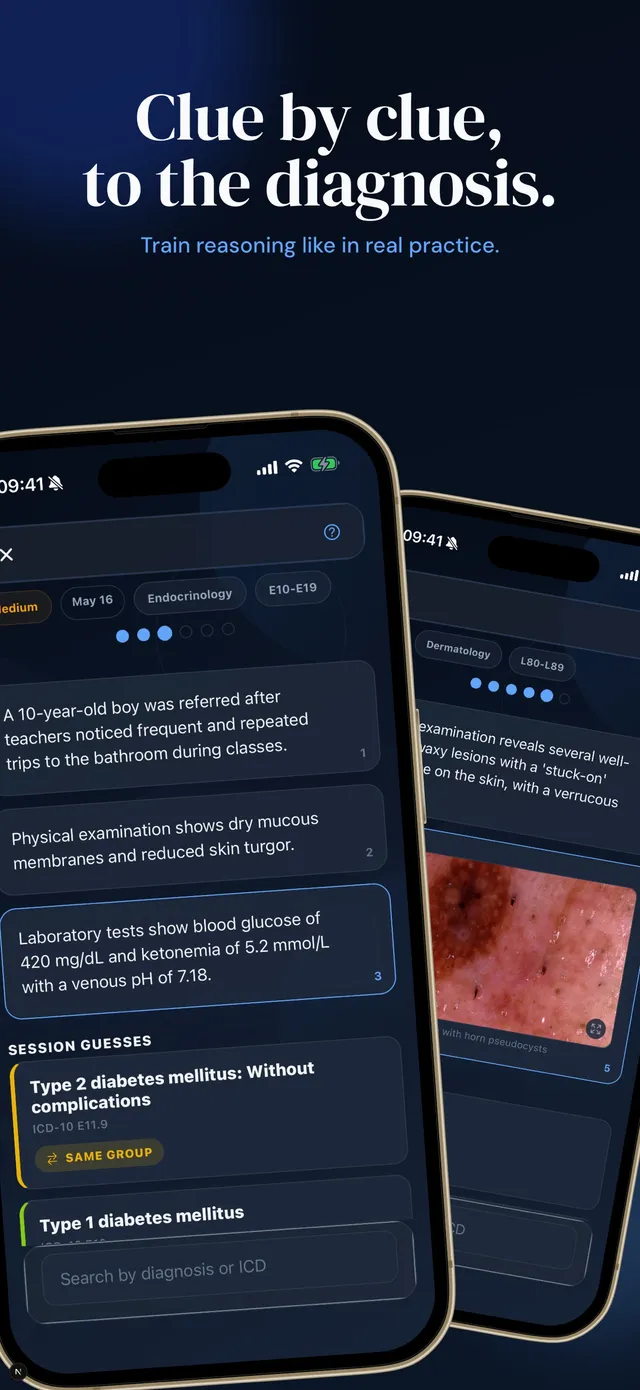
NEXO
A daily clinical case to diagnose from up to six clues
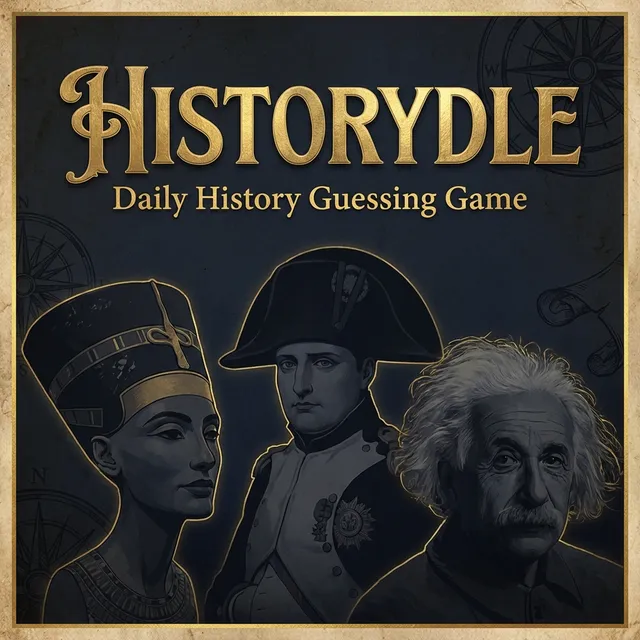
Historydle
Name the day's answer from clues that get more specific
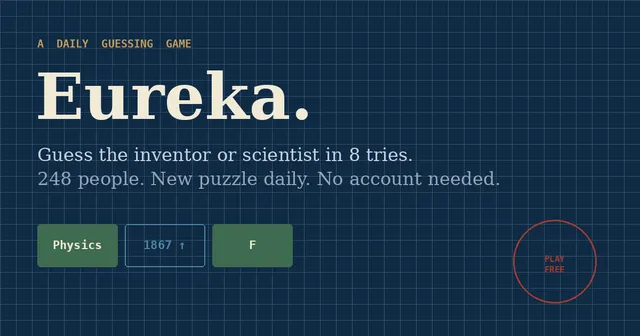
Eureka
Name the day's scientist or inventor in eight guesses
Whodunit?
Read a case file and work out the answer, once a day
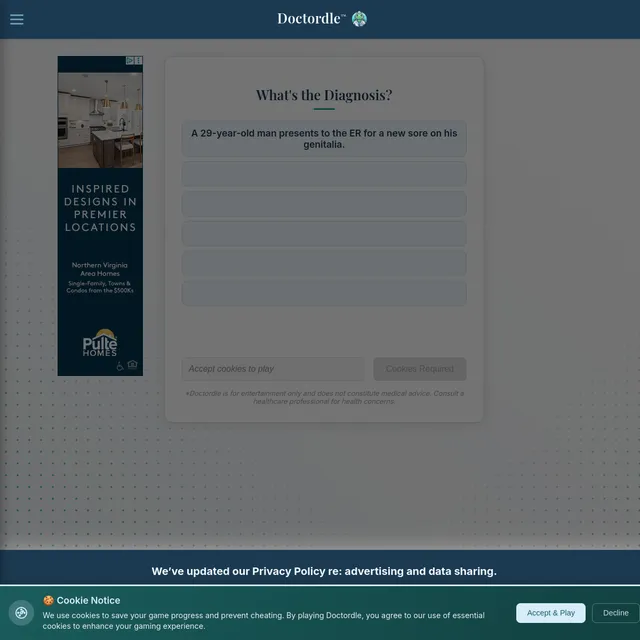
Doctordle
Read the day's clinical case, clue by clue, and name the diagnosis.
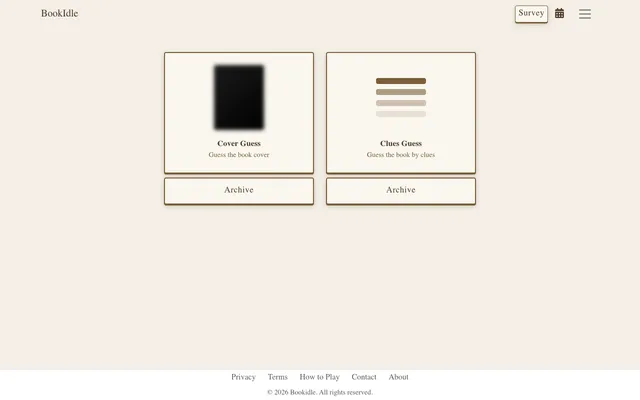
Bookidle
Name the day's book from a pixelated cover or from five clues that get easier.
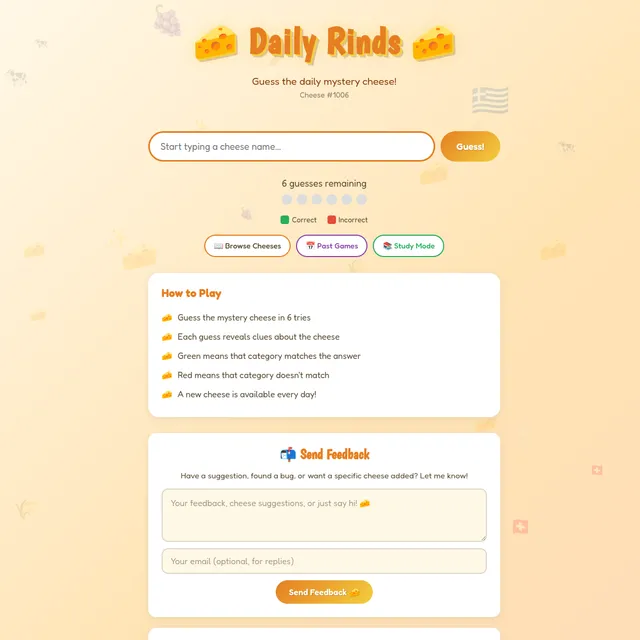
Daily Rinds
Guess the day's mystery cheese in six tries from its origin, milk, texture and flavour.
Numblino
Guess the hidden number in the day's fact, in six tries.