Disordle
Diagnose the day's patient in eight guesses, using overlapping symptoms, drugs and tests as clues.
Every day: One patient case per day for all players, with a count of how many people solved it: diagnose the disorder in eight guesses, each guess revealing which signs, medications, therapies and diagnostics overlap with the answer. New puzzle: Once a day (the page counts down the hours left).
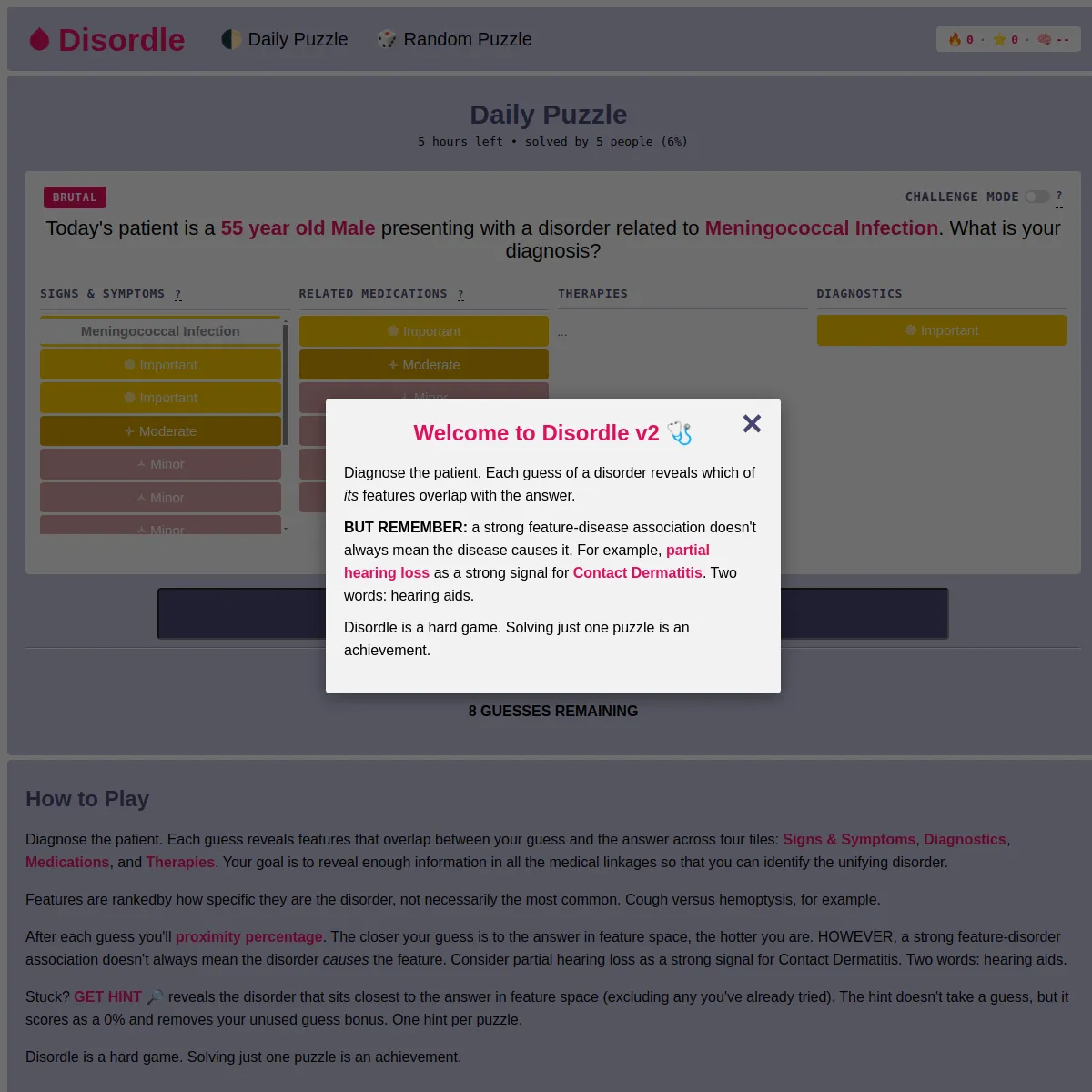
Disordle is a daily medical diagnosis puzzle. You get a patient's age, sex and a hint about the disorder, and each disorder you guess shows which of its features match the answer in four columns: signs and symptoms, related medications, therapies and diagnostics. You have eight guesses.
About Disordle
Disordle frames each day's puzzle as a patient case: for example a 55 year old man presenting with a disorder related to meningococcal infection. The answer is a specific disorder, and the case is the same for every player that day; the page shows how many people have solved it and how many hours are left.
Each guess of a disorder reveals the features it shares with the answer across four tiles: Signs and Symptoms, Diagnostics, Medications and Therapies. Features are ranked by how specific they are to the disorder (Important, Moderate, Minor), not by how common they are, and you also get a proximity percentage telling you how close your guess is in feature space. The game warns that a strong association is not always causal, giving partial hearing loss as a signal for contact dermatitis because of hearing aids.
One hint per puzzle reveals the disorder nearest to the answer, at the cost of your guess bonus. Puzzles carry a difficulty label up to Brutal, a challenge mode makes things harder, and a Random Puzzle mode offers extra cases. Stats track streaks and win rate.
It suits medical students, clinicians and curious players who like a hard deduction game; the site itself says solving even one puzzle is an achievement.
How to play Disordle
- Read the case: age, sex and the related condition.
- Guess a disorder; matching features light up in the four columns with their importance.
- Use the proximity percentage to tell whether you are getting closer.
- Name the exact disorder within eight guesses, or use the one hint per puzzle if stuck.
Tips
- Start with a broad disorder in the right family to light up many shared features.
- Important features are the most specific; focus your next guess on what explains them.
- Medications and diagnostics often separate close candidates better than symptoms.
- Remember the warning: a matching feature can be linked to the disorder without being caused by it.
Questions
Is the case the same for everyone?
Yes. There is one daily puzzle, and the page shows how many players have solved it.
How many guesses do I get?
Eight.
Is there a hint?
Yes, one per puzzle. It shows the disorder closest to the answer and removes your unused guess bonus.
Do I need medical training?
It helps a lot. The game says it is hard and that solving one puzzle is an achievement.
Games like Disordle
Chemdle
A daily science puzzle for chemistry students
STAT Mini Crossword
A daily crossword with health and medicine clues

Metazooa
Narrow down a hidden answer through shared features

Clueless
Find a hidden answer by closeness of meaning
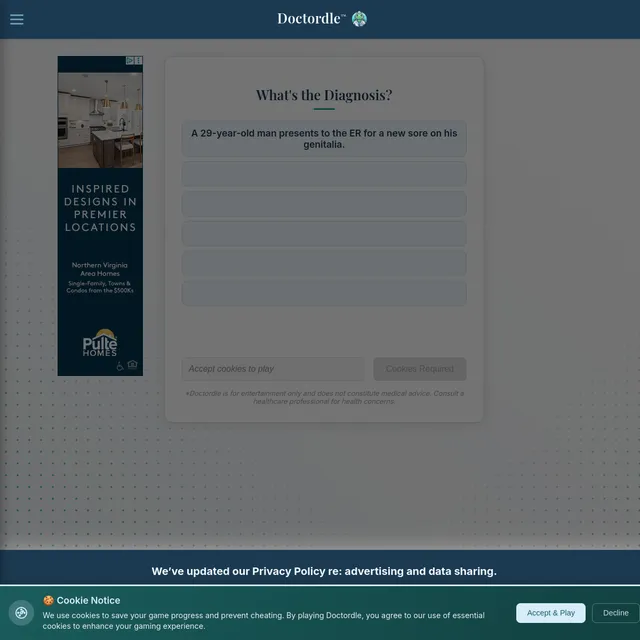
Doctordle
Read the day's clinical case, clue by clue, and name the diagnosis.
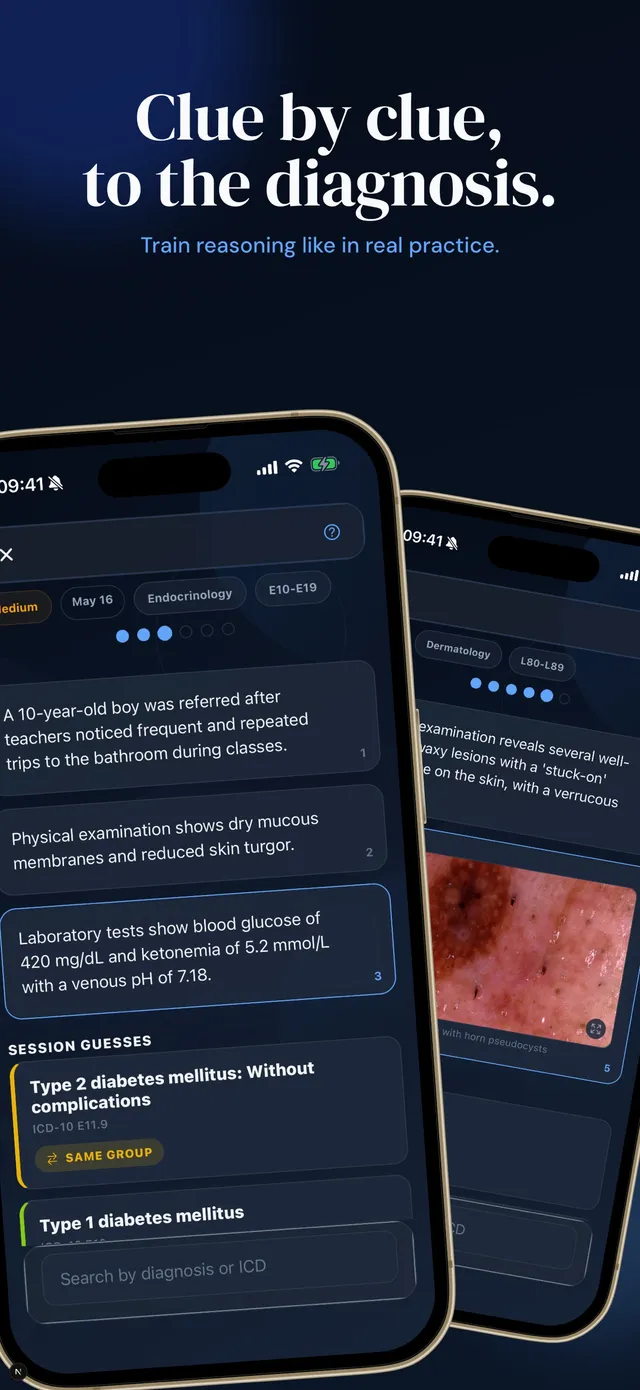
NEXO
A daily clinical case to diagnose from up to six clues, with feedback measured on the ICD-10 tree.
¿Cuánto sabes? (El Mundo)
El Mundo's daily news quiz: three choices a question, against the clock.
4Circles
Four quick questions on one topic a day, one circle for each.