Chemdle
Draw the product of the day's organic chemistry reaction in six attempts.
Every day: One numbered organic chemistry problem a day, the same for everyone: given the starting materials, draw the product in six attempts. New puzzle: Midnight in your own time zone; the game sends your time zone and the puzzle number moves on at your local midnight.
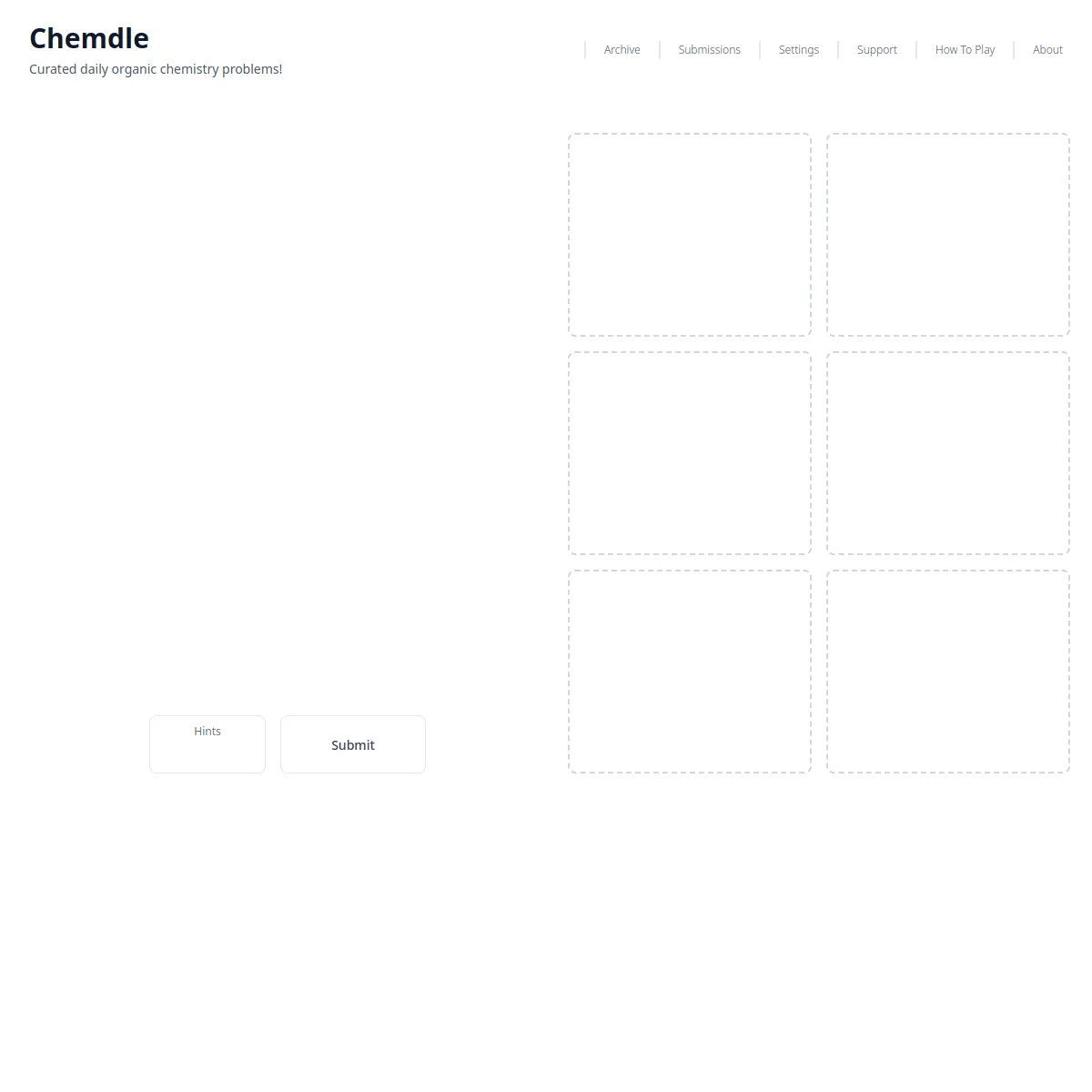
Chemdle sets one organic chemistry problem a day. You are shown the starting materials, draw the molecule you think the reaction gives, and get six attempts. Each guess is marked wrong, an intermediate on the way, or correct.
About Chemdle
Chemdle is a daily puzzle for people who know their organic chemistry. Each numbered problem shows one or more starting materials and asks what they become. The problems are a mix of named reactions, steps from drug syntheses and transformations from total syntheses, curated and reviewed by a small group of chemists.
You answer by drawing a structure in a chemical sketcher, either Ketcher or Marvin JS, and submitting it. A red answer is wrong, a blue one is an intermediate along the right path, and green is the product. You have six attempts.
The game is free to play each day. Hints, stats and the archive of past problems are part of Chemdle Premium, which you can earn by submitting a problem of your own: each approved puzzle gives three months of access. Players can also support the site through Ko-fi.
Chemdle was created by Sam Ellis, whose About page dates it 2024 to 2026. It suits chemistry students, teachers and working chemists more than casual quiz players.
How to play Chemdle
- Open Chemdle and look at the day's starting materials.
- Work out which reaction they undergo and what the product should be.
- Draw your answer in the sketcher and press Submit.
- Read the colour: red is wrong, blue is an intermediate, green is the final product.
- Refine your structure and try again, up to six attempts.
Tips
- A blue answer means you are on the right path: think about what happens to that intermediate next.
- Check stereochemistry and charges before you submit; the molecule is compared as drawn.
- If one sketcher feels awkward, switch between Ketcher and Marvin in the settings.
- Submitting a good problem of your own unlocks hints and the archive for three months.
Questions
What kind of chemistry is in Chemdle?
Organic chemistry: named reactions, drug synthesis steps and total synthesis transformations.
How do I answer?
By drawing the product's structure in the built-in sketcher and submitting it. You have six attempts.
When is there a new problem?
At midnight in your own time zone.
Is Chemdle free?
The daily problem is free. Hints, stats and the archive need Premium, which you get by contributing an approved puzzle or by supporting the site.
Games like Chemdle
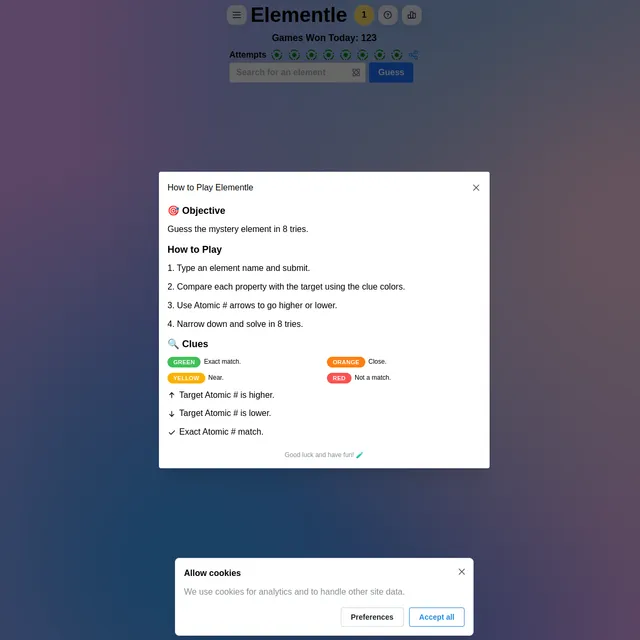
Elementle
Find the day's chemical element from periodic table clues.
AtomixQuest
Daily periodic table cards: pick the heaviest, lightest or exact element.

Periodic Times Table
A number puzzle written in chemical element symbols.
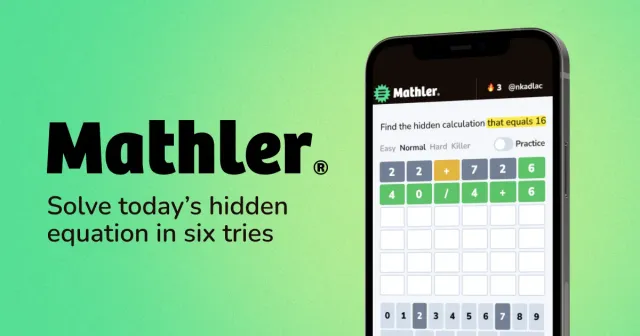
Mathler
A six-try daily puzzle for people who like working a problem out on paper.

Witstep
One short reasoning question a day for a science-minded player.
Elemingle
Swipe through the periodic table to find the day's mystery element.
Eureka
Name the day's inventor or scientist in eight guesses.
Fashionguessr
Name the house, designer and season of a runway look, then answer fashion trivia and sketch from memory.