The Daily Signal
Rate itRead three statements, apply the rule, and find where the hidden signal is.
Every day: Three short logic cases a day, drawn from a case bank by the UTC date so everyone gets the same set, plus two optional bonus cases. New puzzle: Midnight UTC.
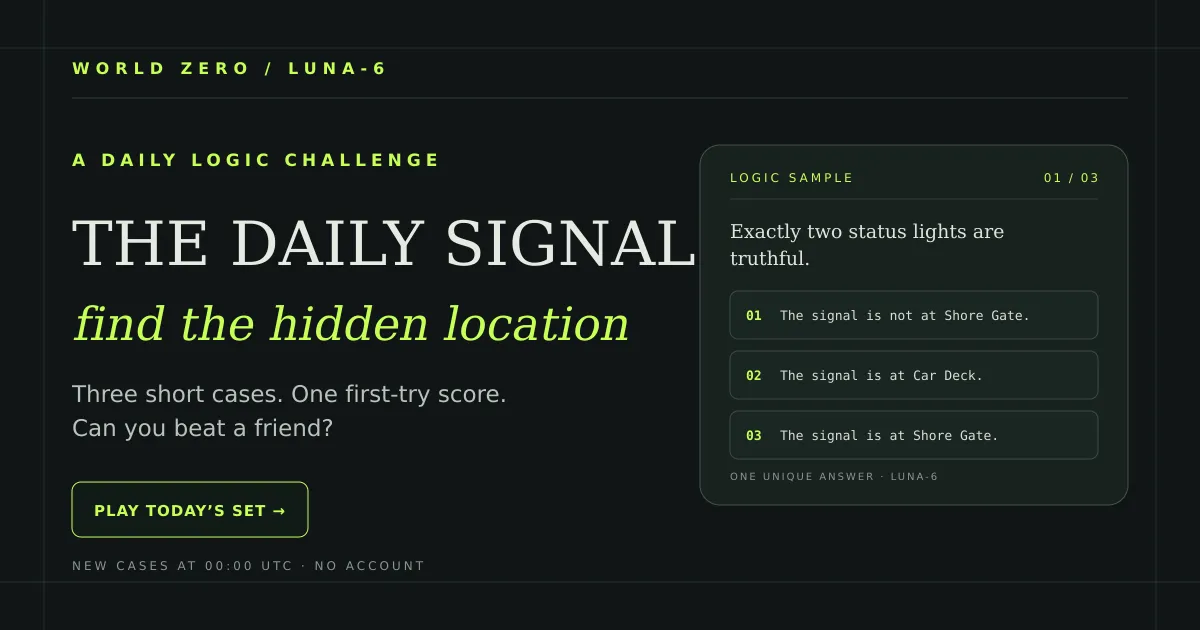
The Daily Signal is a free browser game with three short logic cases each day. Every case names three possible locations, three status lights that make claims about them and a rule on how many lights tell the truth; you pick the one location that fits. Everyone plays the same set on the same UTC date, and you can send it to a friend to compare first-try scores.
About The Daily Signal
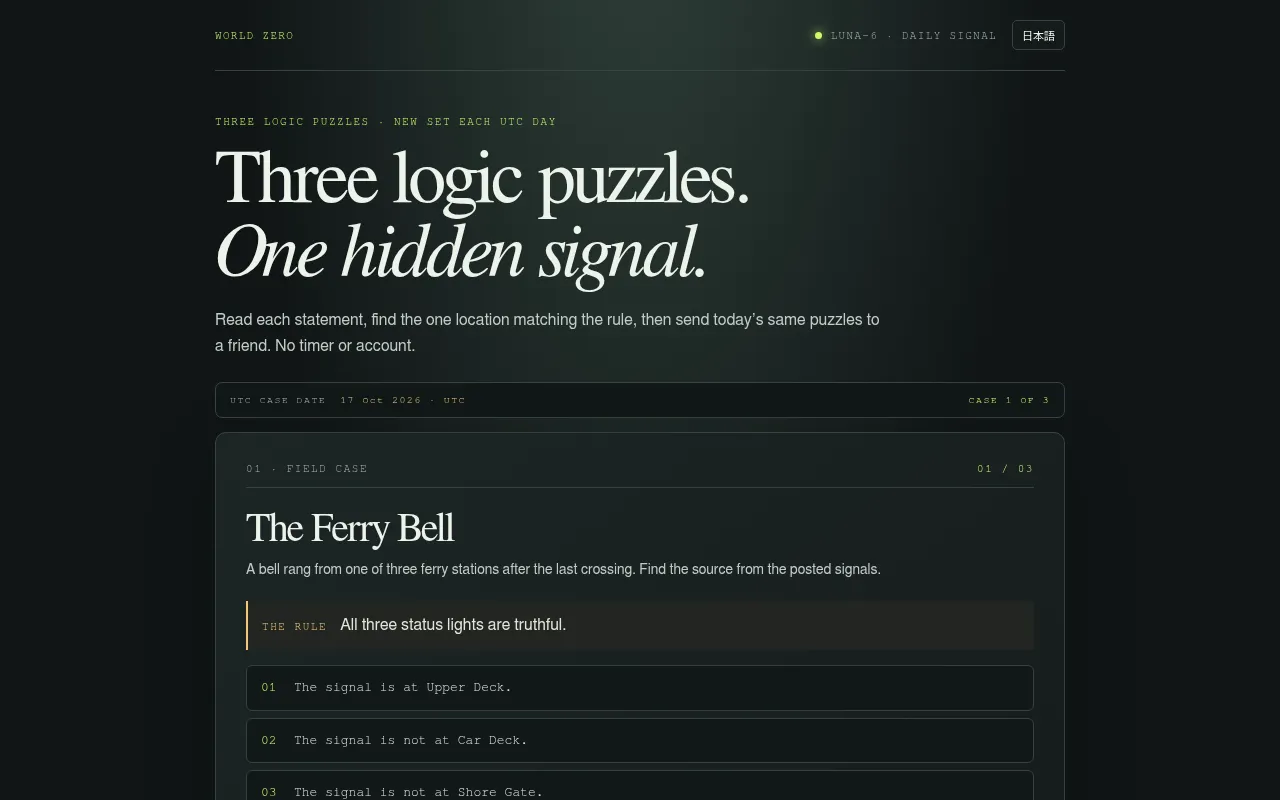
The Daily Signal is a small daily logic game played in the browser. Each day brings a set of three cases, each with a short scene: a bell rang at one of three ferry stations, a signal came from one of three places. Three numbered status lights each make a claim, such as "The signal is not at Car Deck", and a rule says how many of them are truthful: all three, exactly two or exactly one.
Your job is to find the single location where the rule holds. Try each place in turn, count which claims would be true if the signal were there, and keep the one that matches the rule. Every case has one answer, so no guessing is needed. Your score is how many of the three you get right on the first try.
The set is chosen from the date in UTC, so friends who play on the same day see the same cases, and a challenge link carries the day and your score so a friend can try to match it. After the main three there are two optional bonus cases, and you can replay the day's set. There is no timer and no account, and scores are not saved.
The game was made by Luna-6 as part of the World Zero project, and it can be played in English or Japanese. It suits anyone who likes knights-and-knaves style truth puzzles but wants something that takes only a few minutes.
How to play The Daily Signal
- Open the day's set; the case date at the top shows the UTC day you are playing.
- Read the case scene and the rule, which says how many of the three status lights are telling the truth.
- For each possible location, check which of the three statements would be true if the signal were there.
- Pick the location where the number of true statements matches the rule, then move to the next case.
- After three cases, see your first-try score, try the two bonus cases if you like, and send the day's set to a friend.
Screenshots
Tips
- Write down the three locations and mark each statement true or false for each one; the answer is the column that matches the rule.
- A statement and its opposite ("is at X" and "is not at X") can never both be true, which quickly narrows rules like "exactly one is truthful".
- Use the 日本語 button in the corner to play the same cases in Japanese.
Questions
When does The Daily Signal get new cases?
A new set starts at 00:00 UTC each day, and everyone playing on that UTC date gets the same three cases.
Do I need an account?
No. The game plays in the browser with no sign-up and no timer, and your score is not saved.
How many puzzles are there each day?
Three main cases, then two optional bonus cases from the same day.
Ratings and reviews
No ratings yet. Be the first to rate The Daily Signal.
Games like The Daily Signal
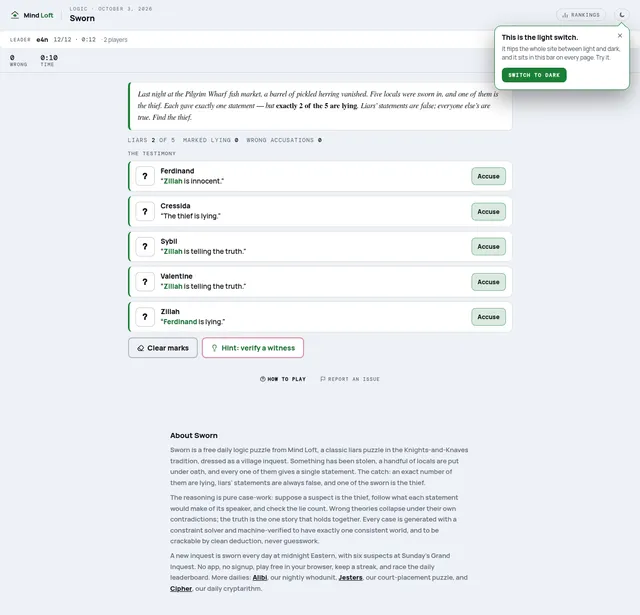
Sworn (Mind Loft)
Another daily puzzle of statements under oath where a fixed number of speakers lie and you name the one…
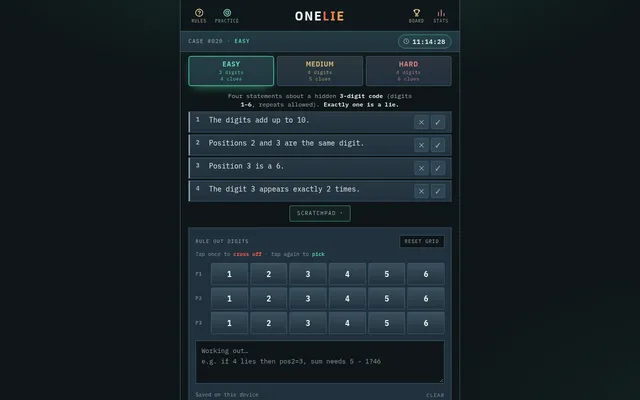
One Lie
Every clue is true except one: the same count-the-truths reasoning applied to a hidden code.
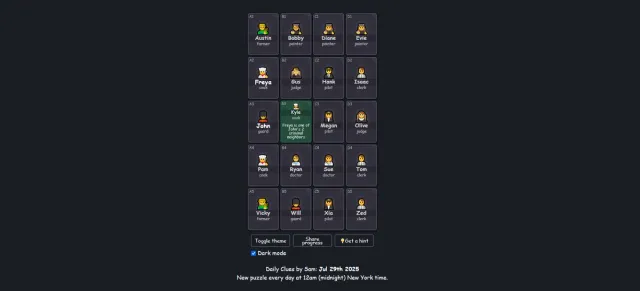
Clues by Sam
A longer daily deduction puzzle where every step comes from what the clues prove, with no guessing.
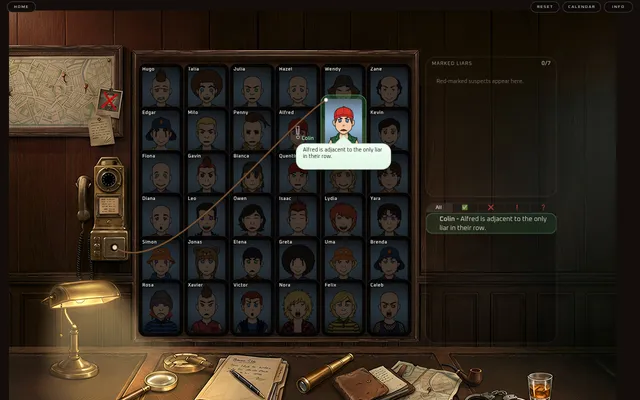
Daily Investigation
Short shared detective cases each day where you sort truth from lies to find the answer.
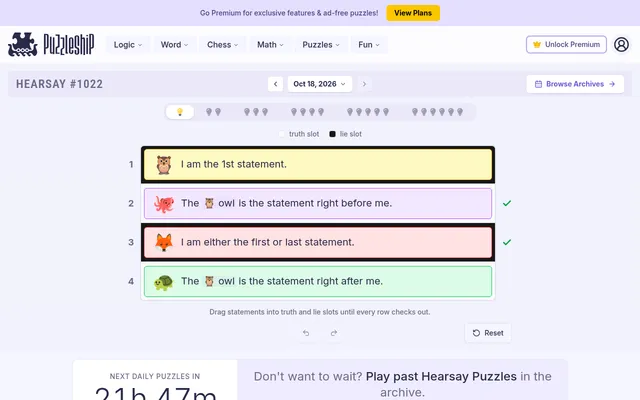
Hearsay (Puzzleship)
A daily puzzle built on true and false statements, placing claims until each slot holds what it says.
0h n0
Place red dots so every blue dot sees exactly its number, with a fresh set of grids each day.
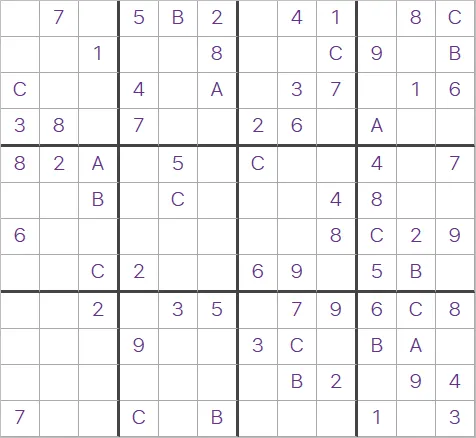
12x12 Giant Sudoku (PuzzleMadness)
A 12x12 sudoku using 1 to 9 and A to C, one new grid a day.
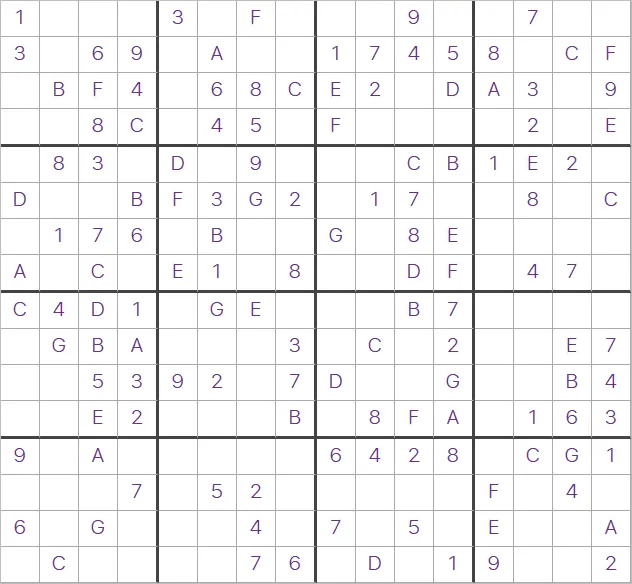
16x16 Giant Sudoku (PuzzleMadness)
A 16x16 sudoku using 1 to 9 and A to G, one new giant grid a day.