Pancham
One word, shown in five Indian languages one at a time; guess its English meaning before Hindi gives it away.
Every day: One word a day, the same for every player: you see it written in Indian languages one clue at a time and guess its meaning in English, with Hindi held back as the last clue. New puzzle: Midnight UTC.
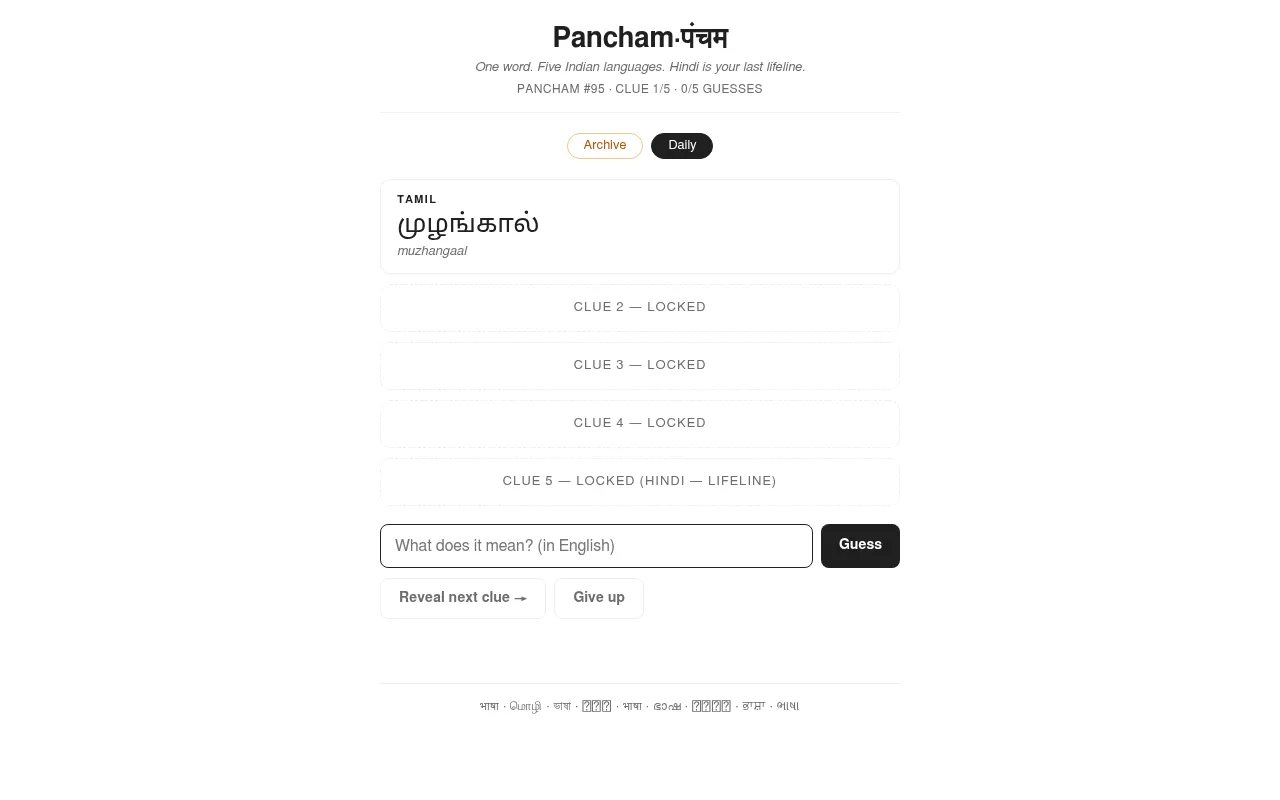
Pancham is a daily word game about India's languages. Each day's word appears in its script and transliteration in one language after another, such as Tamil, Bengali, Telugu or Kannada, and you guess what it means in English. Hindi comes last as a lifeline, and after the round a short note explains where the words came from.
About Pancham
Pancham shows one everyday word a day, like fire, rain, rice or moon, in several Indian languages. Each clue gives the word in its own script with a transliteration. You type the English meaning; a wrong answer brings the next language. Hindi is kept for the end as your last lifeline, so solving it on the first clue in Tamil or Malayalam is the real test.
After each round the game tells the story behind the word: which languages share a Sanskrit root, which kept a Dravidian word of their own, and which borrowed from Persian, Arabic or Portuguese. The notes are short and specific, such as why Tamil 'kanneer' literally means eye-water.
The daily puzzle is picked by the UTC date, so everyone gets the same word, and the game keeps a streak and statistics in the browser. It suits players who speak one or more Indian languages, or anyone curious about how one word travels across a subcontinent.
How to play Pancham
- Open Pancham; today's word appears in its first language with a transliteration.
- Type what you think the word means in English.
- If you are wrong, the word appears in the next language.
- Keep guessing; Hindi is shown last as the final clue.
- Read the note on the word's history, then come back the next day.
Tips
- Read the transliteration aloud; many words share a sound with a language you know.
- Words with a Sanskrit root look alike in Bengali, Marathi and Hindi; Dravidian languages often stand apart.
- Think of everyday nouns first: food, weather, the body and family come up often.
Questions
Is Pancham the same word for everyone?
Yes. The puzzle is chosen by the UTC date.
Why is Hindi last?
Because most players would know it at once; it is kept as the last lifeline.
Games like Pancham
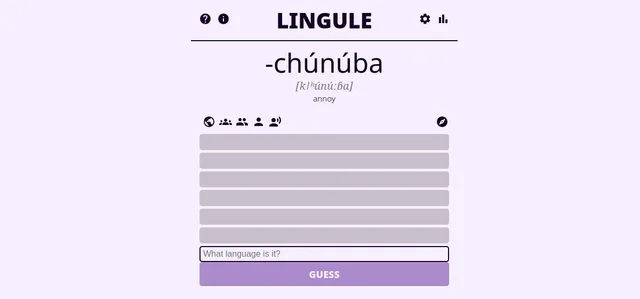
Lingule
See one word in a mystery language each day and reason about it

Langle
Name the world language behind the day's sample text
LangWhich
Spot the language of five words a day
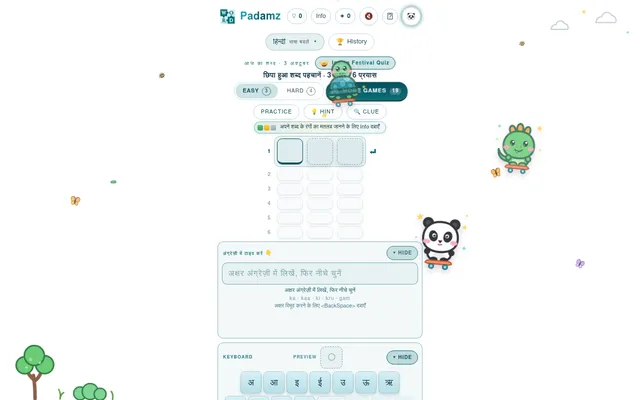
Padamz Hindi
A daily word game in Hindi
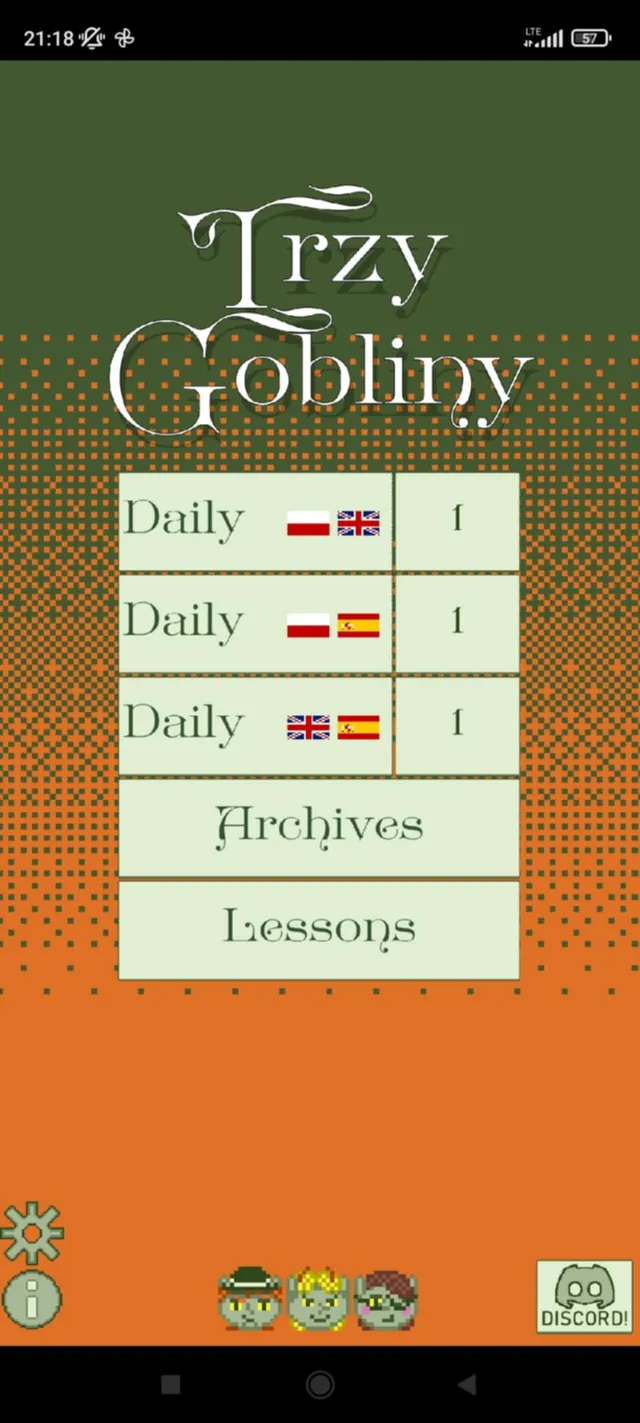
Three Goblins
Three goblins in a trench coat give you a bilingual riddle a day: translate the pieces to find the password.
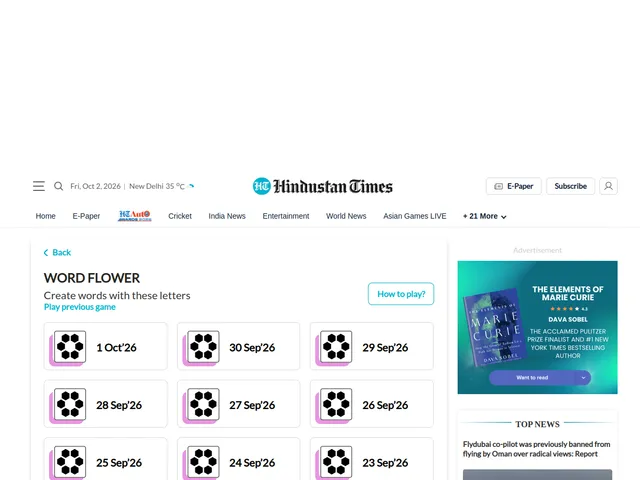
Word Flower (Hindustan Times)
Seven letters in a flower: make words of four to seven letters, always using the one in the centre.
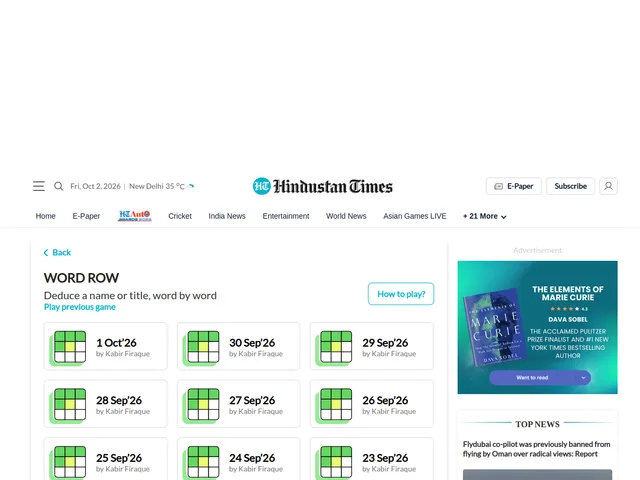
Word Row (Hindustan Times)
Guess a hidden name or title one word at a time, with Wordle-style coloured letters.

14 Kelime
Fourteen Turkish clues, four minutes, one set a day.