etyML
Rate itSort twelve words into three families that share a root, and spot the three impostors.
on etyml.com
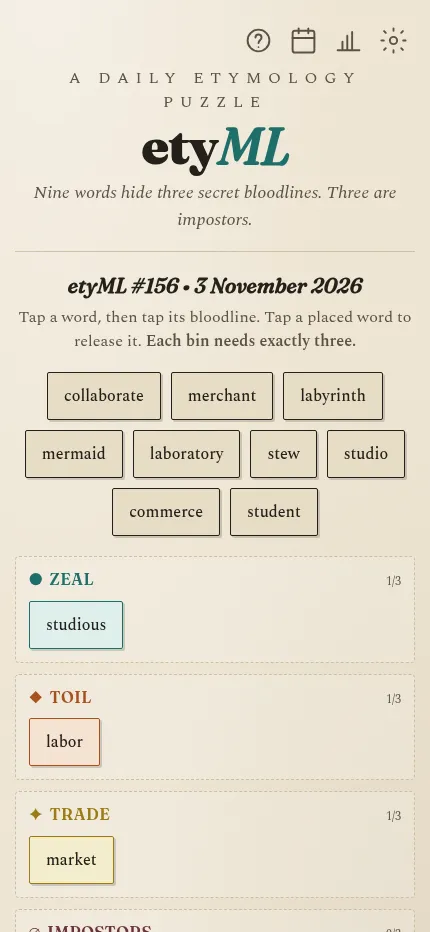
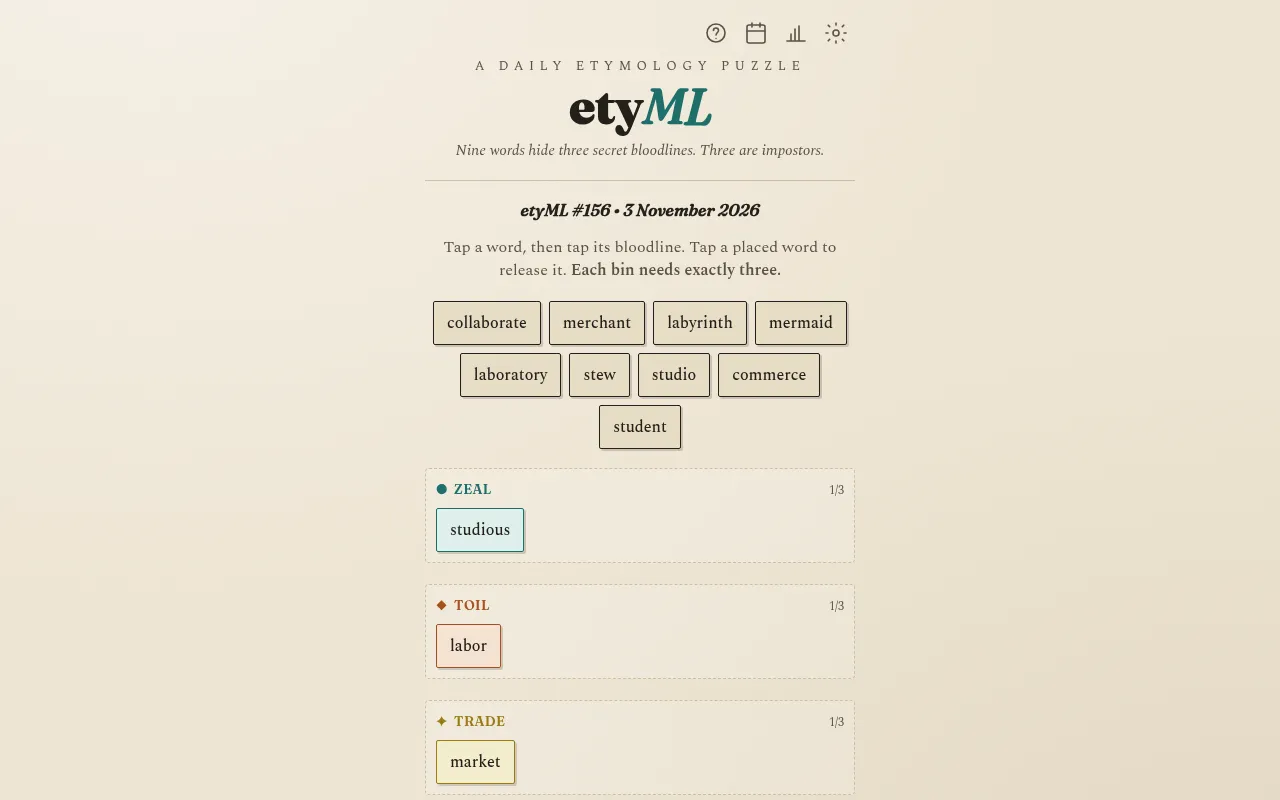
etyML is a daily etymology puzzle. Twelve words sit above four bins. Three bins are labelled with a root's meaning, such as "Zeal", "Toil" and "Trade", and the fourth takes the three impostors that only look related. A perfect day is all twelve placed right without hints.
About etyML
etyML turns word origins into a sorting puzzle. Each day's board shows twelve English words. Nine of them belong to three families, each descended from one older root, and three are impostors that look as if they belong but come from somewhere else. The how-to gives the flavour: chief, cattle and cabbage all go back to Latin caput, 'head', while salient looks salty but comes from salire, 'to leap'.
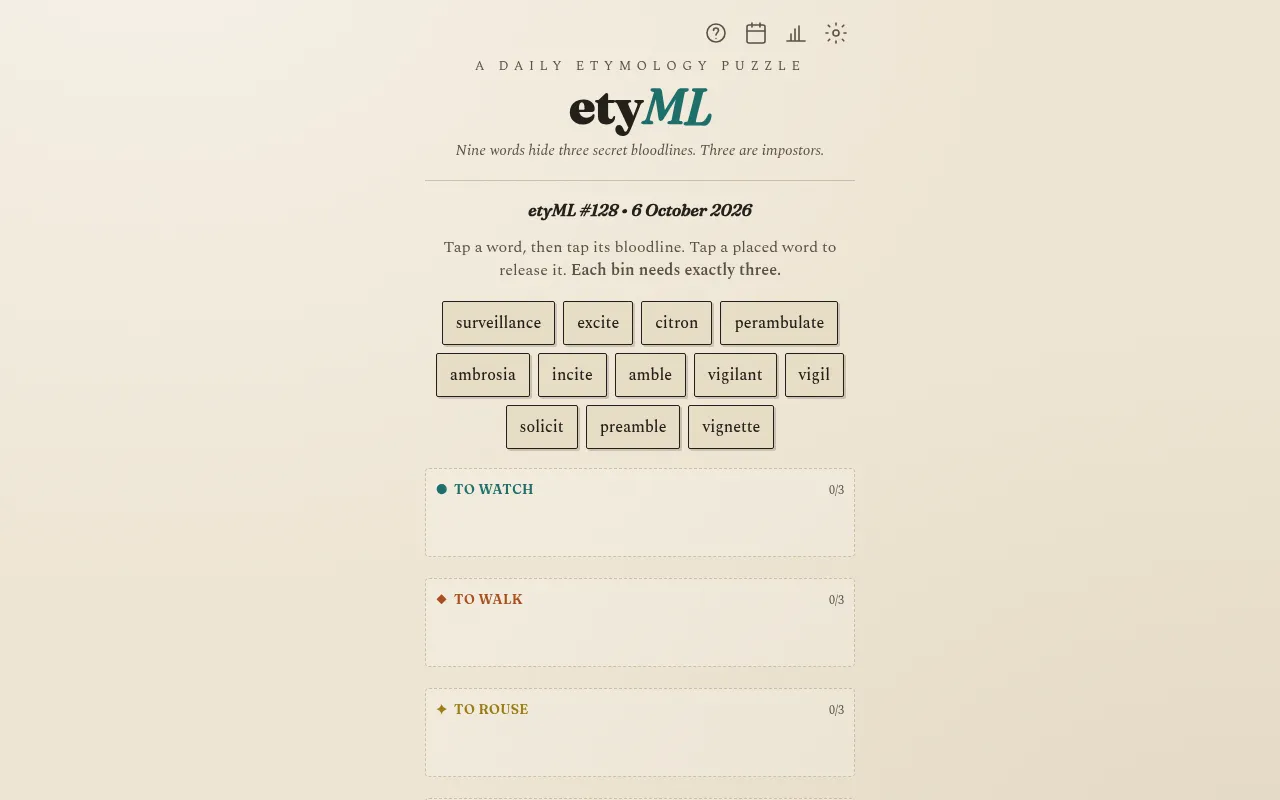
The bins carry a label for each root's meaning, so you are reasoning from spelling and sense rather than recalling a dictionary: on 6 October the bins were to watch, to walk and to rouse, and the words included vigil, vigilant, surveillance, amble, preamble, perambulate, excite, incite and solicit, with citron, ambrosia and vignette waiting to trip you. Tap a word, then tap its bin. Each bin takes exactly three, and the impostors get a bin of their own. Three hints a puzzle place one word correctly, and after you submit, the etymology of every word is shown.
Hard mode hides the root labels during play, and there are dark and high-contrast colour settings. Past puzzles are in an archive, each at its own numbered address. On 3 November, puzzle No. 156 asked for families meaning zeal, toil and trade, with words like studio, laboratory and market among labyrinth, mermaid and stew. The game keeps your streak and stats in your browser, with no account. Its etymologies come from Wiktionary and the Etymological Wordnet, and the site notes that its puzzles are made with an AI-assisted process and may contain mistakes.
It suits word lovers who enjoy Connections but want groups decided by history rather than by trivia or wordplay.
How to play etyML
- Read the twelve words and the three bin labels. Each label is the meaning of an old root.
- Tap a word, then tap the bin of the family you think it belongs to. Tap a placed word to take it back out.
- Put exactly three words in each family bin and the three that only look related in the "Impostors" bin.
- Use a hint if you are stuck. It places one word correctly, up to three a puzzle.
- Submit, then read the etymologies to see where every word came from.
Screenshots
Tips
- Look for a shared chunk of spelling (vig, amb, cit) but test it against the meaning: impostors are chosen to share the chunk without the root.
- Place the words you are sure of first; the last few often sort themselves.
- A perfect score needs no hints, so save them for the final pair you cannot separate.
Questions
When does a new etyML puzzle come out?
One new puzzle unlocks at midnight each day.
Do I need an account?
No. Your streak and stats are kept in your browser.
What counts as a perfect game?
All twelve words placed correctly with no hints used.
Ratings and reviews
Games like etyML
Etymon
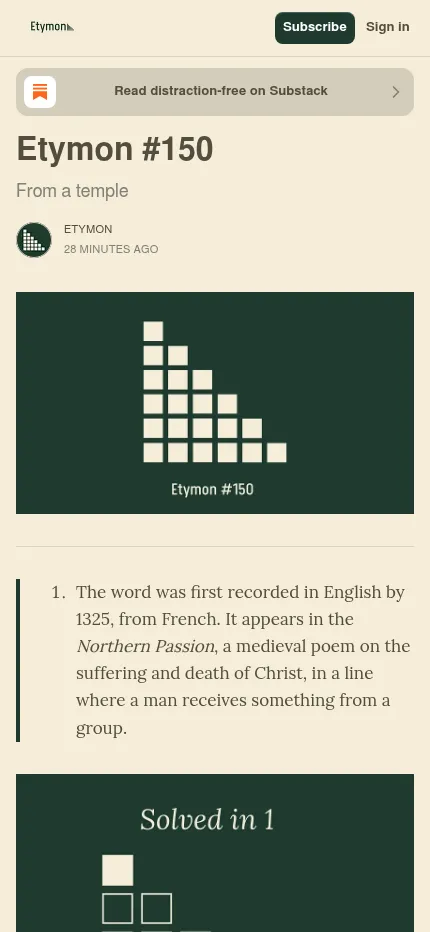
Also about word history. You name one English word from six clues to its origin, era and relatives.
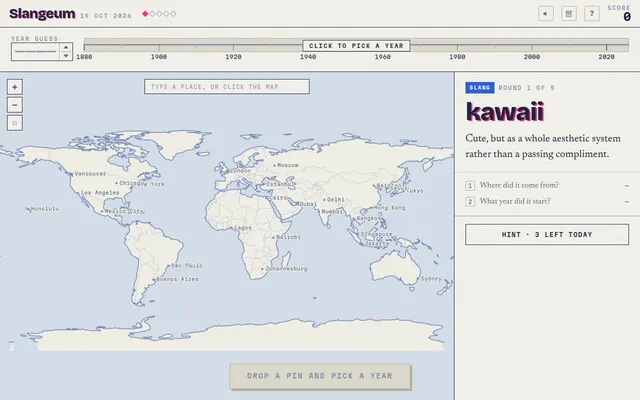
Slangeum
Word origins again, for slang and memes: place where each was born on a map and guess the year
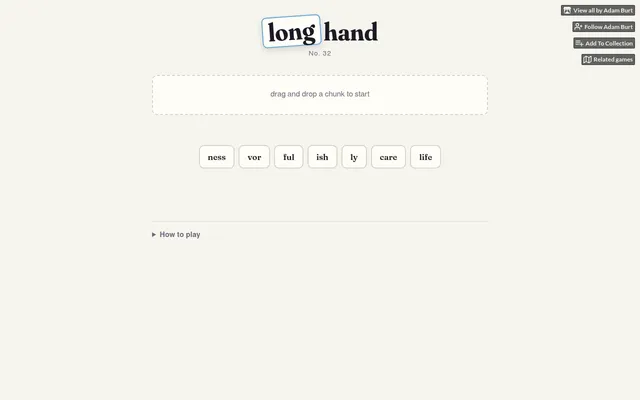
Longhand
Builds the longest word from a shared pile of prefixes, roots and endings, the same parts etyML sorts by.
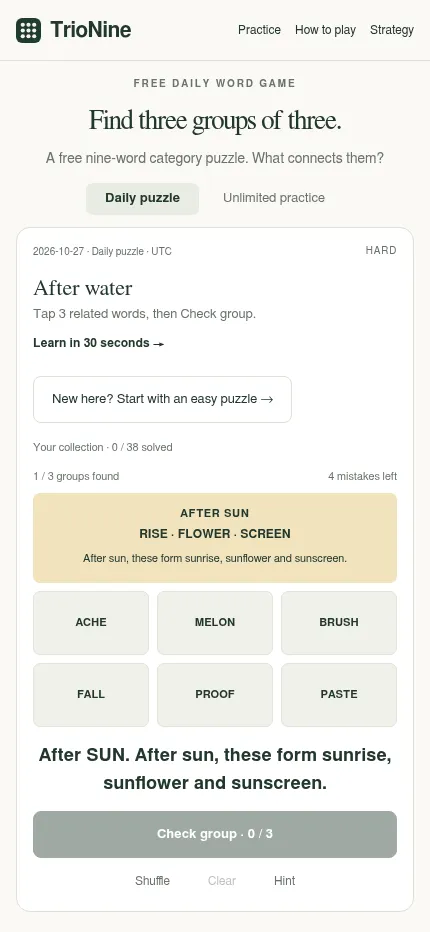
TrioNine
Nine words in three groups of three, a board the same size as etyML's families
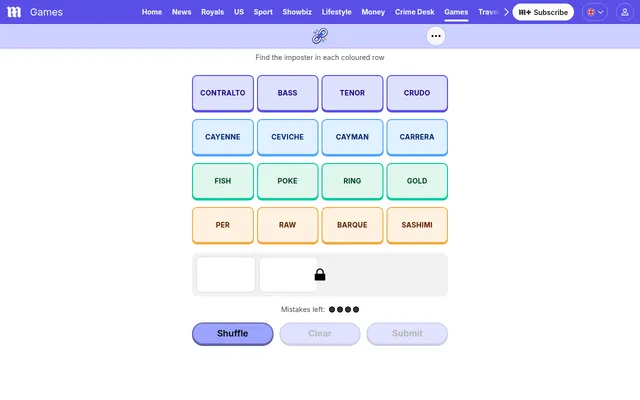
Relink (Daily Mail)
Impostors matter here too. Each row of four hides one, and the four impostors make a last group.
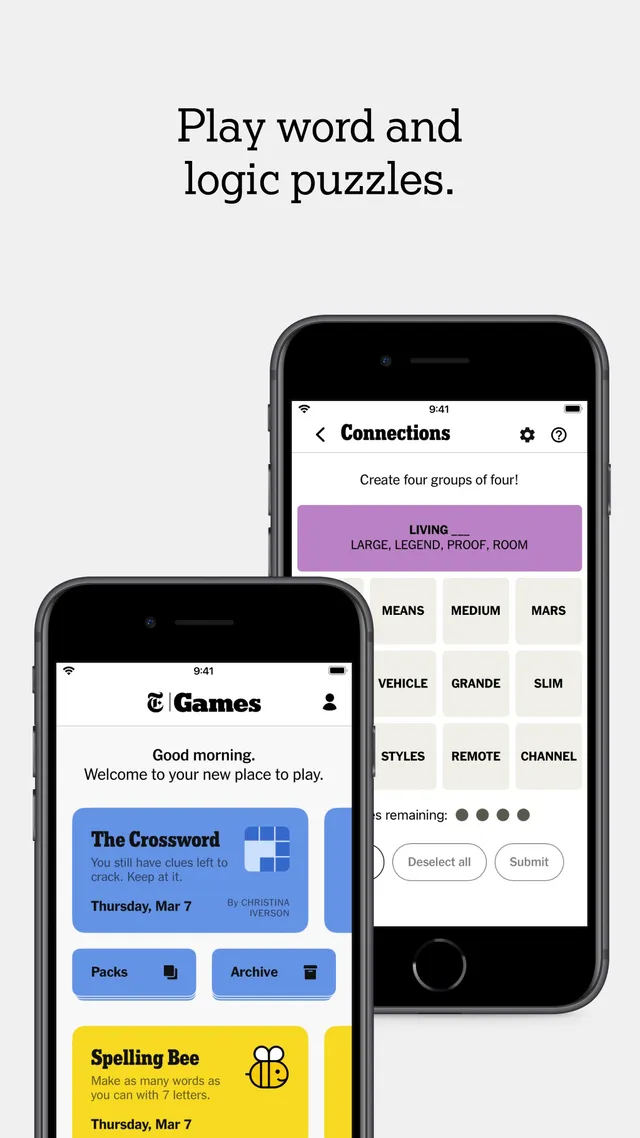
Connections
The grouping game behind it: sixteen words, four groups of four, four mistakes allowed
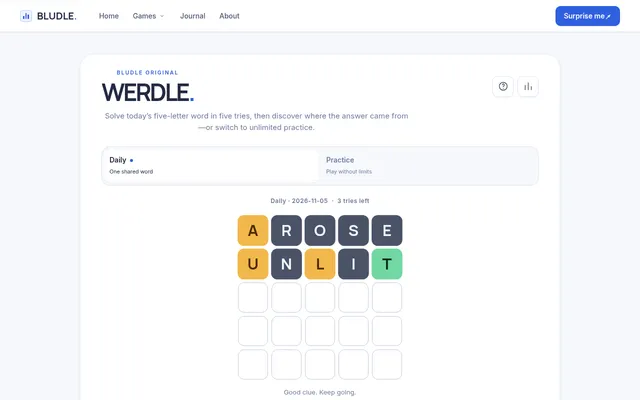
Werdle
A five-letter word to find each day in five tries, for a quick second puzzle
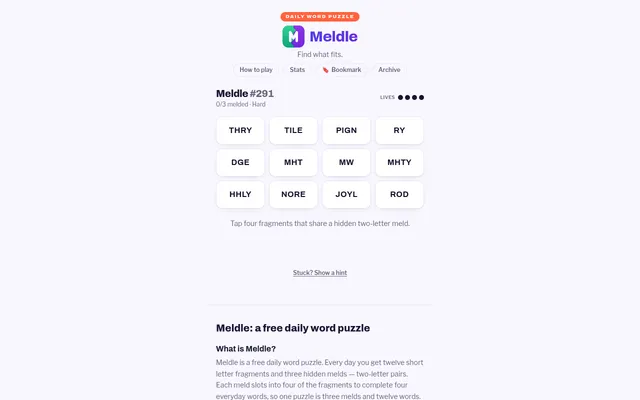
Meldle
Find the two letters that complete four word fragments at once, three times over.