Babel (Mind Loft)
A word-tile game picked up at the end, with the bag empty and the opponent's rack knowable.
Every day: One word-tile endgame a day, the same position for every player: the bag is empty, you hold five tiles, and you try to beat a solver's benchmark spread against the opponent's known rack. New puzzle: Midnight US Eastern Time.
Babel is a free daily word puzzle from Mind Loft set at the very end of a crossword-style tile game. The bag is empty, you hold five tiles, and because the bag is printed on the page you can work out exactly what your opponent holds. You play out the last moves for the best spread you can force.
About Babel (Mind Loft)
Babel drops you into the last few turns of a word tile game on an 11 by 11 board. Nothing is left to draw, which means the opponent's rack is no secret: it is the full bag minus what is on the board minus your own tiles. Babel prints the 65-tile bag on the page and leaves that subtraction to you, the same bookkeeping tournament players do on a tracking sheet.
You are scored on spread, your points from this position minus your opponent's. Going out first matters most, because the opponent's leftover tiles are taken off their score and added to yours. So each endgame becomes a choice between racing to empty your rack and blocking the spot the opponent needs, leaving them stuck with a tile they cannot play. Your words are checked against a full dictionary, while the opponent plays from a list of common words.
Each position comes with a benchmark worked out by the same solver that plays the defence, so the target is always reachable. The bag is weighted toward common letters, includes the Q and has no blanks. A new endgame appears every day at midnight Eastern, and on Sundays each side gets six tiles instead of five.
How to play Babel (Mind Loft)
- Open Babel and press Start once the dictionary has loaded.
- Compare the printed bag with the board and your rack to work out the opponent's tiles.
- Place words with your tiles; the opponent replies after each play.
- Try to go out first, or block the opponent so they are left holding tiles.
- Finish the endgame and compare your spread with the day's benchmark.
Tips
- Work out the opponent's rack before your first play; it tells you which of their words you need to block.
- Going out first is usually worth more than any single high-scoring play.
- A play that leaves the opponent's awkward letter, such as the Q, with nowhere to go can swing the spread more than your own points.
Questions
What time does Babel reset?
A new Babel endgame goes up every day at midnight US Eastern Time, the same for every player. The Sunday Edition deals six tiles a side instead of five.
Is Babel free?
Yes. Babel plays in the browser on Mind Loft with no app and no account. Signing up with a display name (no password) puts your result on the daily leaderboard; an email is optional.
Can I play earlier Babel puzzles?
Yes. Mind Loft keeps an archive of past Babel boards together with each day's standings.
How is Babel scored?
On spread: your points from the starting position minus your opponent's. If you go out first, their unplayed tiles come off their score and are added to yours. Each day has a benchmark spread computed by a solver.
Games like Babel (Mind Loft)
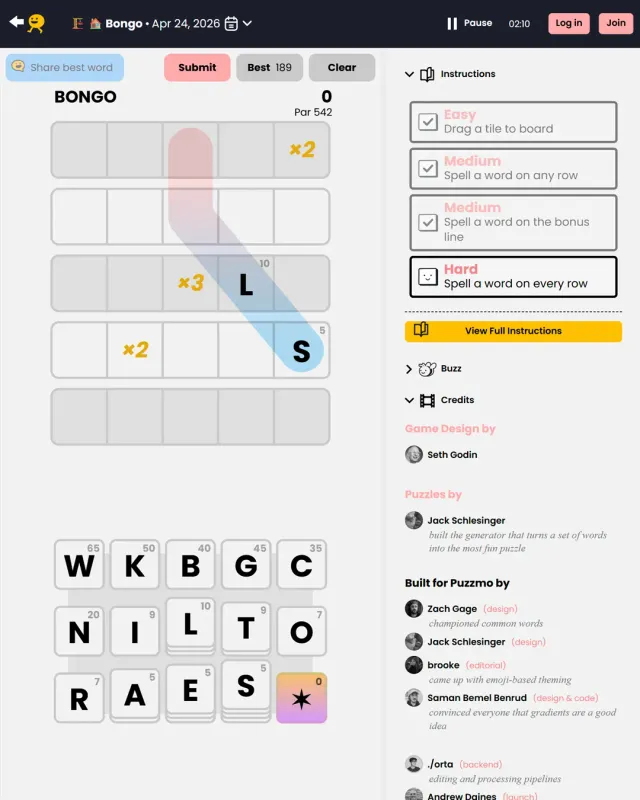
Bongo
A daily letter-tile puzzle scored on the words you build

5spell
Make words from a rack of tiles in a daily challenge

Scrokkle
Place tiles on a board so every line scores, in a daily puzzle
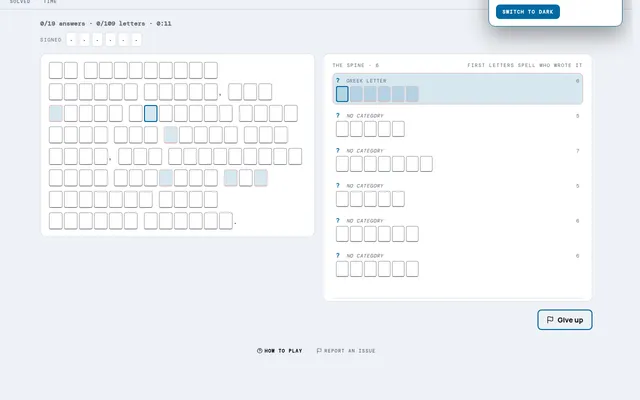
Anon (Mind Loft)
Another Mind Loft word puzzle where the letters are known and the work is placing them
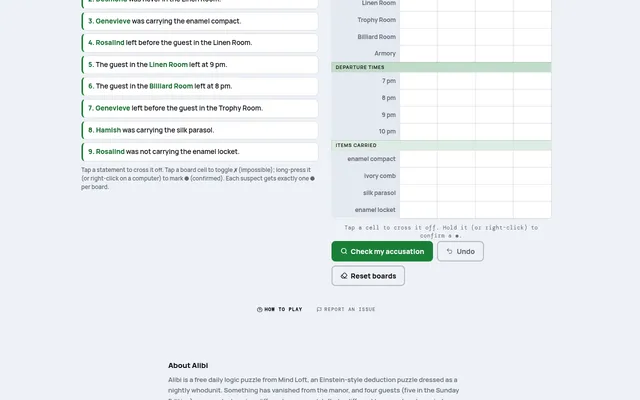
Alibi (Mind Loft)
Mind Loft's daily deduction puzzle, for the bookkeeping side of Babel
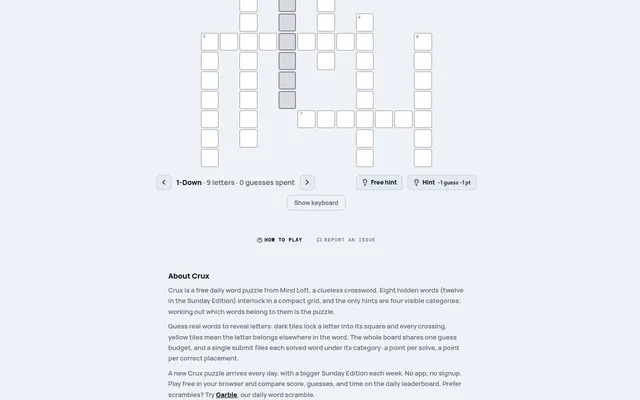
Crux (Mind Loft)
A crossword with no clues: guess words to reveal letters, then sort them into four categories.
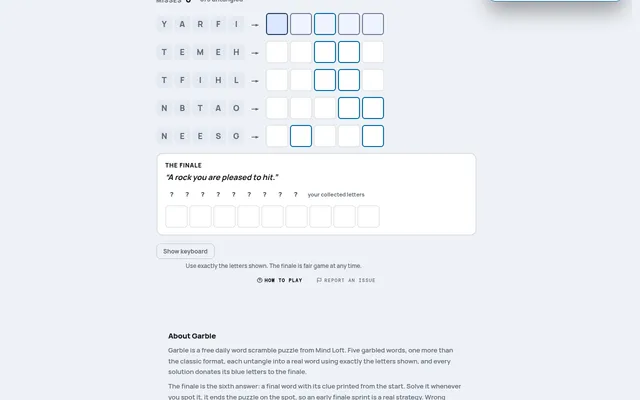
Garble (Mind Loft)
Untangle five scrambled words, then solve the clued finale.
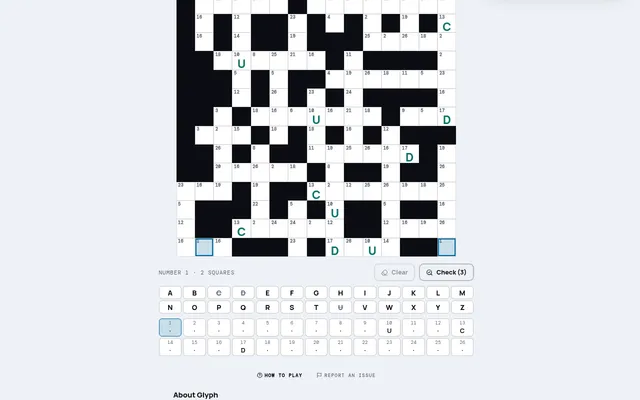
Glyph (Mind Loft)
A daily codeword: crack which number stands for which letter.