Tuck (Mind Loft)
Everyone gets the same 14 letters: build the highest scoring crossword.
Every day: One rack of 14 letters a day (15 on Sundays), the same for every player, to build into one interlocking crossword on an empty 9x9 board for the highest score. A daily benchmark from real players' scores; only the first submitted grid ranks. New puzzle: Midnight US Eastern Time.
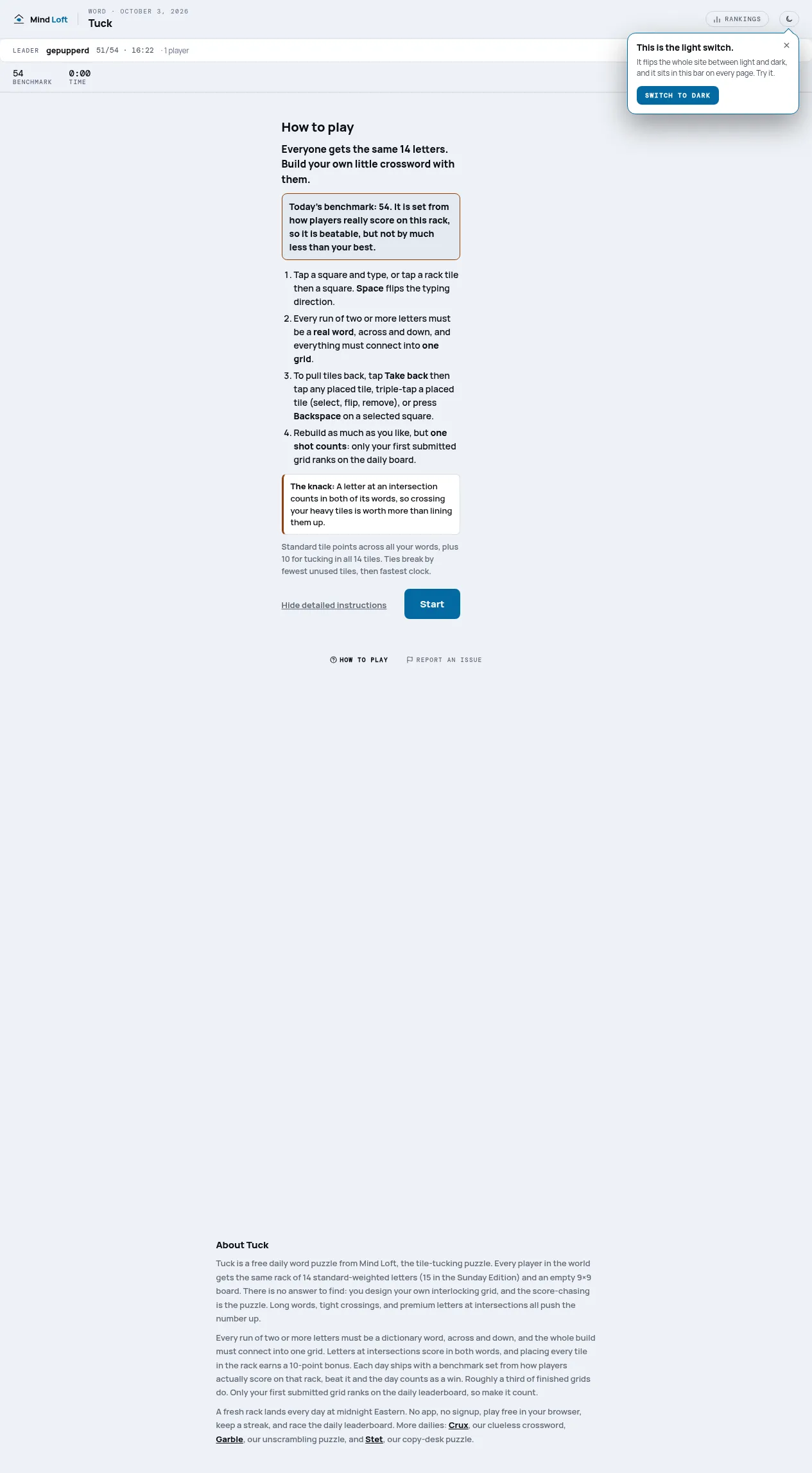
Tuck is a free daily word puzzle from Mind Loft. Every player gets the same rack of 14 letters and an empty 9x9 board, and builds their own interlocking crossword from them. Long words, tight crossings and valuable letters at intersections push the score up, and the day's benchmark is the score to beat.
About Tuck (Mind Loft)
Tuck is a word building puzzle on Mind Loft, a free site of daily browser games. Each day everyone gets the same rack of 14 letters, weighted like a standard word game set (15 in the Sunday Edition), and an empty 9x9 board. There is no hidden answer. You design your own interlocking grid, and chasing the score is the puzzle.
Every run of two or more letters, across and down, must be a dictionary word, and the whole build must connect into one grid. Letters at intersections score in both words, so placing high-value letters where words cross pays. Using every tile on the rack earns a 10-point bonus.
Each day comes with a benchmark set from how players actually score on that rack. Beat it and the day counts as a win; roughly a third of finished grids do. On the day we looked the benchmark was 54. Scores use standard tile points across all your words, and ties break on fewest unused tiles, then the clock. Only your first submitted grid counts on the daily leaderboard.
A fresh rack goes up at midnight US Eastern Time. It suits players who like the board-building side of Scrabble without an opponent, and pairs with Mind Loft's Crux, Garble and Stet.
How to play Tuck (Mind Loft)
- Open mindloftdaily.com/tuck and press Start to see the day's 14 letters and the empty board.
- Place letters on the 9x9 board to form words across and down.
- Make sure every run of two or more letters is a real word and the whole grid connects.
- Cross words on high-value letters so they score twice, and try to use every tile for a 10-point bonus.
- Submit once you are happy; only your first submitted grid ranks.
Screenshots
Tips
- Look for one long word first, then hang shorter words off it.
- Put the rare, high-scoring letters at crossings.
- Watch for accidental two-letter runs where words sit side by side; each must be a word.
- Using all 14 tiles is worth 10 points, often more than one extra crossing.
Questions
Is there a correct answer in Tuck?
No. You build your own crossword from the day's letters, and the score decides the leaderboard.
What is the benchmark in Tuck?
A score set from how players actually do on that day's rack. Beating it counts the day as a win.
Is Tuck free?
Yes. Tuck runs in the browser on mindloftdaily.com at no cost. There is no app and no account to make; entering a display name only puts your result on the daily leaderboard.
When does a new Tuck come out?
Every day at midnight US Eastern Time, with the same rack for every player. Sundays bring 15 letters instead of 14.
Can I play old Tuck racks?
Yes. Mind Loft keeps past days in its puzzle archive, together with each day's standings.
Games like Tuck (Mind Loft)
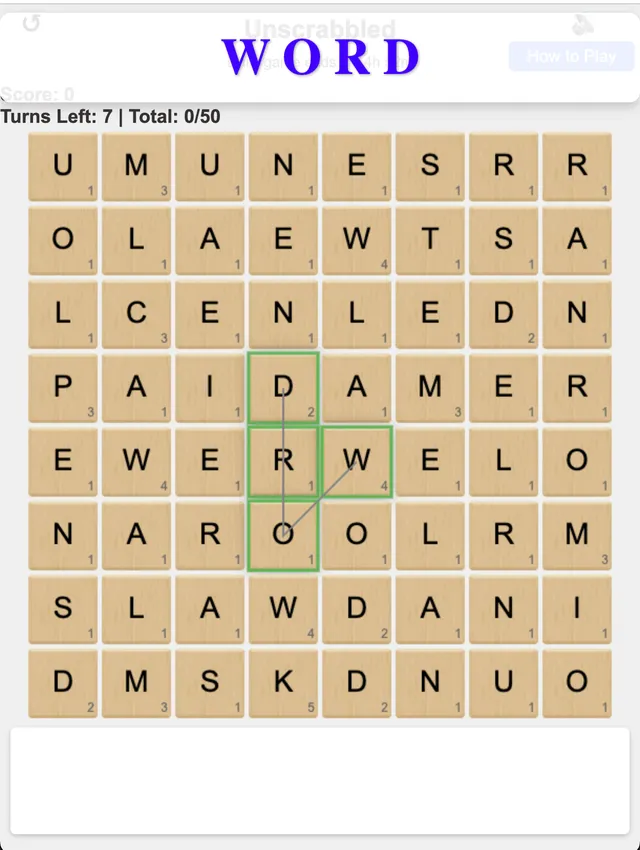
Unscrabbled
A daily board of Scrabble tiles where long words score far more
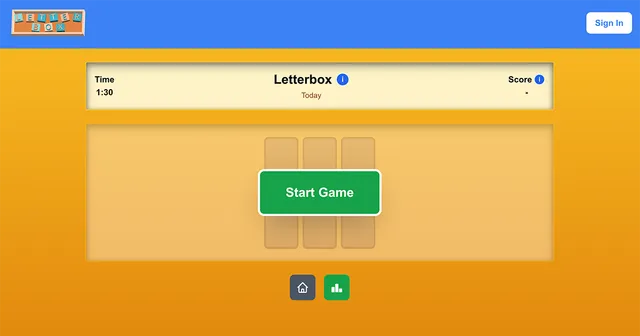
Letterbox (Lost Art Games)
Drop the day's letters into a grid so rows and columns spell words
Summit (summit-puzzle.me)
Fit every letter into interlocking words with no clues
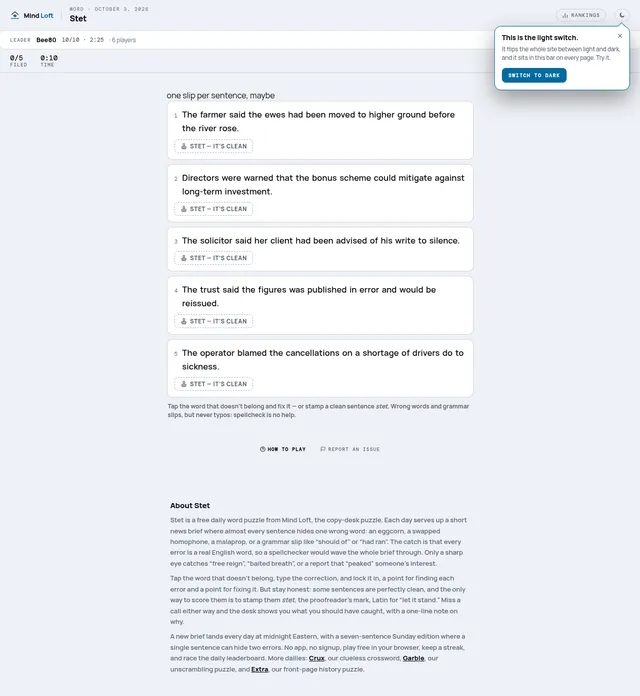
Stet (Mind Loft)
Mind Loft's copy-desk puzzle, named on the Tuck page
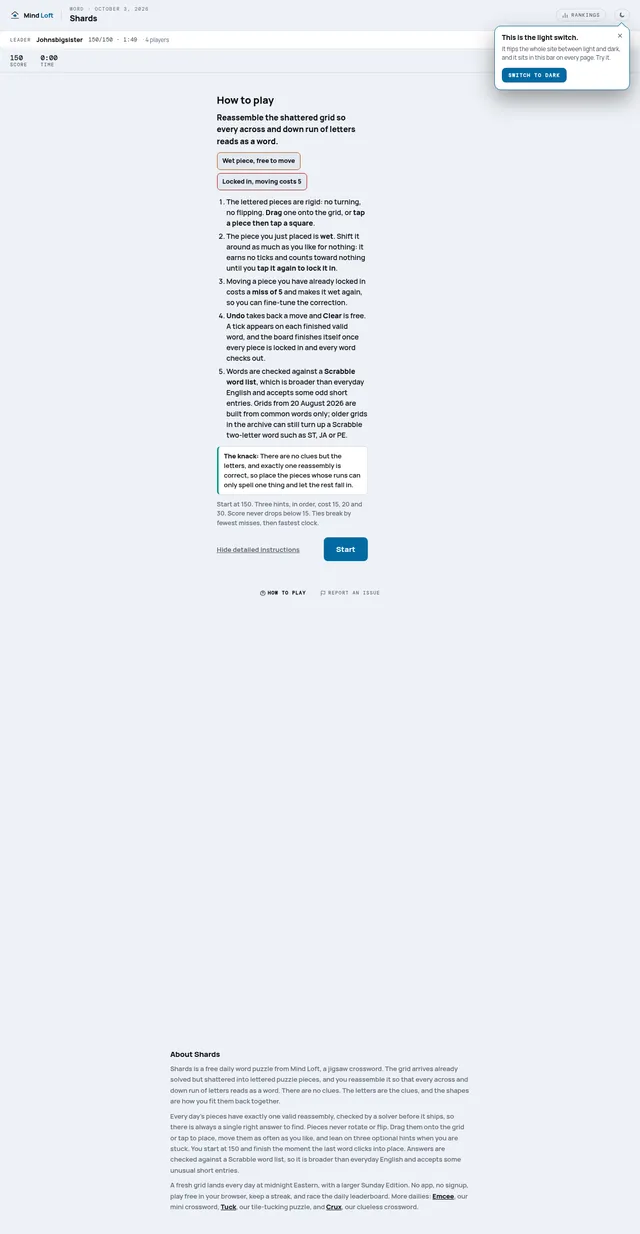
Shards (Mind Loft)
Mind Loft's jigsaw crossword, rebuilding a grid from pieces
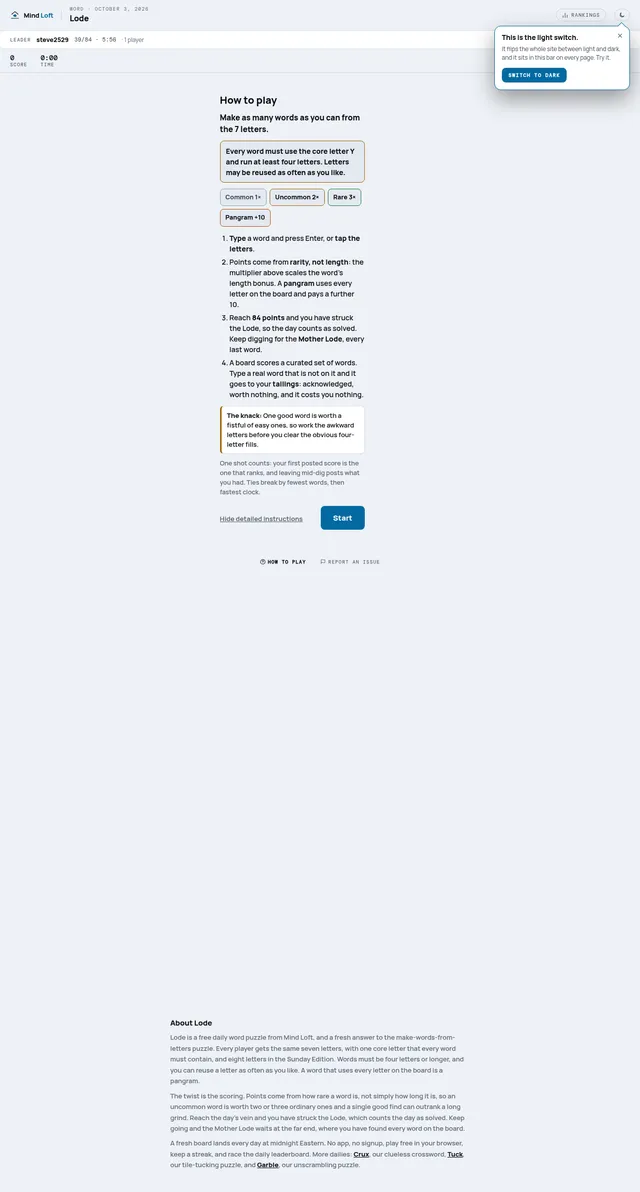
Lode (Mind Loft)
Mind Loft's seven-letter daily where rare words score more
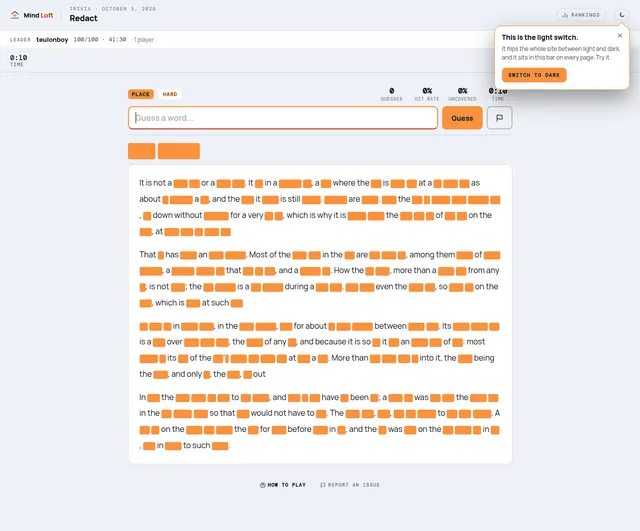
Redact (Mind Loft)
An article with every word blacked out: guess words until you can name its subject.
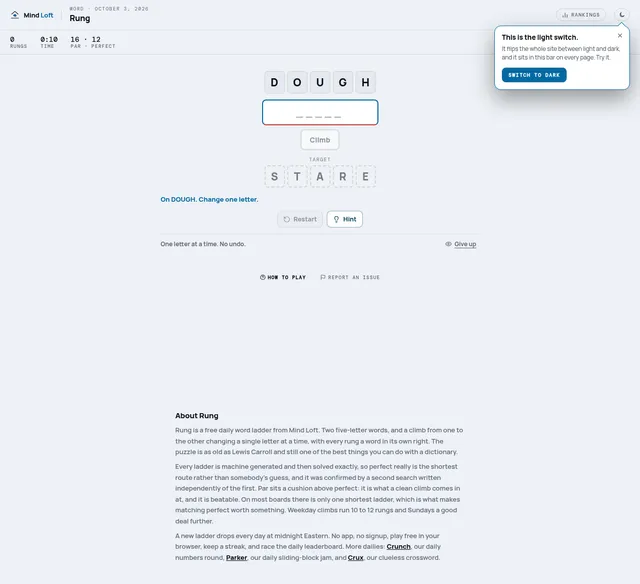
Rung (Mind Loft)
Climb from one five-letter word to another, changing one letter a rung.