Neighbours (BrainBashers)
A Latin square where small symbols mark which squares differ by exactly 1.
Every day: Seven new Neighbours grids every day, from a 4x4 Easy to 7x7 Hard, dated and the same for every visitor, plus a 9x9 weekly special. New puzzle: Midnight GMT (the site lets you set your own time zone).
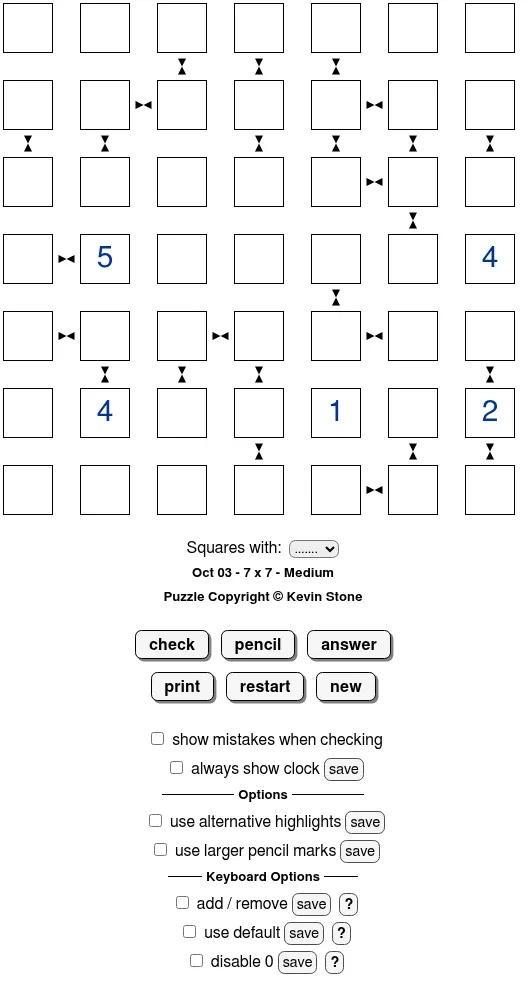
Neighbours on BrainBashers is a number grid in which every row and column holds each number once. A small symbol between two squares means their numbers are consecutive, and the absence of a symbol means they are not, which is the clue that does most of the work.
About Neighbours (BrainBashers)
Neighbours is one of BrainBashers' Latin square puzzles. You fill a square grid so every row and column contains each number from 1 to the grid size exactly once. Between some pairs of adjacent squares there is a small bow-tie symbol: it means the two numbers are neighbours, differing by exactly 1, such as 3 and 4 or 2 and 1. The second rule matters just as much: where two squares touch and there is no symbol, their numbers must not be neighbours.
Kevin Stone's site posts a 4x4 Easy grid every day, then 5x5, 6x6 and 7x7 grids at Medium and Hard, and a 9x9 weekly special. A few numbers are given to start. Each puzzle has its own dated page with check, pencil marks, answer, print and restart, an option to show mistakes when checking and an optional clock, and a help page with a walkthrough.
The puzzles change at midnight GMT or at the time zone you set, and earlier days stay in the date list for a few weeks. There are no adverts and no account.
It suits players who already enjoy Futoshiki or sudoku and want a variant where the empty borders carry as much information as the marked ones.
How to play Neighbours (BrainBashers)
- Open the Daily Neighbours page and pick a size and level from today's puzzles.
- Fill each row and column with the numbers 1 to the grid size, once each.
- Where a symbol sits between two squares, make their numbers differ by exactly 1.
- Where two adjacent squares have no symbol, make sure their numbers do not differ by 1.
- Check your grid, reveal the answer if needed, and come back after midnight GMT.
Tips
- Use the no-symbol rule: a square bordered on all sides without symbols rules out every number next to its neighbours' values.
- In a 4x4 grid, 1 and 4 are the only numbers with just one possible neighbour, so look for squares with a single symbol.
- A run of symbols along a row forms a counting sequence, either rising or falling.
- Pencil marks help on the 7x7 Hard grid, where most deductions come from where the symbols are missing.
Questions
What does the symbol between squares mean?
The two numbers are neighbours: they differ by exactly 1.
What if there is no symbol?
Then the two numbers must not differ by 1. Both rules apply to every pair of touching squares.
What sizes are there?
A 4x4 Easy, 5x5 to 7x7 at Medium and Hard each day, and a 9x9 weekly special.
Is it free?
Yes, with no adverts and no account.
Games like Neighbours (BrainBashers)
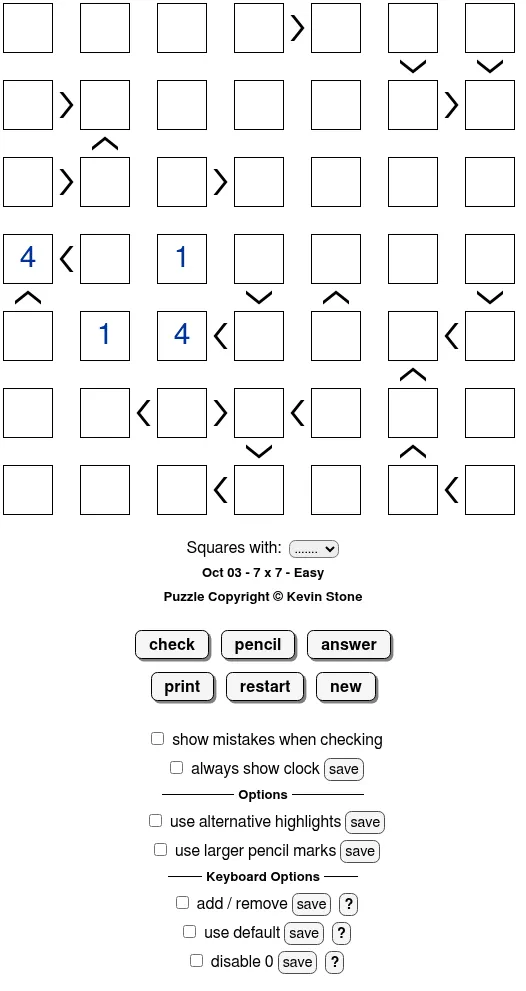
Futoshiki (BrainBashers)
The same site's Latin square steered by greater-than and less-than signs
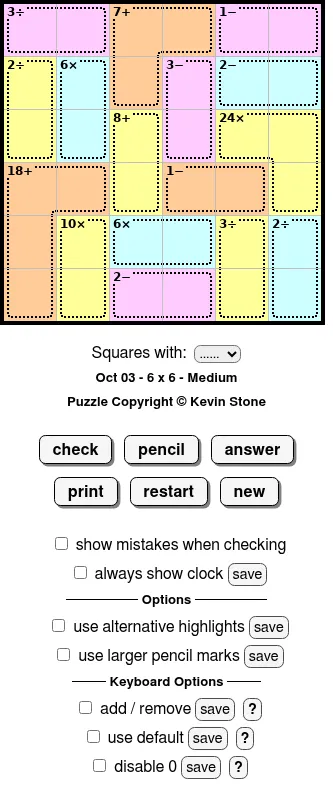
CalcuDoku (BrainBashers)
BrainBashers' Latin square with arithmetic cages
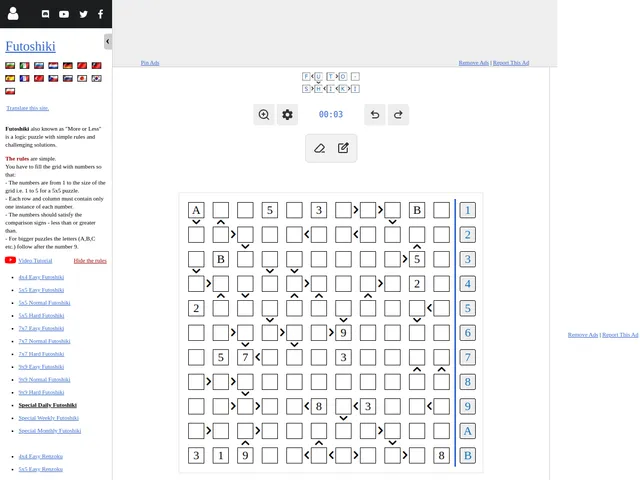
Daily Futoshiki
A daily Futoshiki, the closest relative among other sites
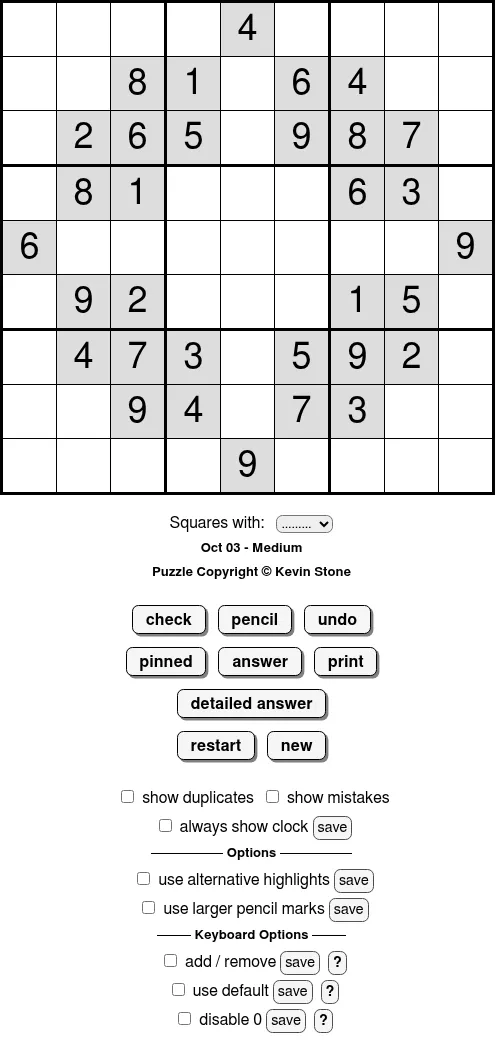
Sudoku (BrainBashers)
The site's classic daily sudoku at six levels
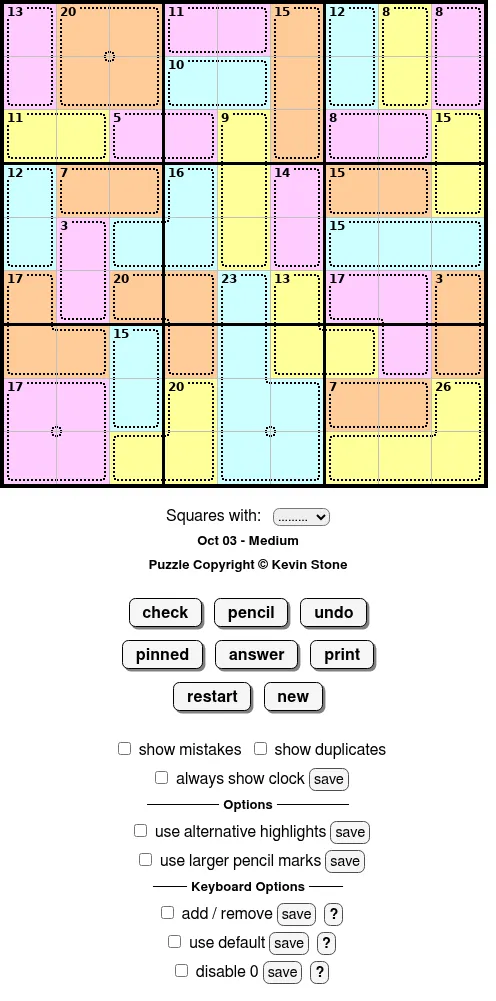
Killer Sudoku (BrainBashers)
Another BrainBashers number grid with extra constraints
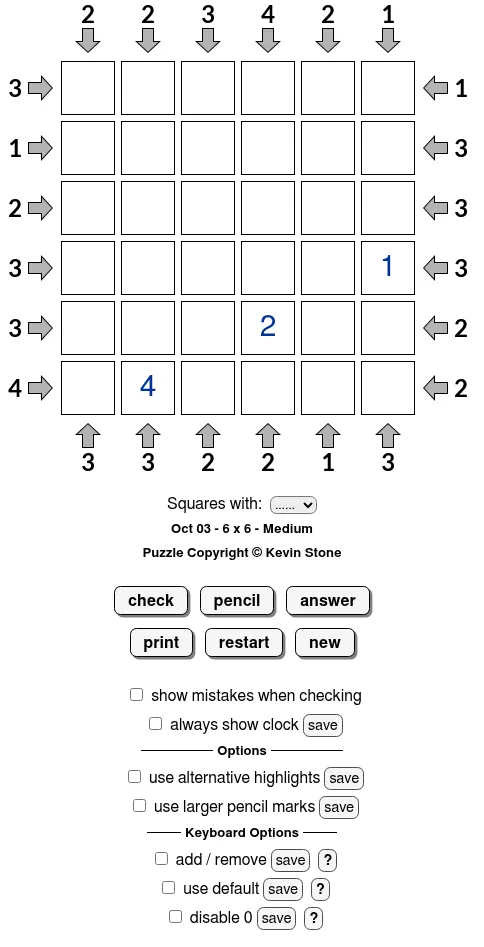
Skyscrapers (BrainBashers)
Place buildings of every height so the edge clues count the ones you can see.
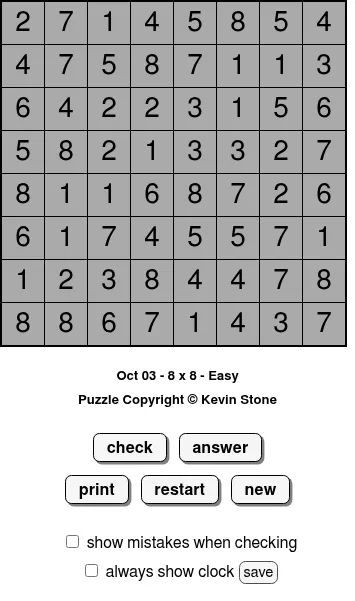
Hitori (BrainBashers)
Shade out repeated numbers without letting black squares touch or cutting the white ones apart.
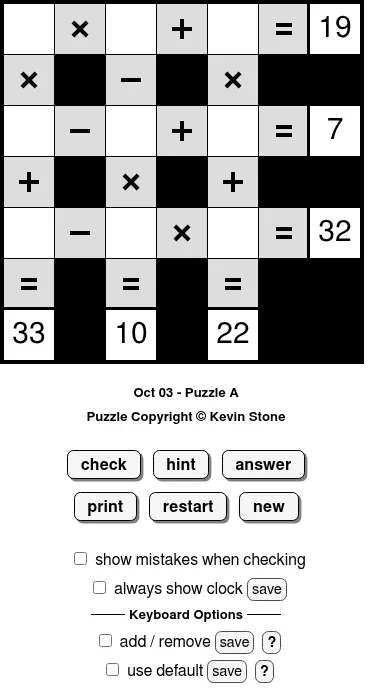
MathemaGrids (BrainBashers)
Place the digits 1 to 9 so three across sums and three down sums all come out right.