Equations
Split a grid of numbers into groups of three that add, multiply or raise to a power.
Every day: One numbered grid of 15 numbers per day, with a countdown to the next: split all of them into groups of three that form an addition, multiplication or power equation. New puzzle: Daily (countdown shown after you finish).
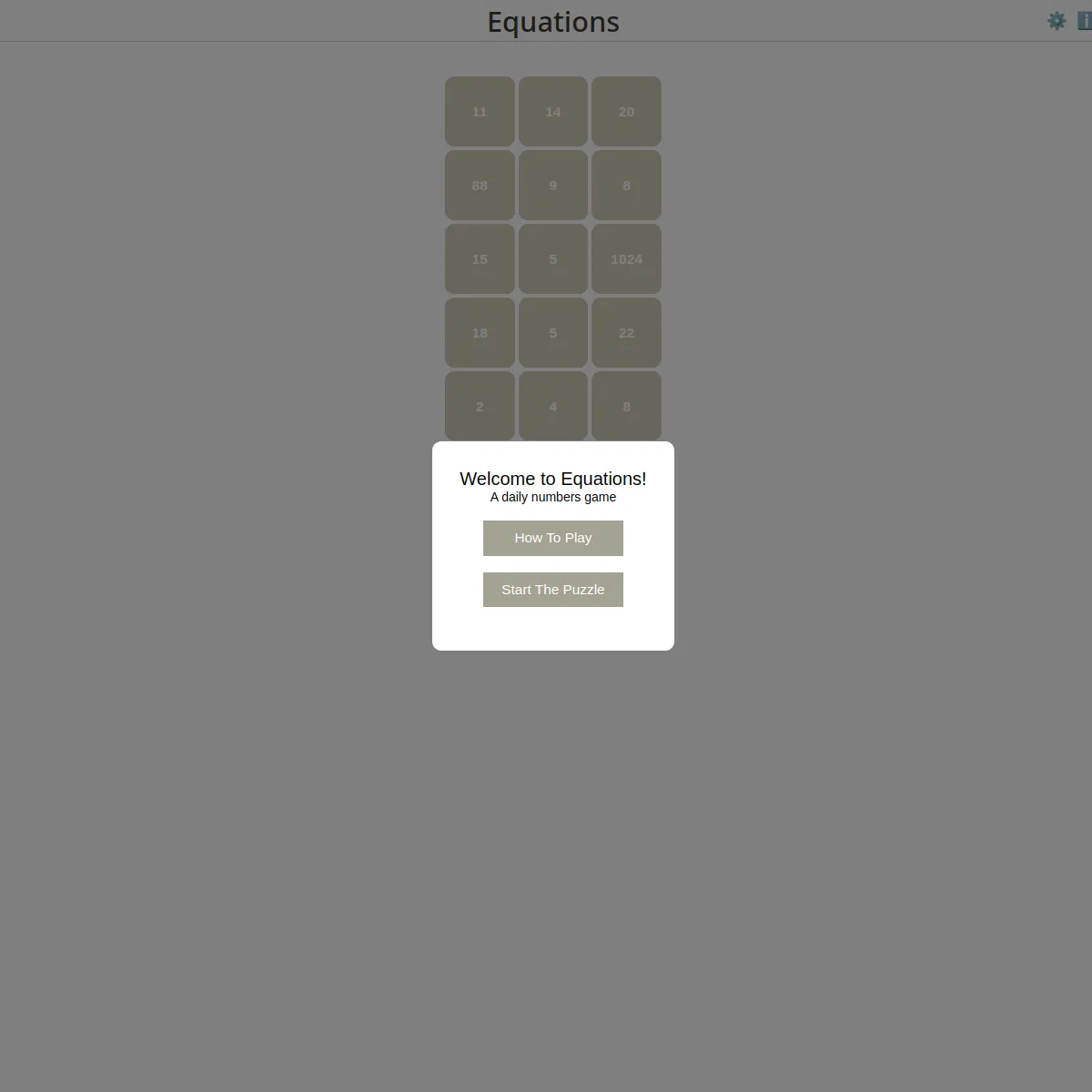
Equations is a daily numbers game. You get a grid of numbers and must sort every one of them into groups of three, where two numbers add up to the third, multiply to it, or one raised to the power of the other gives it. Each number is used once, and the puzzle hides red herrings.
About Equations
Equations calls itself a daily numbers game. Each day brings one numbered puzzle, a grid of numbers (five rows of three in the 2 October 2026 puzzle), and after solving it you see your result and a countdown to the next puzzle.
The goal is to find groups of three numbers that form an equation of one of three kinds: addition (two numbers add up to the third), multiplication (two numbers multiply to the third) or exponential (one number raised to the power of another equals the third). Every number must belong to exactly one valid group. The rules warn about red herrings: combinations that look right but leave the rest of the grid impossible. For example, from 2, 3, 5, 9, 16, 24, 25, 32 and 40 you can form 2^5 = 32, 16 + 24 = 40 and so on, but only one full split works.
Difficulty rises through the week. A share button copies the puzzle number and your result.
It suits players who like Connections-style grouping but prefer numbers to words, and anyone keen on quick mental arithmetic with a logic twist.
How to play Equations
- Start the puzzle and look at the grid of numbers.
- Pick three numbers that form a valid equation by addition, multiplication or a power.
- Use each number only once; every number must end up in a group.
- Avoid red herrings that strand other numbers, finish the grid and share your result.
Tips
- Start with the largest numbers; they are usually results, which limits their partners.
- Big round powers such as 1024 or 32 almost always come from an exponent.
- Duplicated numbers (two 5s or two 8s) often belong to different groups.
- Before locking in a group, check that the remaining numbers can still pair up.
Questions
Is the puzzle the same for everyone?
Yes. There is one numbered puzzle per day with a countdown to the next.
Which operations count?
Addition, multiplication and exponents. Subtraction and division appear only as the same equations read backwards.
Does it get harder?
Yes. The rules say difficulty increases throughout the week.
Is it free?
Yes, it plays free in the browser.
Games like Equations
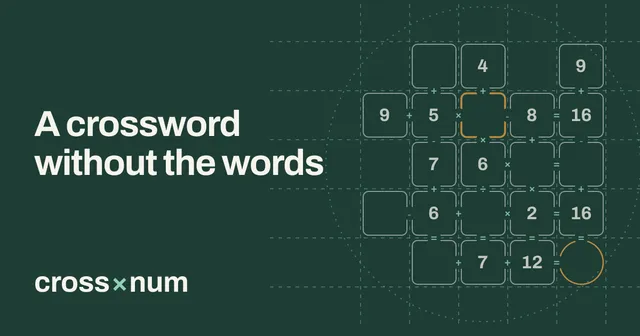
Crossnum
A daily grid of interlocking equations

Connections
Sort items into hidden groups each day
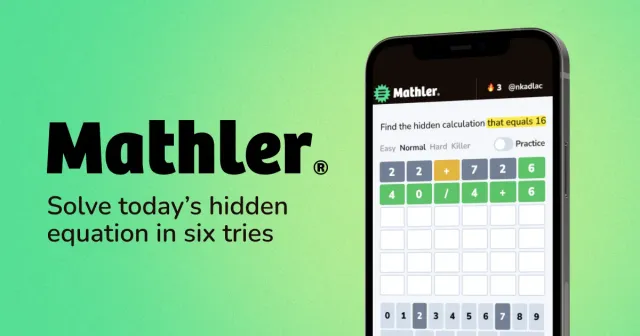
Mathler
Find the day's hidden equation
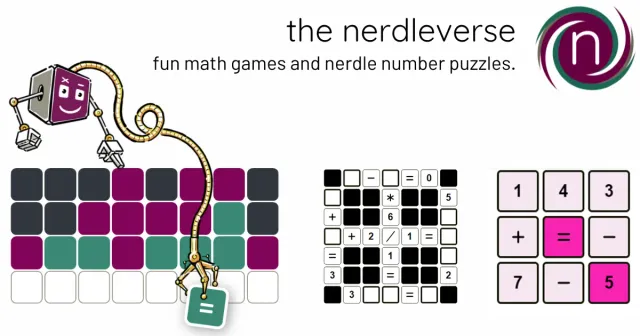
Nerdle
A daily equation guessing game
Logic Equations (Puzzleship)
Deduce numbers that make equations hold
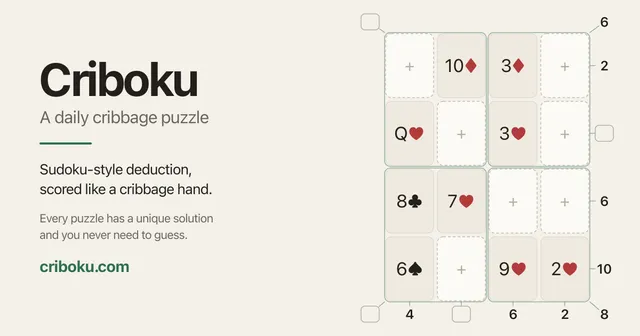
Criboku
Sudoku-style deduction on a grid of playing cards, scored like cribbage hands.
K-doku (Dagbladet)
Dagbladet's daily KenKen-style number grid with arithmetic cages.
KenKen (Boston Globe)
The Boston Globe's daily KenKen in 4x4 and 6x6, harder as the week goes on.