Bevel
Read a short passage from a classic and work out who wrote it, when and where.
Every day: One numbered passage a day from a public-domain book, the same for everyone; deduce its author, decade, nationality and title in five attempts. New puzzle: Midnight in your own time zone: the site sets the day from your browser's time zone, or UTC if it cannot.
Bevel gives you one short passage a day from a public-domain book and asks you to place it: the author, the decade, the author's nationality and the title. You have five attempts, and colours tell you when a guess is right or close. It suits readers who like to recognise a writer by the prose.
About Bevel
Bevel calls itself a daily literary deduction game. Each numbered puzzle is a passage of 150 words or so taken from a public-domain work. Puzzle 148, on 2 October 2026, was a scene told by a household servant, with a Mr. Franklin Blake and a Miss Rachel.
Under the passage is a form with four fields: author, decade, nationality and title. Each field offers a shortlist for the day, though you can type anything. After each attempt the tiles show whether you are correct, close or not close. Author and title are simply right or wrong; a decade counts as close within ten years, and a nationality counts as close when it shares a literary tradition. You get five attempts to fill all four.
Passages come from Project Gutenberg's catalogue and are chosen by an editor, who also reviews the hints and redactions, before they go out. There is a cold read option for players who want to start without the shortlists. Bevel Together lets a classroom or a group of friends read the day's passage, or an earlier one, and vote on each field, and a Discord app brings the daily puzzle into a server with a recap of everyone's scores.
The About page describes Bevel as made by a team of one, as the first part of a larger reading platform. The game is free, with an optional sign-in and a shelf page for your results.
How to play Bevel
- Open Bevel and read the day's passage.
- Pick or type an author, a decade, a nationality and a title.
- Submit your guess and read the tiles: correct, close, or not close.
- Use what was close to narrow the next attempt; a close decade is within ten years.
- Fill all four fields correctly within five attempts, then share your result.
Tips
- Spelling, punctuation and vocabulary date a passage well; settle the decade first.
- A close nationality means the right literary tradition, such as another English-language country.
- Character names and forms of address in the passage often point to the book once you know the author.
- Leave a field blank if you have no idea; it shows as a dashed tile rather than a wrong guess.
Questions
Where do Bevel's passages come from?
From public-domain works, checked against Project Gutenberg's catalogue and chosen by an editor.
How many guesses do I get?
Five attempts to name the author, decade, nationality and title.
What does 'close' mean?
For the decade, within ten years. For nationality, the same literary tradition. Author and title are only right or wrong.
Can I play with a group?
Yes. Bevel Together lets a room vote on each field, and there is a Discord app for playing in a server.
When does a new passage appear?
Once a day, at midnight in your own time zone.
Games like Bevel
Litclues
Sort book and writer tiles into four groups, for a different daily test of literary knowledge.
Decodex
Decode a quotation each day, with its author given as a clue.
Redactle
Uncover a hidden text word by word until you can name it, another daily deduction from prose.
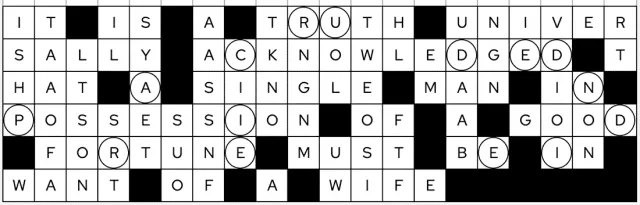
Gisnep
Rebuild a quotation from its letters and find its source.
PopCultured
Name the year shared by a film, a song and a book, close to Bevel's decade guess.

Celeble
Guess a person in several tries with tiles that show which details are right or close.
Twiggit
Find the day's mystery thing with twenty yes or no questions.
¿Cuánto sabes? (El Mundo)
El Mundo's daily news quiz: four choices a question, against the clock.