Argyle Sudoku (PuzzleMadness)
A sudoku with eight diagonal lines in an argyle pattern, and no digit repeats along any of them.
Every day: A new dated Argyle Sudoku puzzle every day at each difficulty (Easy, Medium, Hard and Tough, plus a Mixed page), the same for every player, with scores on monthly and all-time leaderboards and earlier days in the archive. New puzzle: Once a day (the site does not state the time).
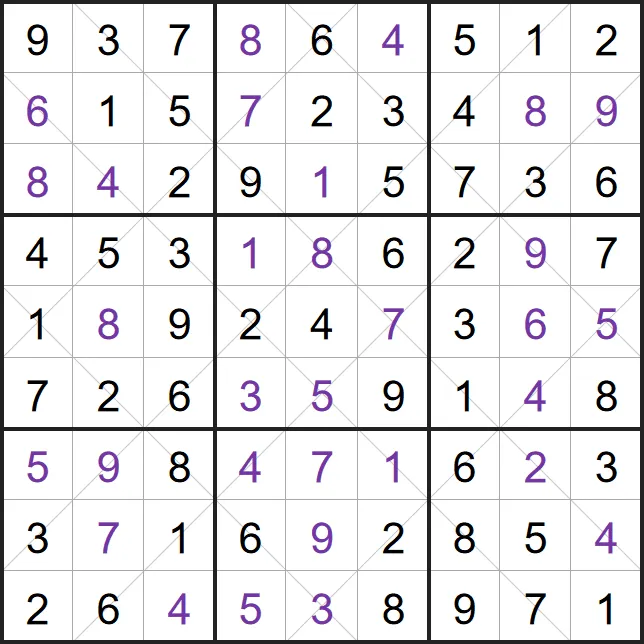
Argyle Sudoku on PuzzleMadness is a 9x9 sudoku crossed by eight diagonal lines that form a diamond, argyle-style pattern. No digit may repeat along any of those lines. A new grid is posted every day from Easy to Tough.
About Argyle Sudoku (PuzzleMadness)
Argyle Sudoku keeps the usual rules, 1 to 9 once in each row, column and 3x3 box, and adds eight diagonal lines drawn across the grid in a diamond lattice. Digits may not repeat along any line. It resembles X-Sudoku, but the diagonals are shorter: none of them runs the full nine cells, and the longest have eight.
That difference changes how the lines help. On an X-Sudoku diagonal every digit must appear once, so you can look for the only place a digit fits. On an Argyle line a digit need not appear at all, so the lines only ever remove candidates: once a digit is on a line, it is ruled out of every other cell on that line. Where two lines cross, a single cell sees both, and a lot of eliminations meet there.
The grid works like every sudoku on PuzzleMadness: number buttons above and below it, an eraser, and a pencil mode for candidate digits. On a keyboard, the number keys enter digits, the arrow keys move between cells, Ctrl, Shift or Alt with a number adds a pencil mark, and Delete or Backspace clears a cell.
PuzzleMadness is a free puzzle website run by Dewi, a software developer who started out making games for the PlayStation 2, Nintendo Wii and DS and now builds the site as a hobby. It carries dozens of puzzle types, from classic sudoku to newer logic grids, and each one gets its own dated puzzle every day at each difficulty. Argyle Sudoku comes in Easy, Medium, Hard and Tough versions plus a Mixed page, and the same day's Argyle Sudoku puzzle is shared by everyone who opens it.
The site checks your grid as you go and tells you when it is finished; it does not publish solutions. Each completed puzzle earns a score, and scores feed a monthly and an all-time Argyle Sudoku leaderboard, where only your best attempt at a puzzle counts. Older days stay in the archive, so a missed puzzle can still be played later and still counts toward the current month. Playing needs no account; a free registration gives you a username on the leaderboards and a cloud save. The pages carry adverts.
How to play Argyle Sudoku (PuzzleMadness)
- Open today's Argyle Sudoku page on PuzzleMadness and choose a difficulty from the menu above the grid.
- Click a cell and enter a digit with the number buttons above and below the grid or with the keyboard; the eraser button clears a cell.
- Fill every row, column and 3x3 box with the digits 1 to 9, each once.
- Never repeat a digit along any of the eight diagonal lines.
- Turn on pencil mode (the pencil button, or Ctrl, Shift or Alt with a number key) to jot candidate digits in a cell.
- The site tells you when the grid is complete and adds your score; registered players appear on the leaderboards.
Tips
- Treat each diagonal as an extra set of cells a placed digit can see; it removes candidates but never forces a digit to appear.
- Cells where two diagonals cross see the most cells, so they often run out of candidates first.
- Do not hunt for the only place of a digit on a diagonal: unlike X-Sudoku, the digit may not be on that line at all.
- Missed a day? Earlier puzzles are in the archive, and finishing one still counts toward this month's leaderboard.
Questions
How is Argyle Sudoku different from X-Sudoku?
X-Sudoku has two full nine-cell diagonals that must each contain 1 to 9. Argyle Sudoku has eight shorter diagonals, up to eight cells long, where digits may not repeat but need not all appear.
When does a new Argyle Sudoku puzzle appear?
Once a day: each difficulty gets its own dated puzzle. PuzzleMadness does not state the exact changeover time.
Where can I see the solution?
PuzzleMadness does not publish solutions. The page tells you when your grid is correct and finished, or when you have made a mistake.
Is Argyle Sudoku on PuzzleMadness free?
Yes. It is free to play in a browser with adverts on the page, and registering for the leaderboards is free too.
Games like Argyle Sudoku (PuzzleMadness)
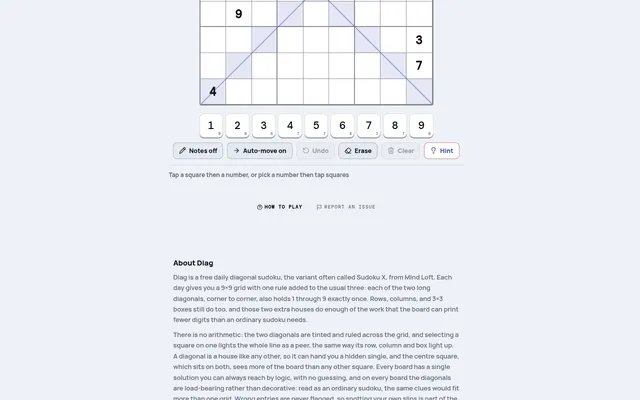
Diag (Mind Loft)
Mind Loft's daily Sudoku X, the classic diagonal variant
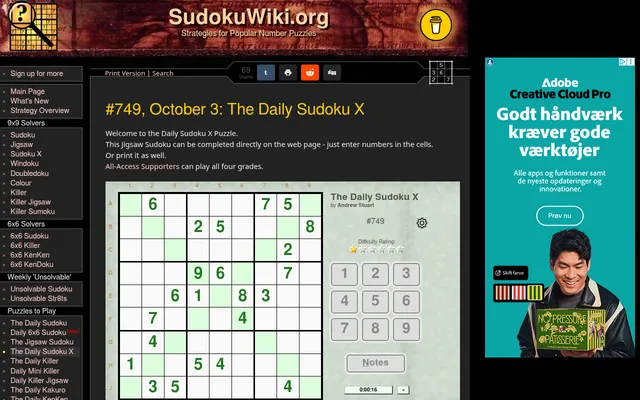
The Daily Sudoku X (SudokuWiki)
A daily Sudoku X with two full diagonals
Sudoku X (Daily Mail)
The Daily Mail's daily diagonal sudoku
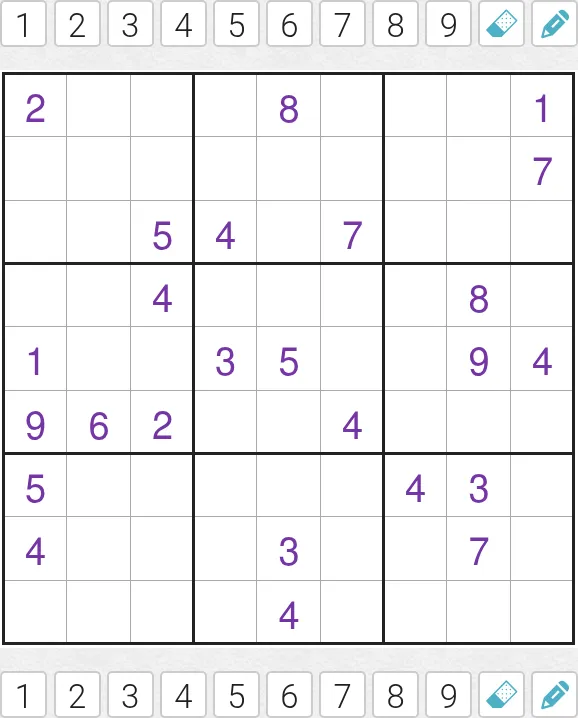
Anti Knight Sudoku (PuzzleMadness)
PuzzleMadness's daily sudoku with an extra rule about which cells see each other
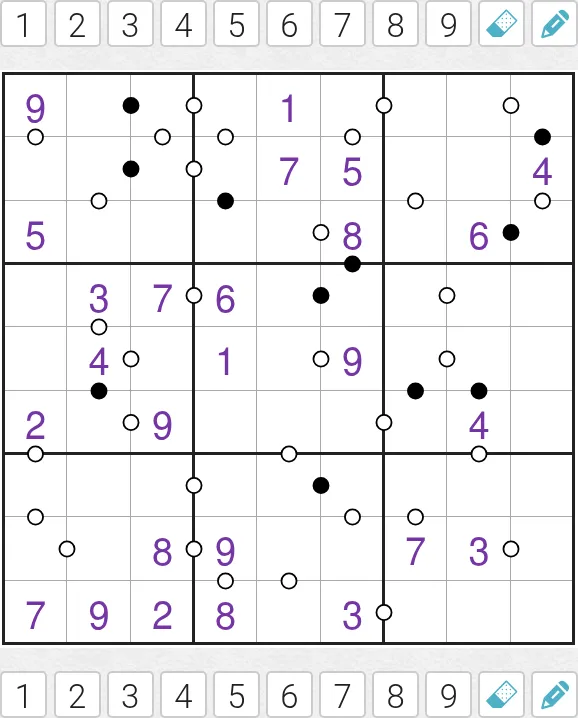
Kropki Sudoku (PuzzleMadness)
Another PuzzleMadness daily sudoku variant
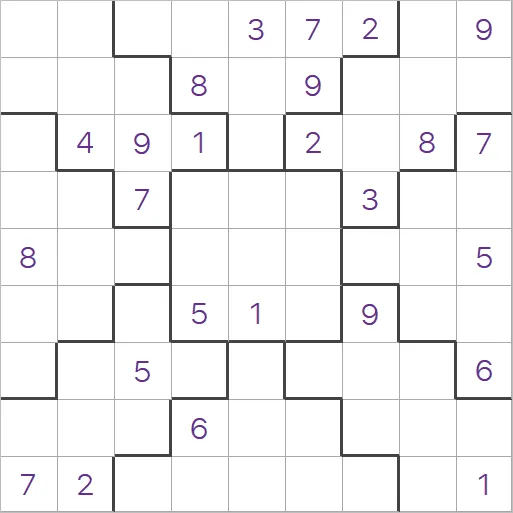
Jigsaw Sudoku (PuzzleMadness)
PuzzleMadness's daily sudoku with irregular regions
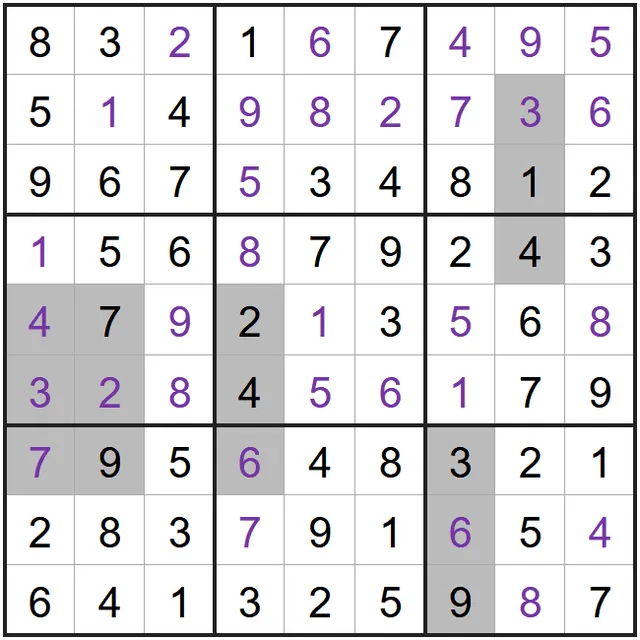
Addition Sudoku (PuzzleMadness)
A sudoku with grey blocks of cells that work as written-out addition sums.
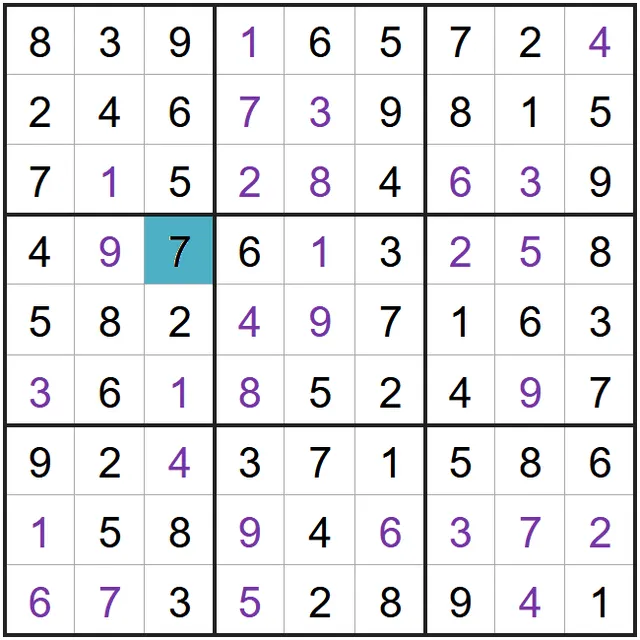
Anti King Sudoku (PuzzleMadness)
A sudoku where the same digit may never sit in two cells that touch, not even diagonally.