Waffle Japanese (ワッフル, Puzzlega.me)
Swap the day's kanji around a waffle grid until every word is right.
Every day: One kanji grid each day, the same puzzle and answer for every player. The kanji are scrambled around a waffle-shaped grid of words, and you swap tiles until every row and column reads as a real Japanese word, guided by tile colours. New puzzle: Once a day.
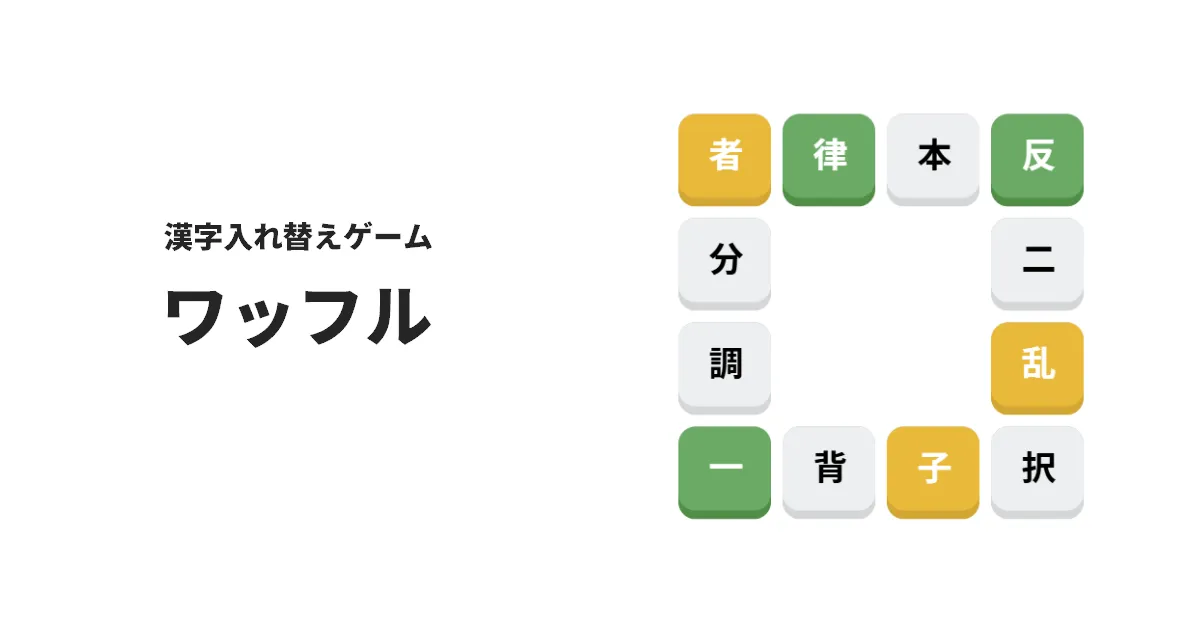
Puzzlega.me's Waffle is a Japanese kanji version of the tile-swapping word grid. The kanji in a square, waffle-shaped grid are mixed up, and you swap pairs of tiles to rebuild the hidden words. Colours tell you which kanji are already in place and which belong elsewhere in their line.
About Waffle Japanese (ワッフル, Puzzlega.me)
This Waffle is a kanji-swapping puzzle from the Puzzlega.me collection of Japanese daily games. The board is a square grid with holes, like a waffle, where the rows and columns each spell a Japanese word made of kanji.
At the start the kanji are scrambled. You swap two tiles at a time to move them into place. A green tile is in the right spot, a yellow tile belongs somewhere else in the same row or column, and a plain tile is not part of that line. Using the colours and your knowledge of kanji compounds, you rearrange the grid until every word is correct.
The puzzle changes every day and the answer is the same for every player. It plays free in the browser alongside the site's other Japanese puzzles such as Spelling Bee, Sakuin Tango and Donut.
It suits Japanese readers and kanji learners who enjoy the English Waffle and want a version built on kanji compounds.
How to play Waffle Japanese (ワッフル, Puzzlega.me)
- Look at the scrambled kanji in the waffle-shaped grid.
- Pick two tiles to swap their places.
- Read the colours: green is correct, yellow belongs elsewhere in that line.
- Keep swapping until every row and column forms a real word.
Tips
- Lock in green tiles first and work around them.
- Think of common two-kanji compounds that fit the corners.
- Plan swaps that fix two tiles at once to save moves.
Questions
Is it daily?
Yes. The puzzle changes every day and the answer is common to all users.
What do the colours mean?
Green means the kanji is in the right place; yellow means it belongs elsewhere in the same row or column.
Is it free?
Yes, it is free to play in the browser.
Games like Waffle Japanese (ワッフル, Puzzlega.me)
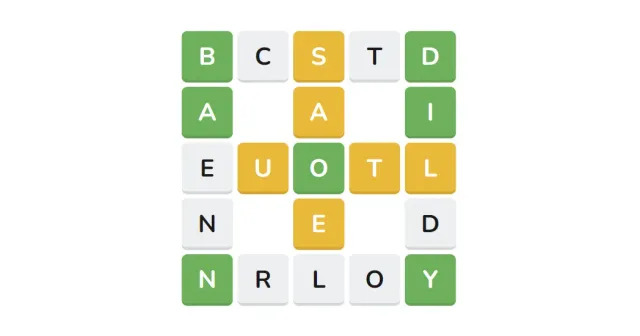
Waffle
The original English tile-swapping grid.
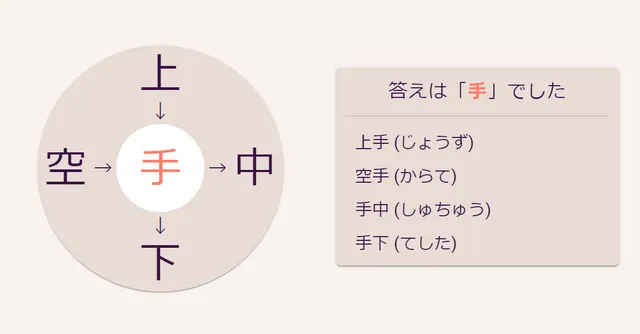
Donut (Puzzlega.me)
Another kanji puzzle from Puzzlega.me.
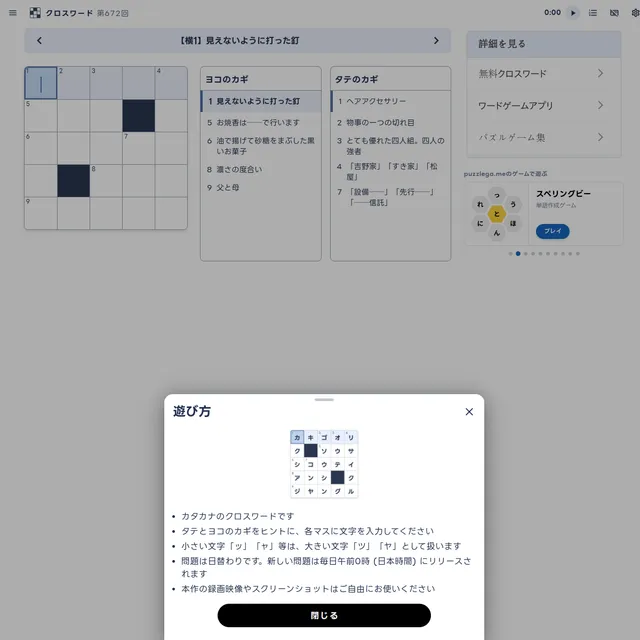
Crossword / 無料クロスワード (Puzzlega.me)
Daily Japanese grid puzzle from the same site.
Kotonoha Tango (ことのはたんご)
A daily Japanese word game.
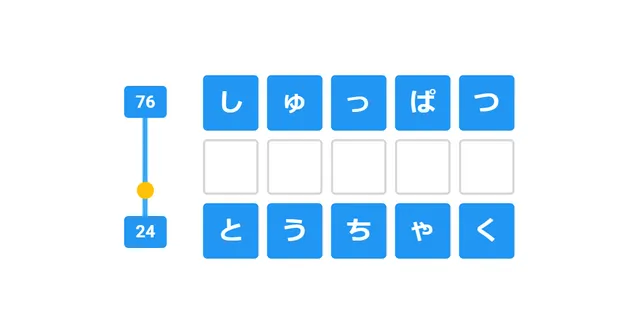
Sakuin Tango (索引たんご, Puzzlega.me)
A Puzzlega.me sibling: find the hidden Japanese word by dictionary order.
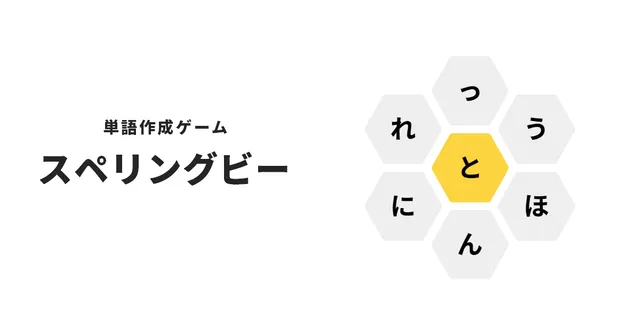
Spelling Bee Japanese (スペリングビー, Puzzlega.me)
A Japanese Spelling Bee: build words from seven kana, always using the centre one.

Collage / コラージュ (Puzzlega.me)
A Japanese crossword where the clues are cut-out photos pinned to a corkboard.

Cryptogram / 暗号解読 (Puzzlega.me)
Crack a Japanese sentence where each number hides one kana, one puzzle a day.