Puckdoku
Fill a 3x3 grid with NHL players who fit each row and column, in nine shots.
Every day: One 3x3 NHL grid a day, the same for everyone: name a player for each cell who fits both its row and column (teams, awards, stats or teammates), with nine shots to fill the board and a rarity score for your picks. New puzzle: Once a day; the site does not state the time.

Puckdoku is a daily hockey grid in the style of Immaculate Grid. Each of the nine cells sits where a row and column meet, such as two NHL teams or a team and a stat, and you name a player who fits both. Every pick counts as a shot, and a uniqueness score rewards rarer correct answers.
About Puckdoku
Puckdoku brings the sports grid format to the NHL. The board is three by three, and each row and column has a category: an NHL franchise, an award, a statistical mark, a junior tournament such as the World Juniors, or having played alongside a named player. For each cell you choose a player who fits both of its categories. Player data comes from Elite Prospects.
The rules are careful about edge cases. A player must have played at least one regular season or postseason NHL game for a team to count for it. When a cell combines a team with an award or stat, the achievement has to have come while the player was with that team. Relocated franchises count as one team, so the Hartford Whalers count as the Carolina Hurricanes, with the exception of the original Winnipeg Jets, which do not count for the current Jets. Special retro team categories ignore relocations.
Every selection counts as a shot whether it is right or not, each player can be used only once, and a choice cannot be changed. Besides the number correct, the game scores uniqueness: it adds up the share of players who picked each of your answers, plus 100 for each empty cell, so a lower score means rarer picks. Completing every cell on the day the grid is released keeps your streak going.
A new grid is released every day, and there is an archive of earlier grids. The site also has a Teammates Explorer for looking up who played with whom.
How to play Puckdoku
- Open Puckdoku and read the three row and three column categories.
- Pick a cell and type an NHL player who fits both its row and its column.
- Remember each pick is a shot, right or wrong, and a choice cannot be changed.
- Fill as many of the nine cells as you can, aiming for rare players to lower your uniqueness score.
- Complete the full grid on the day it comes out to keep your streak.
Tips
- Fill the hardest cell first, while you still have every player available.
- For team-and-stat cells, check that the player reached the mark while on that team.
- Relocated franchises count as one team, so older players from the earlier city are valid answers.
- For a low uniqueness score, think of journeymen and short stints rather than the stars everyone picks.
Questions
What counts as playing for a team?
At least one regular season or postseason NHL game for that franchise.
Do relocated teams count?
Yes, as one franchise, so the Hartford Whalers count for the Carolina Hurricanes. The original Winnipeg Jets do not count for today's Jets.
How is uniqueness scored?
By adding up the percentage of players who chose each of your answers, plus 100 for every empty cell. Lower is rarer.
How do streaks work?
You keep a streak by completing all nine cells correctly on the day the grid is released.
Games like Puckdoku
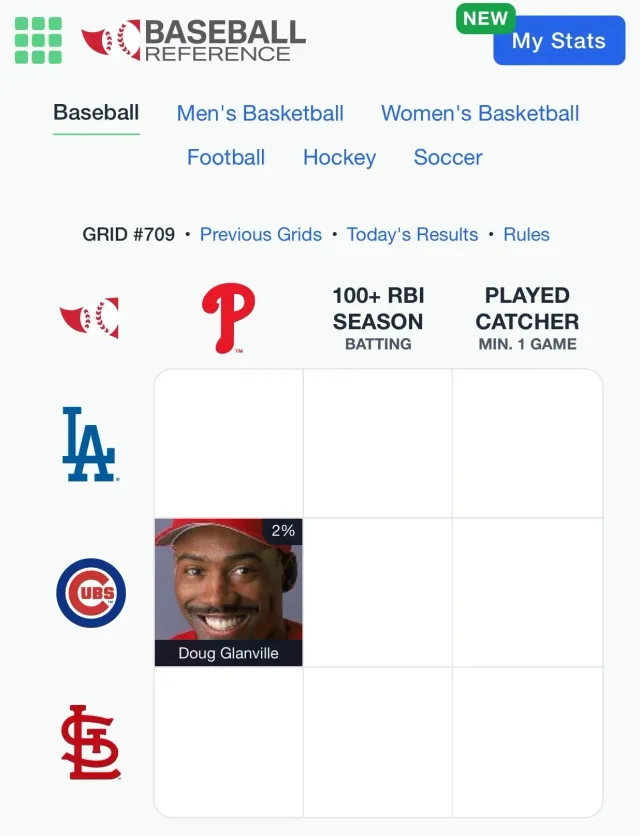
Immaculate Grid
The original daily sports grid, with the same row and column format

HoopGrids
The same 3x3 grid for NBA players

Futdoku
A football grid of nine players who fit both clues

DailyFoot
A daily footballer grid with limited mistakes
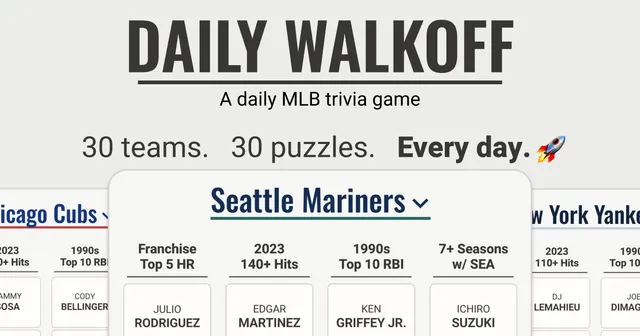
Daily Walkoff
Daily baseball trivia sorting players by team

Cinematrix
The same grid idea applied to films and actors
Scorewit Footyphoria
Six daily Premier League questions, every answer computed from match data.
Scorewit Racing
Six daily Formula 1 history questions, every answer computed from race data.