CrissWord: GRID
A crossword where every word runs across and each column repeats one letter.
Every day: One numbered grid a day, the same for every player, counted from the game's first puzzle in March 2025, with past days reachable by date. New puzzle: Midnight in your local time zone.
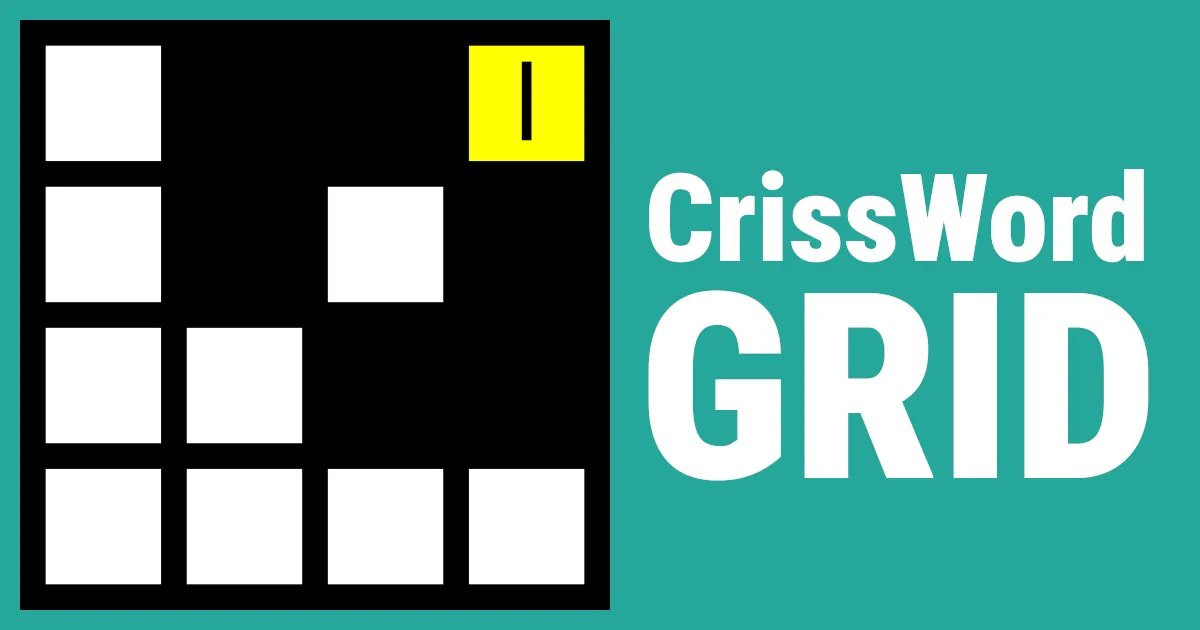
GRID is a daily puzzle from the maker of CrissWord. Every answer runs across, one per row, and every letter in a column is the same, so each row you solve fills in letters on the others. The clues are kept vague on purpose, and hints and answer checks are there if you need them, at a cost to your score.
About CrissWord: GRID
CrissWord: GRID is a daily word puzzle from Chris Ward, who makes the CrissWord games. It looks like a small crossword but follows two rules of its own: every answer runs across, one word per row, and every letter in a given column is the same all the way down. So the grid is a stack of across answers that share their letters by column.
Because the columns repeat, each row you solve hands you letters in the same columns of the other rows. The clues are kept deliberately vague, so the crossing column letters, rather than the clue alone, are often what pins an answer down. If you get stuck, hints and answer checks are available, but each one costs you score.
There is one numbered grid a day, the same for everyone, counted from the first puzzle in March 2025 (the live grid shown was No. 557). Earlier days can be reached by date. The puzzle is credited on the page to Chris Ward, alongside his other CrissWord games such as WikiMatch and Full Circle.
It suits crossword solvers who want a short daily with a twist, and anyone who enjoys using letter overlaps as much as the clues. It runs in the browser and is free.
How to play CrissWord: GRID
- Open crissword.com/grid and start the day's grid.
- Read the clue for a row and type its answer across that row; each row holds one whole word.
- Remember that every letter in a column is the same down the grid, so a letter you place shows up in the same column of the other rows.
- Use those shared column letters, along with the deliberately vague clues, to work out the remaining rows.
- If you are stuck, take a hint or check an answer (each costs score), then finish the grid to see your result.
Tips
- Solve the row you are surest of first: its letters seed the same columns in every other row.
- The clues are vague on purpose, so lean on the crossing column letters as your main constraint.
- Every row spans the full width, so each answer is a fixed length; count the cells before guessing.
- Hold back hints and answer checks until you are truly stuck, since each one lowers your score.
Questions
How is GRID different from a normal crossword?
Every answer runs across, one per row, and every letter in a column is the same down the grid. Instead of across and down answers crossing, the rows share their letters by column.
Is it the same puzzle for everyone?
Yes. There is one numbered grid per day, shared by all players, and earlier days can be reached by date.
Who makes it?
Chris Ward, who also makes the other CrissWord games such as WikiMatch and Full Circle.
Are there hints?
Yes. Hints and answer checks are available if you need them, but each one costs some of your score.
Is it free?
Yes. It runs in the browser for free and needs no account.
Games like CrissWord: GRID
CrissWord
The original CrissWord by the same maker, a two-clue mini crossword
CrissWord: Full Circle
Another daily CrissWord game, a clued word path that comes back to its start
Cluewords
A daily list of crossword clues whose answers share letters
The Mini Crossword
A small daily crossword for a quick solve
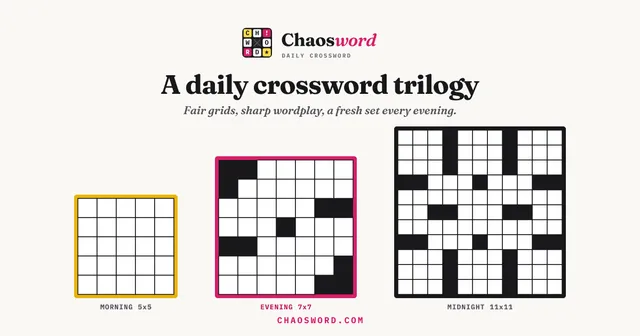
Chaosword
Daily crosswords in three sizes
7 Little Words
Short daily clues where the answers are pieced together from parts
Autodefinido (El País)
Solve the clues inside the grid in the daily Spanish arrowword of El País.
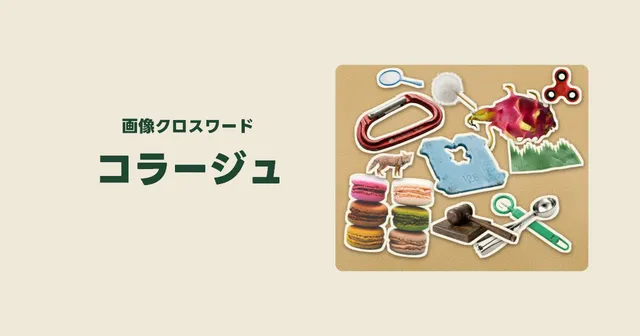
Collage / コラージュ (Puzzlega.me)
A Japanese crossword where the clues are cut-out photos pinned to a corkboard.
More daily crosswords
- Apple News+ Crossword
- Arkadium Daily Crossword
- Arkadium Daily Crossword Live
- Arkadium Mini Crossword
- Astraware Crosswords
- Best Daily American Crossword
- Best Daily Cryptic Crossword
- Best Daily Quick Crossword
- Boston Globe Crossword
- Claringrilla (Clarín)
- CNN Daily Crossword
- CodyCross Today's Crossword
- All daily crosswords