Picobble
Rate itFill an empty crossword shape with your own words and score past par.
on picobble.com

Picobble gives you an empty crossword-style shape each day and lets you choose the words. Every run of squares must be a real word, letters carry point values, and your total is measured against medal marks from bronze to platinum, with a hidden diamond above, and daily modifiers such as required letters.
About Picobble
Picobble is a daily word puzzle that turns the crossword inside out: there are no clues and no fixed answers. You get an empty shape of squares, and you type in any letters you like, as long as every run of squares, read left to right and top to bottom, ends up as a valid word.
Each letter has a point value, shown on the on-screen keyboard, and every word scores the sum of its letters, so a letter at a crossing counts twice. The goal is to score as many points as you can. A bar under the grid marks the bronze, silver, gold and platinum medals for the day, and there is a hidden diamond medal above platinum for the most determined players. A score breakdown shows where your points come from.
Puzzles are numbered and dated (#25 was the grid for 2 October 2026) and each has a title and a credited setter. Many carry a modifier that changes the rules, such as 'required: H 4x', meaning the letter H must appear at least four times, or squares that multiply a letter's value. Other days ban a set of letters, let no word repeat a letter, link cells that must hold the same letter, or reward one letter at five times its value. On some days part of the shape is missing and you place the extra tiles yourself before the rest of the rules are shown. You can sign in with Google to keep your streak across devices, but it is not needed to play.
It suits word game players who like the scoring side of Scrabble and want a puzzle with no single right answer, where a better fill is always possible.
How to play Picobble
- Open Picobble and look at today's empty grid and any modifier above it.
- Type letters into the squares so that every across and down run forms a valid word.
- Watch the score bar: each word scores the sum of its letter values.
- Rework your fill to reach the medal you are aiming for, from bronze up to platinum (or the hidden diamond).
- Press submit when the grid is full of valid words.
Tips
- Put high-value letters on crossing squares, where they score in two words.
- Pick a medal to aim for, as the game suggests, rather than chasing the top score at once.
- Plan the long words first; short connecting words are easier to fit afterwards.
- Read the modifier before you start: a required letter changes which long words are worth using.
Questions
Is there one right answer?
No. Any fill where every run is a valid word counts; the aim is the highest score.
How are words scored?
Each word scores the sum of its letter values, and letters at crossings count in both words.
What are modifiers?
Extra rules for the day. A letter may be banned or required a set number of times, one letter may score extra, linked cells must hold the same letter, or no word may repeat a letter.
What medals are there?
Bronze, silver, gold and platinum, plus a hidden diamond medal above platinum.
Ratings and reviews
No ratings yet. Be the first to rate Picobble.
Games like Picobble
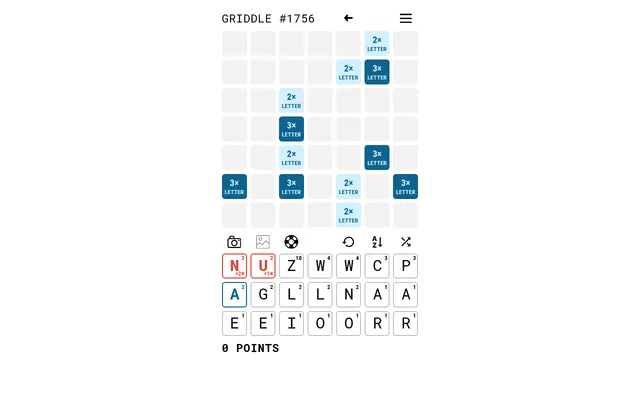
Griddle
Also a scoring fill with letter values, though Griddle hands everyone the same rack of 21 tiles for a 7x7…
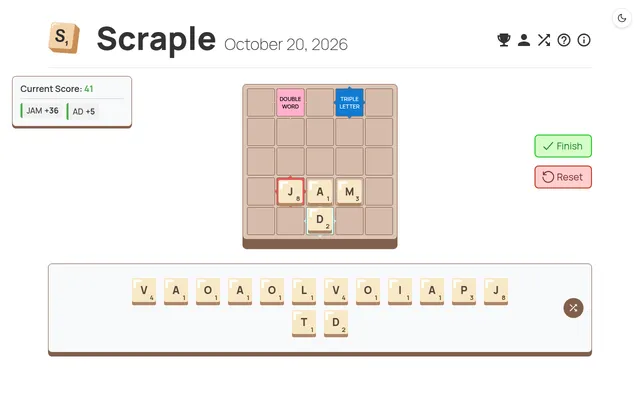
Scraple
A small dated grid where you place lettered tiles for points.
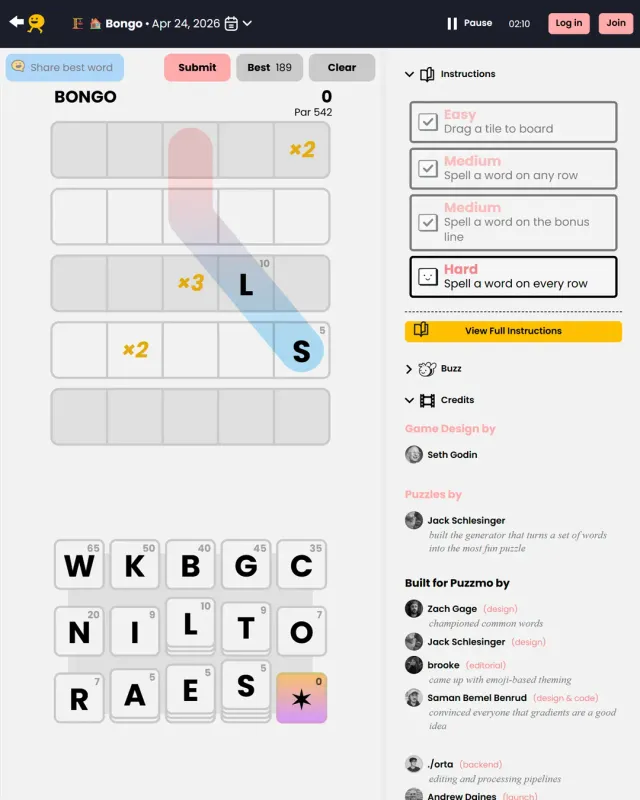
Bongo
Puzzmo's daily of 25 letter tiles with new letter values each day, built into five words for the top score.
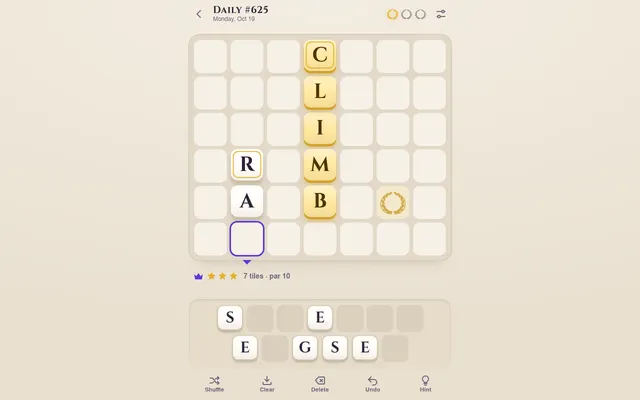
Crossing The Lexicon
Crossing words against a par, but here you link the laurel squares in as few tiles as you can.
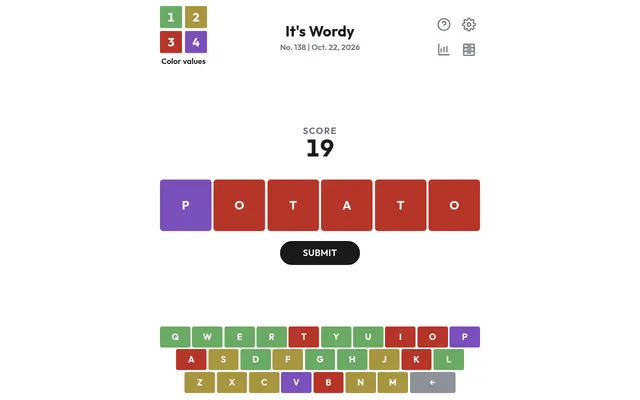
It's Wordy
Letter values change daily and the best words win gold, silver or bronze, much like Picobble's medal marks.
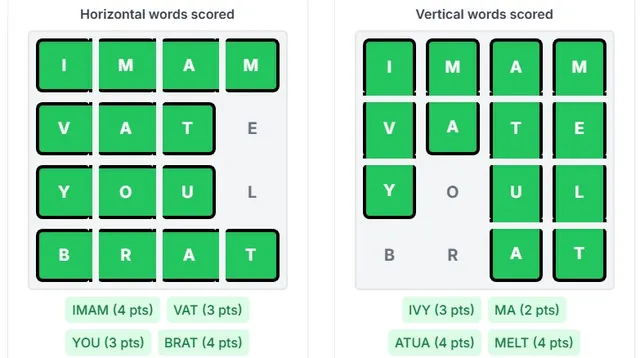
Griddable
You choose half the letters yourself and fit them into a 4x4 grid of words.
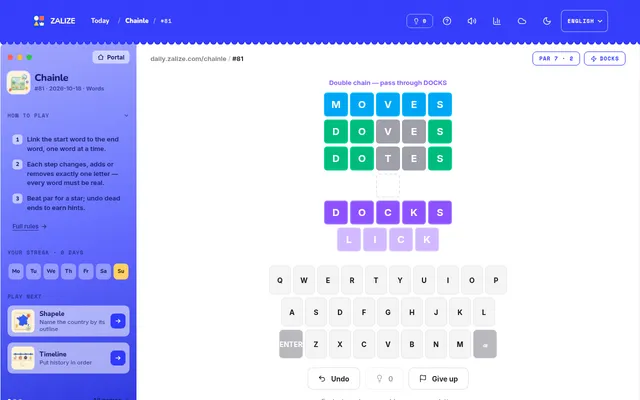
Chainle
Link the day's start word to its end word, changing, adding or removing one letter a step.
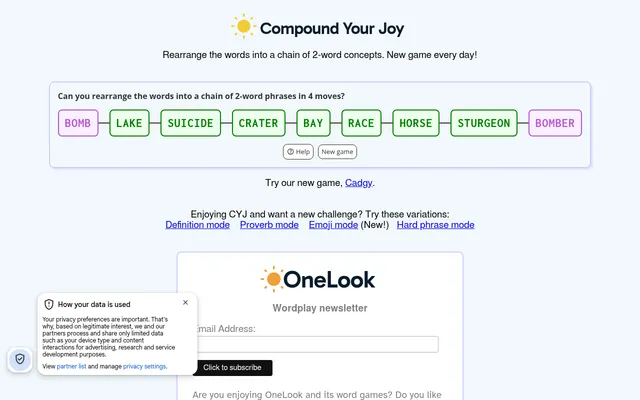
Compound Your Joy (OneLook)
Drag the day's words into a chain where every neighbouring pair makes a two-word phrase.