Daily Binairo
Rate itFill one large grid a day with black and white circles: balanced lines, no three alike in a row, no two lines the same.
on puzzle-binairo.com
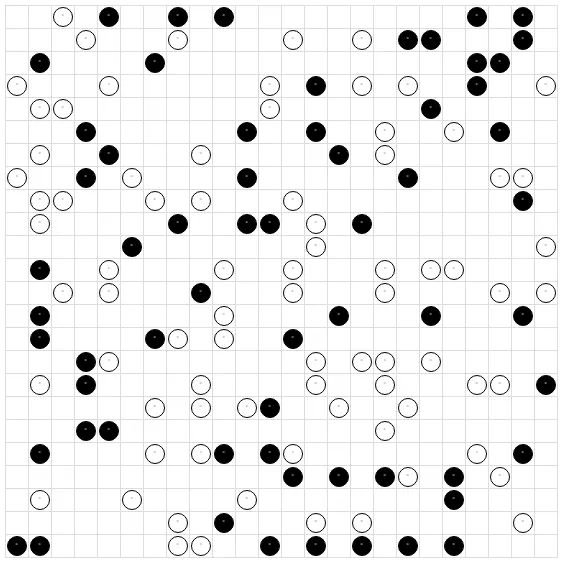
The Special Daily Binairo on puzzle-binairo.com is one large Binairo grid a day, the same for every player. You fill every cell with a black or white circle so each row and column has equal numbers of both, no more than two of a colour sit side by side, and no two rows or columns match.
About Daily Binairo
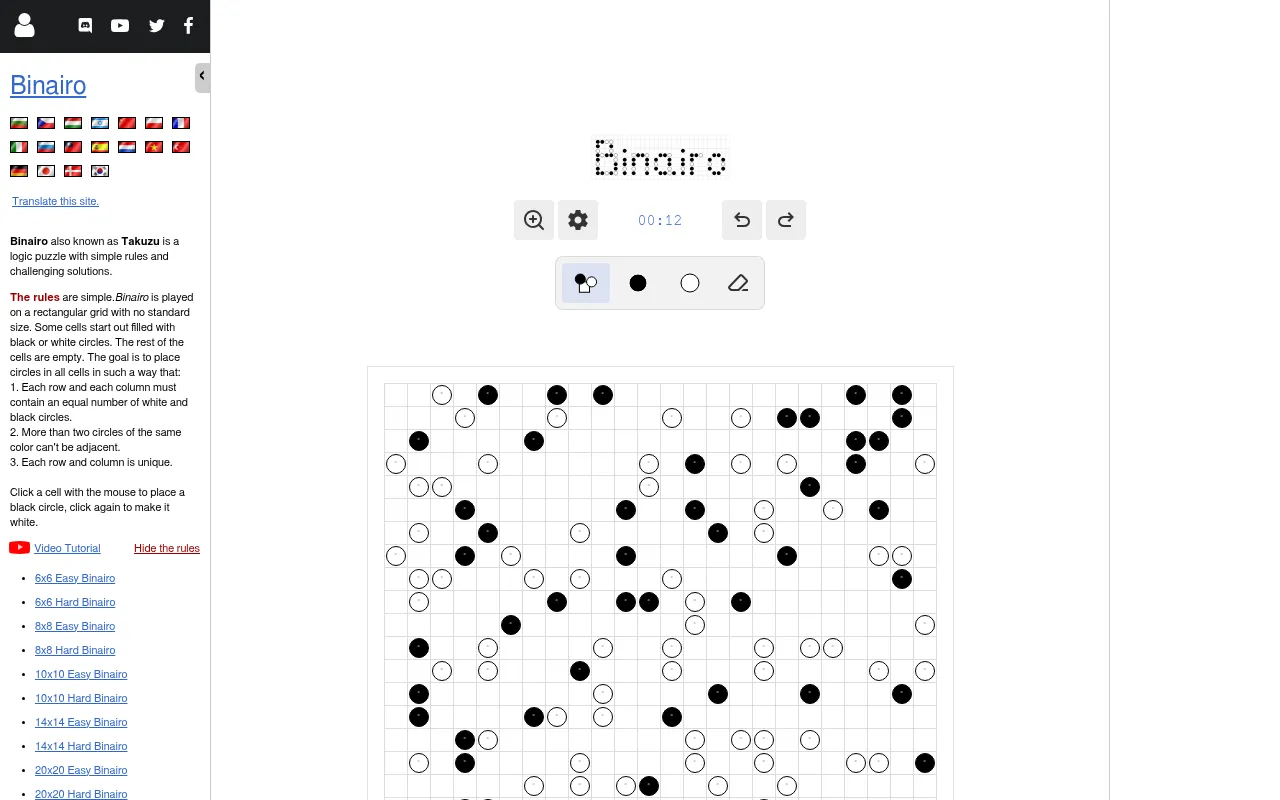
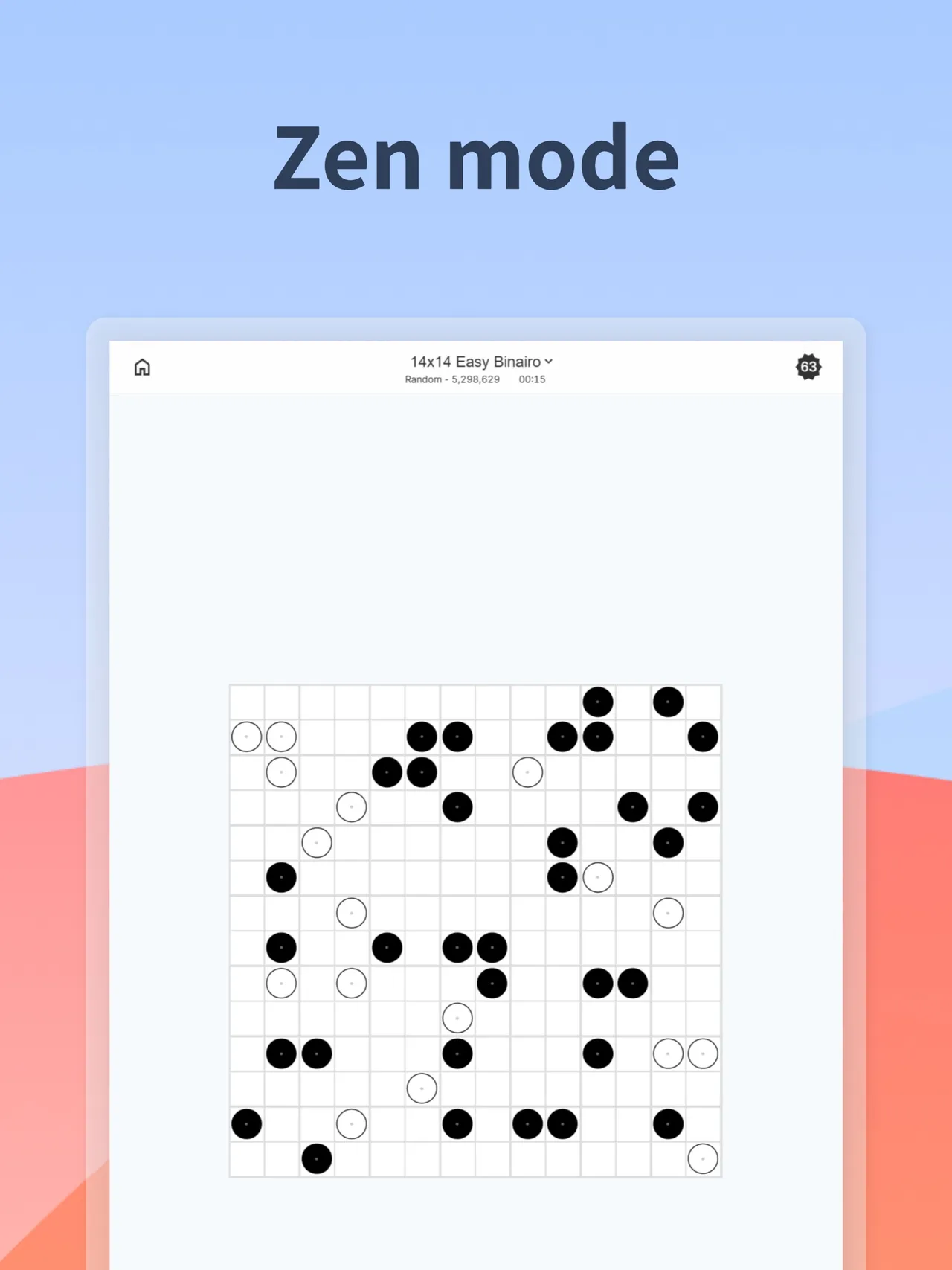
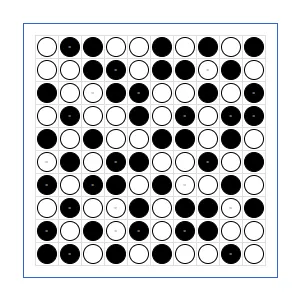
Binairo, also known as Takuzu, starts with a few black and white circles already in the grid. You fill the rest under three rules: every row and every column holds the same number of black and white circles, no more than two circles of the same colour may be adjacent in a line, and no two rows (or two columns) can be identical. The third rule rarely matters early on but often settles the last few cells.
Puzzle-binairo.com has Easy and Hard grids from 6x6 to 20x20, and a Binairo+ variant with its own sizes and specials. The Special Daily Binairo is one dated grid for everyone, bigger than the regular sizes; the 20 October 2026 puzzle was 24 by 24. A Special Weekly and a Special Monthly grid run beside it. Clicking a cell places a black circle and clicking again makes it white. The site shows ads around the board; patrons, from $1 a month, lose the ads and can reopen the last 30 daily puzzles. The site also comes in 17 other languages, from French and German to Japanese and Chinese, with the same daily grid.
If you play LinkedIn's Tango, this is the same family of rules on a far bigger board with no extra symbols to help. It suits players who like fast, mechanical deductions that pile up into a long solve.
How to play Daily Binairo
- Open puzzle-binairo.com and choose Special Daily Binairo.
- Click an empty cell once to place a black circle, and again to make it white.
- Never let three circles of the same colour sit in a row, across or down.
- Give every row and every column the same number of black and white circles, and make each row and each column different from the others.
- When all cells are filled, press Done (or Enter) to check the grid.
Screenshots
Tips
- Two same-coloured circles side by side force the other colour on both ends.
- A gap between two circles of the same colour must be the other colour.
- Count each line: once a row has half its cells in one colour, the rest of that row is the other colour.
- When a line has only two cells left and a finished line looks almost the same, place the colours so the two lines differ.
Questions
Is Binairo the same as Takuzu or Tango?
The site says Binairo is also known as Takuzu. LinkedIn's Tango uses the same balance and no-three-in-a-row rules on a 6x6 grid with suns and moons and adds = and x signs between some cells.
What time does the daily Binairo change?
At midnight UTC: the site's clock runs on UTC and the new dated grid appears at the start of the UTC day.
What is Binairo+?
A variant on the same site with its own sizes and daily, weekly and monthly specials. This page covers the standard Special Daily Binairo.
Ratings and reviews
Games like Daily Binairo
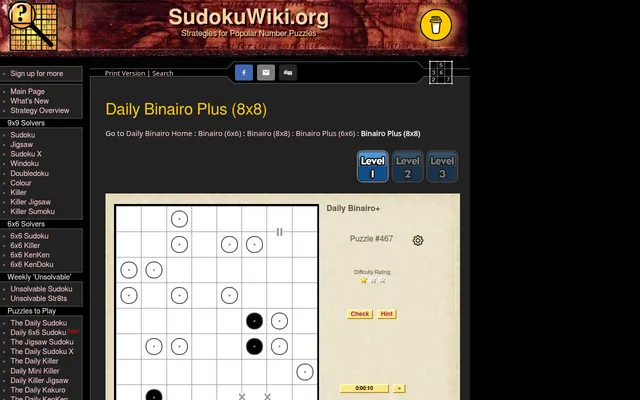
Daily Binairo (SudokuWiki)
The same black and white circle rules on smaller boards: four numbered grids a day at 6x6 and 8x8, in plain…
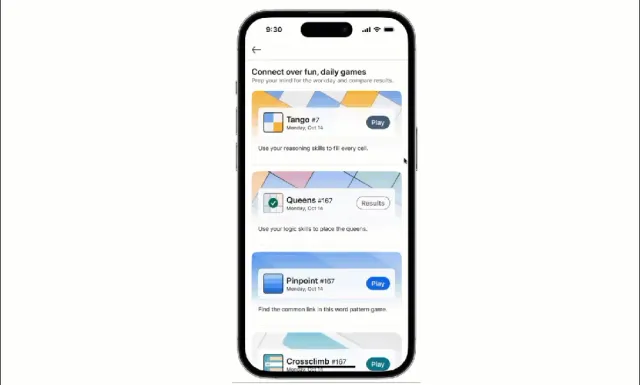
Tango
LinkedIn's daily six-by-six grid of suns and moons under the same balance and no-three-in-a-row rules, for a…
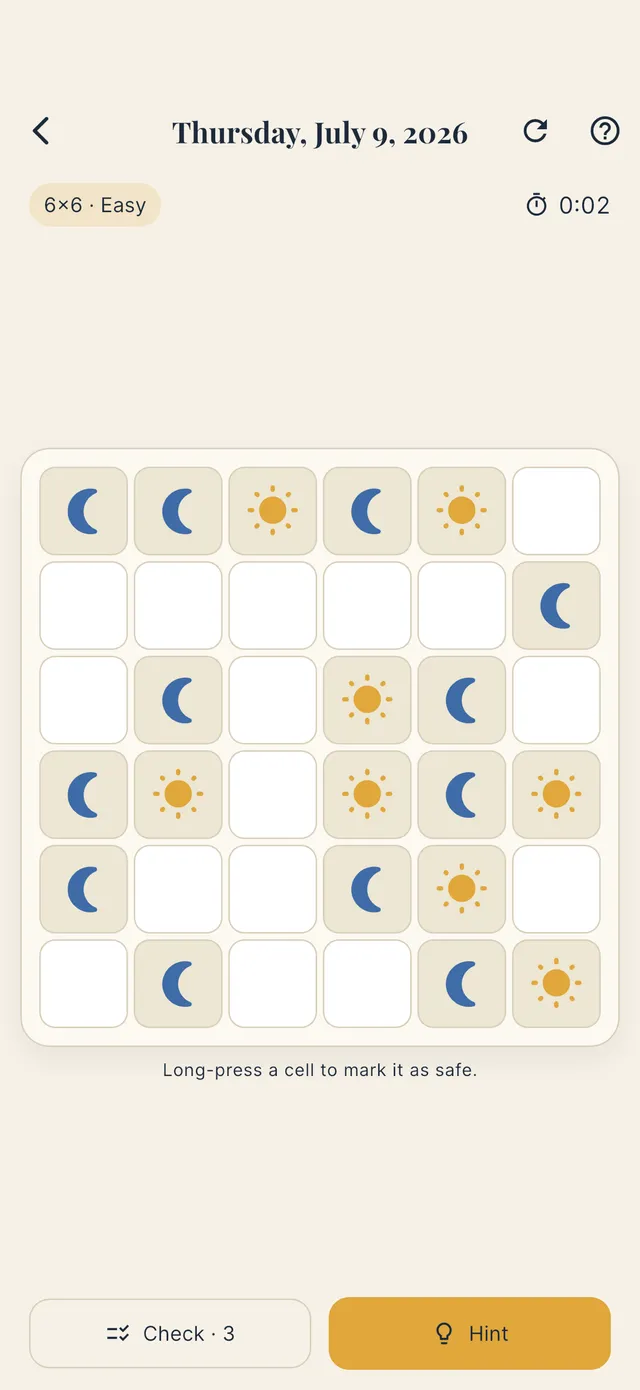
Lunoku
A sun-and-moon binary grid a day that grows through the week, from 6x6 on Monday to a 10x10 on Sunday.
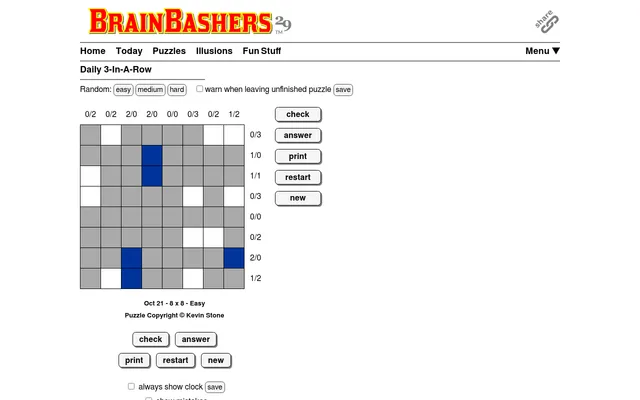
3-In-A-Row (BrainBashers)
Ten blue and white 3-In-A-Row grids a day from 6x6 to 14x14, plus an 18x18 weekly special, for more of the…
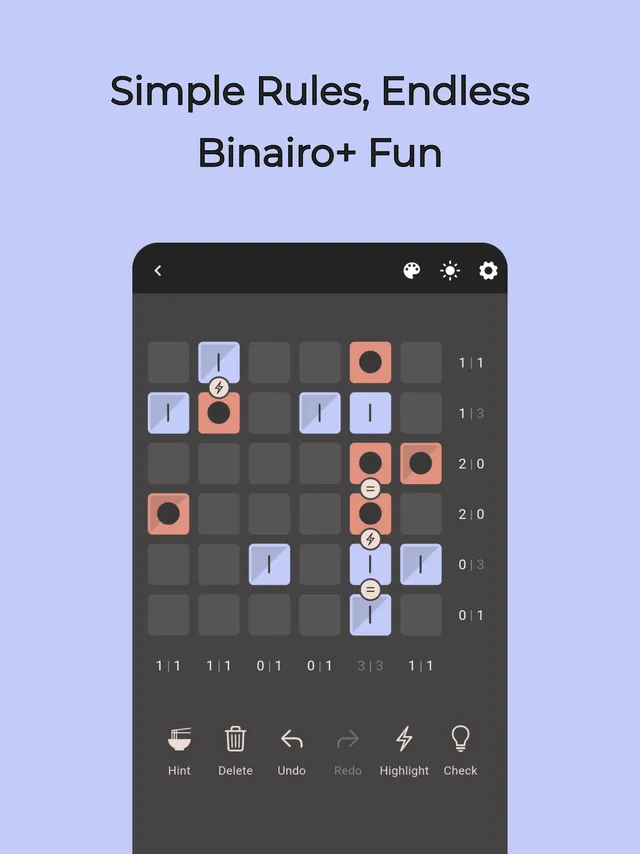
Rumba: Binairo Plus Puzzle
A dated Binairo Plus grid every morning, with = and x clues between cells, at the difficulty you choose.
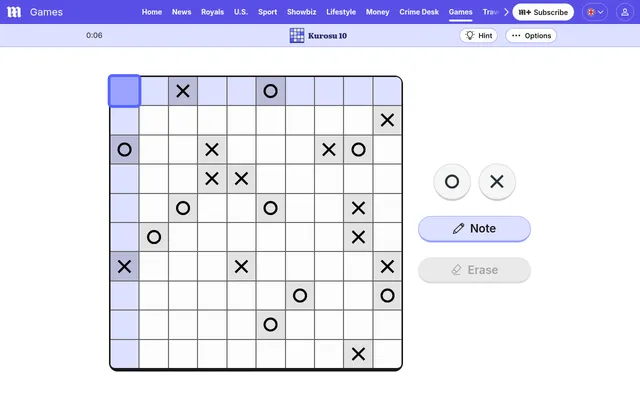
Kurosu 10 (Daily Mail)
The Daily Mail's dated 10x10 grid of crosses and noughts, never three in a line: the same puzzle in another…
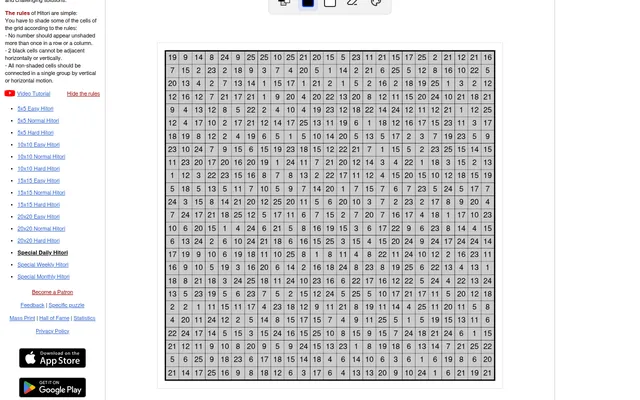
Daily Hitori
A sister site's Special Daily Hitori, another big grid a day with line rules; on 19 October 2026 it was 25x25.
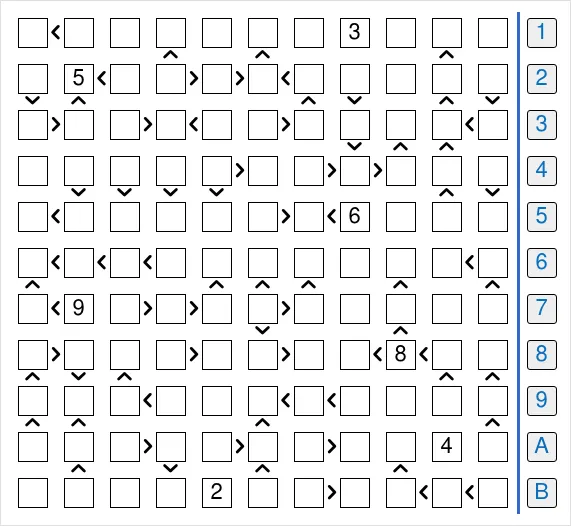
Daily Futoshiki
A sister site's large Special Daily Futoshiki, a Latin square held by greater-than and less-than signs.