Parithmetic
Rate itCombine six number tiles to hit the target, scored like golf.
on parithmetic.com
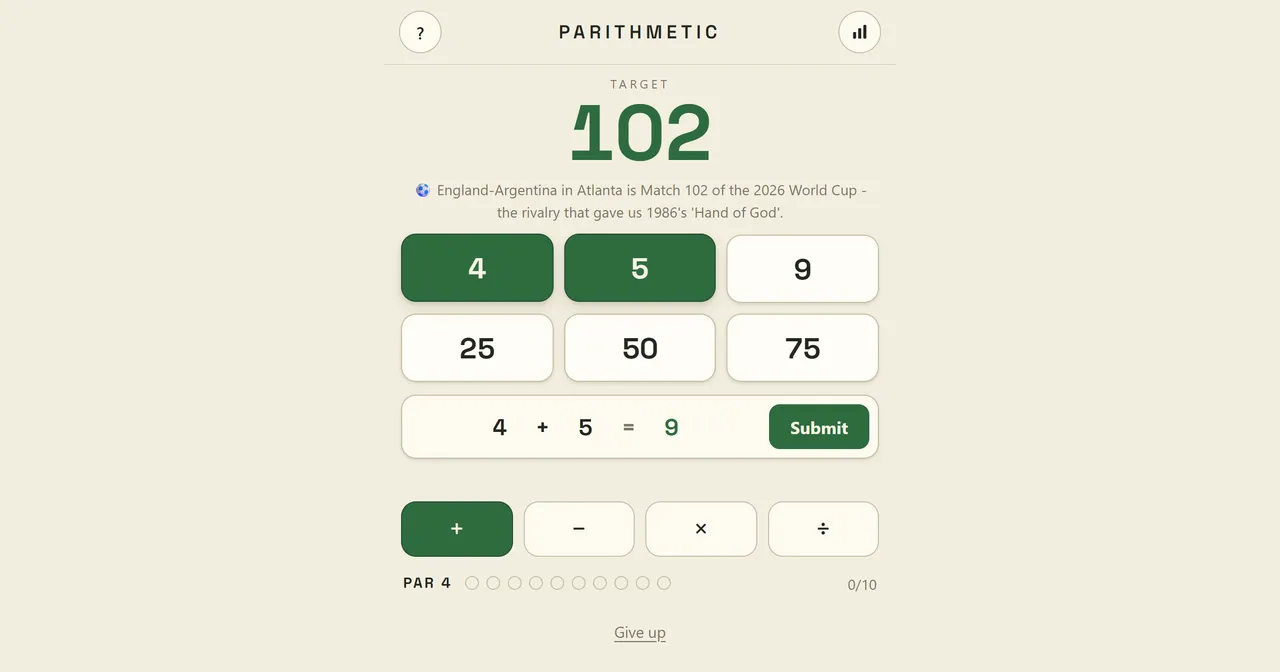
Parithmetic is a daily arithmetic puzzle. You get six number tiles and a target, and you combine two tiles at a time with plus, minus, times or divide until you make the target exactly. Every submitted move is a stroke, with up to ten allowed, and the score is measured against the day's par, so the shortest route earns a birdie.
About Parithmetic
Parithmetic mixes the numbers round from a TV quiz with a round of golf. Each day there are six number tiles and a target. You pick two tiles and an operation, add, subtract, multiply or divide, and the result replaces them as a new tile. Results must be positive whole numbers, and you do not have to use every tile. Hit the target exactly and the hole is done.
The scoring is where the golf comes in. Every move you submit costs a stroke, you have ten at most, and each puzzle has a par, set one stroke above the shortest solution. Finish in par for a solid round, or match the shortest line for a birdie, which cannot be beaten. Some moves lead into dead ends, which you only discover when you reach them, and the summary afterwards marks each move as on pace, a detour or a dead end.
If you give up, the day is recorded as a DNF and an optimal line is shown; there are no retries. The stats page charts your strokes per round as a rolling average, and a share card lets you post your round without spoiling the numbers. A new puzzle arrives at midnight.
Parithmetic suits players who like mental arithmetic and want a short daily puzzle where efficiency matters as much as getting the answer.
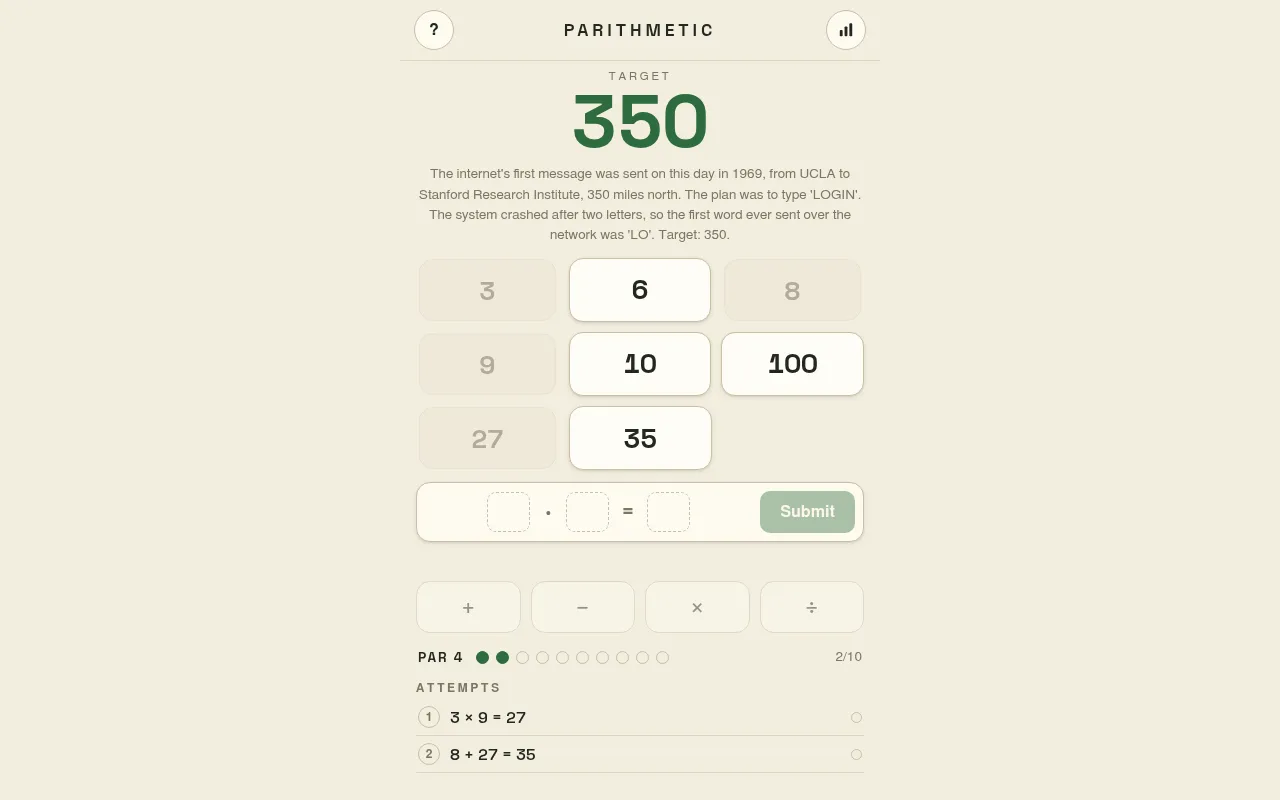
On many days the target has a story. The line under the number explains why it was picked, such as the 350 miles between UCLA and Stanford for the first message sent over the early internet on 29 October 1969.
How to play Parithmetic
- Open parithmetic.com and look at the six tiles and the target.
- Pick two tiles and an operation: add, subtract, multiply or divide.
- Submit the move; it costs one stroke and the result becomes a new tile.
- Keep combining tiles until one of them equals the target exactly, using ten strokes at most.
- Compare your strokes with the day's par, and share your round.
Screenshots
Tips
- Work backwards from the target: look for a product or sum of two tiles that lands close to it.
- Results must be positive whole numbers, so divisions only work when they divide evenly.
- Every submit costs a stroke, so plan the whole line before you start.
- You do not need every tile; leaving one or two unused is often the shortest route.
Questions
When does Parithmetic change?
At midnight. The game uses your local date.
How is Parithmetic scored?
Like golf. Every submitted move is a stroke, each puzzle has a par, and fewer strokes is better. You have ten strokes at most.
Do I have to use all six tiles?
No. You only need to make the target exactly.
What happens if I give up?
The day is recorded as a DNF and an optimal solution is shown. There are no retries.
Why does the target have a fact under it?
Many days pick a target tied to that date, and a short note under the number says why. On 29 October 2026 the target 350 was the distance of the first ARPANET message in 1969.
Ratings and reviews
Games like Parithmetic
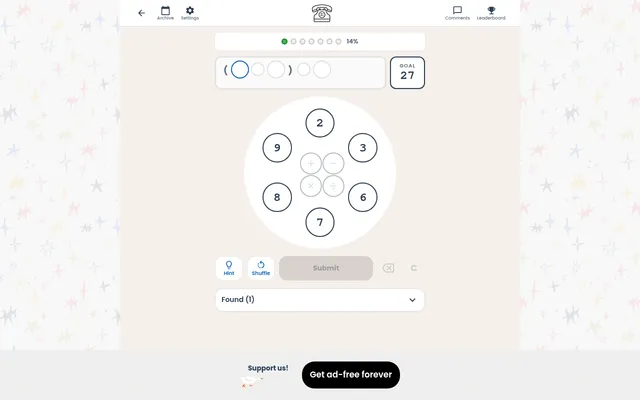
Operator
Also a goal number and six numbers each day, though you keep building equations toward it for a score rather…
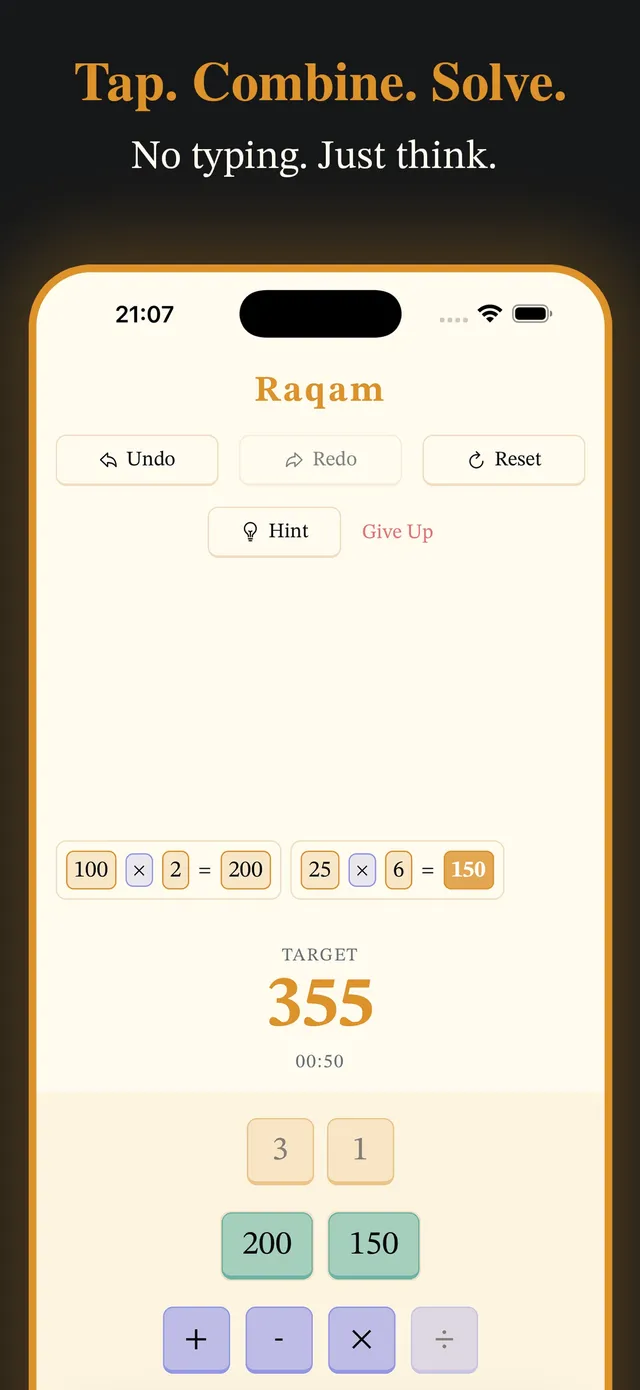
Raqam: Daily Number Puzzle
Six numbers and a target a day, with daily and all-time leaderboards.
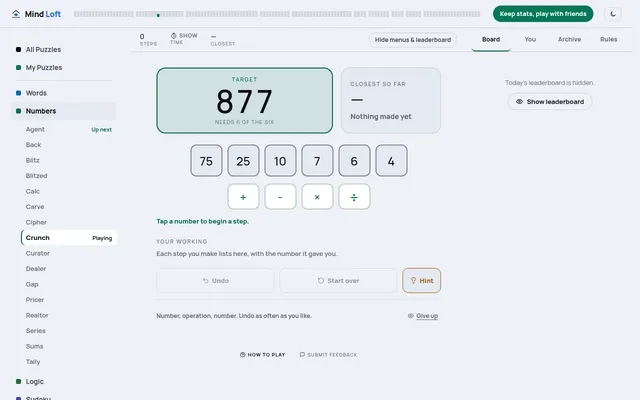
Crunch (Mind Loft)
The same numbers round from the TV quiz: six numbers, a target from 101 to 999 and the four operations.
Summle
Closest in spirit. Summle also counts your steps, giving five sums or fewer to reach the target from six…
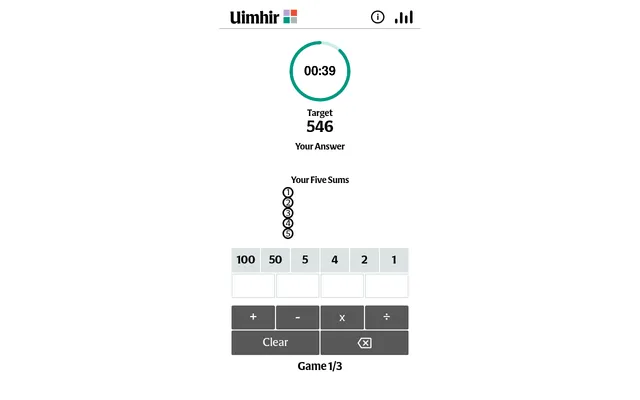
Uimhir (Irish Independent)
Three rounds of the same kind of sum a day, each against a timer.
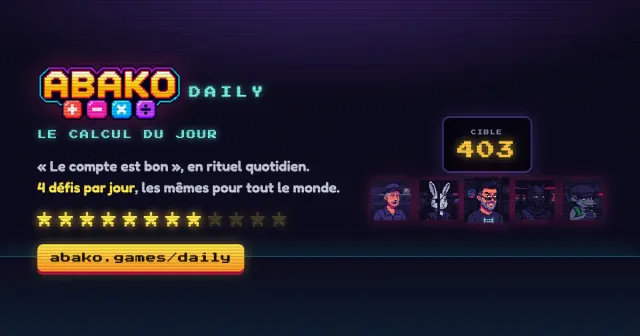
Abako Daily
Four target challenges a day from six numbers, with a boss round on Sundays.
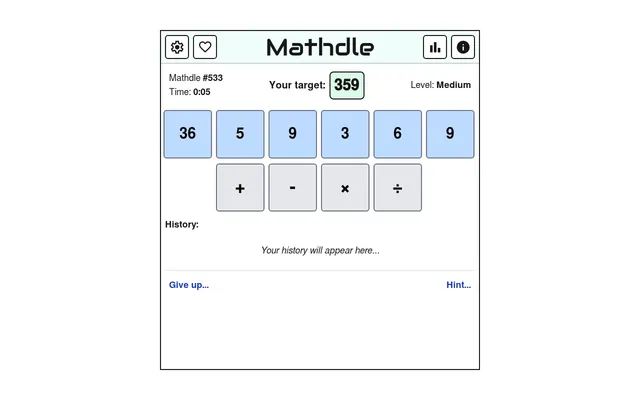
Mathdle
A numbered daily of six numbers and a target where the week gets harder from Monday on.
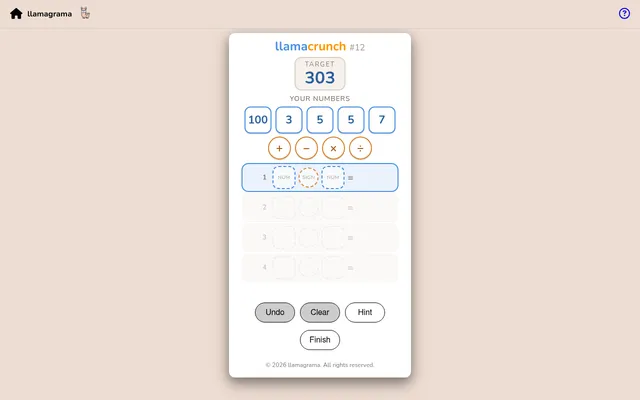
llamacrunch
Chain five numbers and four signs into the day's three-digit target.