Mosaic (Inkwell Games)
Rate itFill the grid from the row and column clues until a small pixel-art picture appears.
on inkwellgames.com
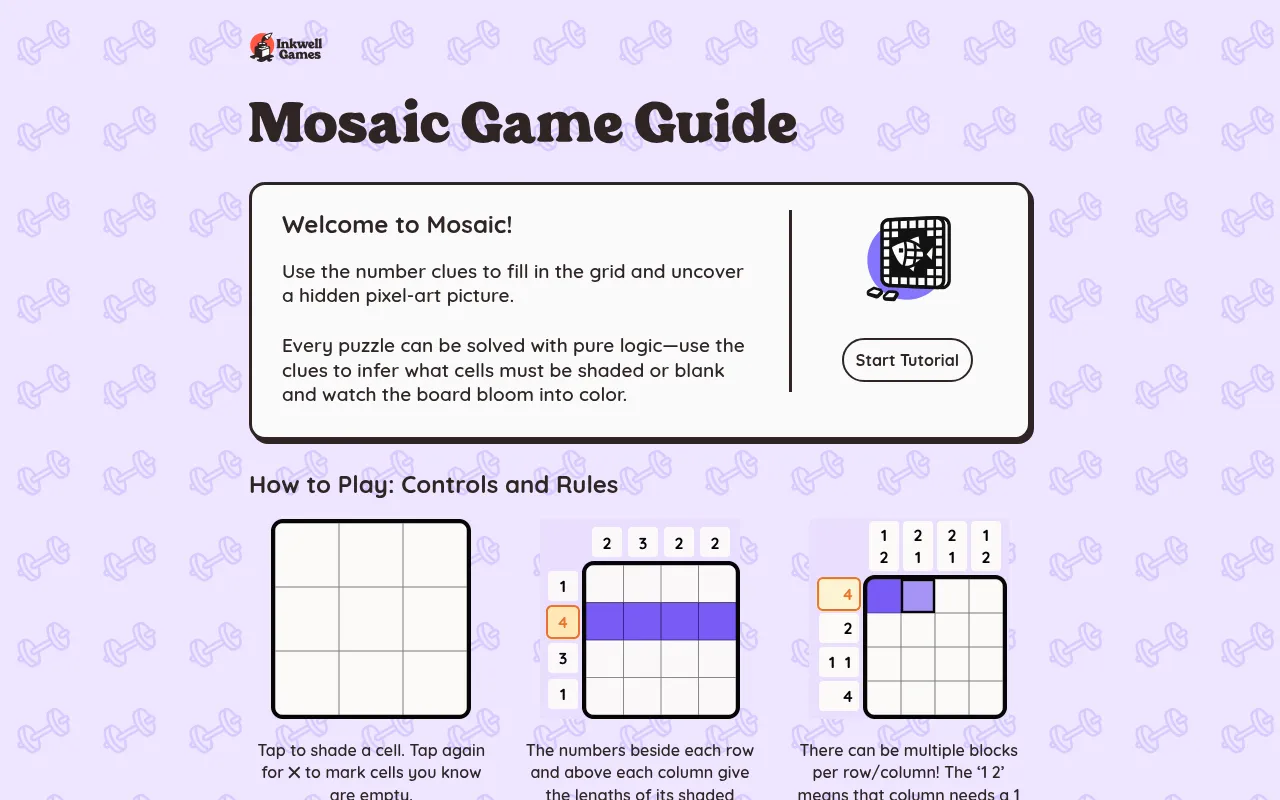
Mosaic is the daily nonogram from Inkwell Games. Each day you shade cells to match the number clues on every row and column, and the finished grid turns into a small pixel-art picture of an everyday thing. Grids run from 5x5 early in the week to 15x15 at the weekend.
About Mosaic (Inkwell Games)
Mosaic is Inkwell Games' take on nonograms, the Japanese picture logic puzzle also sold as Picross. It joined Stars, Fields and Loopy River on the studio's site, spent a few weeks in early access for subscribers, and opened to everyone on 1 October 2026.
Each puzzle is a grid with numbers along the top and the left side. The numbers give the lengths of the runs of shaded cells in that column or row, in order. You tap to shade a cell and tap again to mark one you know is empty, and you work from the clues alone until the grid is complete. There is no guessing needed. When you finish, the shaded cells form a pixel-art picture of an everyday object or scene, and naming it is a small second puzzle; you can click to see its title.
The week works as a gentle curve. Monday is a small grid that takes a minute or two, and the grids grow toward 15x15 by Sunday. Inkwell describes it as the gentlest of its games, made for players who found its other weekend puzzles hard going. A weekday row at the top lets you play any day of the current week you missed.
The daily puzzle is free in the browser. An Inkwell subscription unlocks the archive of past weeks, replays and a few extra tools.
It suits players who like Picross or nonogram apps and want one well-made grid a day rather than a pack of hundreds.
How to play Mosaic (Inkwell Games)
- Open Mosaic and pick today's puzzle from the weekday row at the top.
- Read the numbers above each column and beside each row: each is the length of one run of shaded cells, in order.
- Tap a cell to shade it, and tap again to mark it with an X when you know it stays empty.
- Start with rows or columns whose clues nearly fill the line, then use what you shaded to unlock the crossing lines.
- Finish the grid to reveal the picture, guess what it shows, and share your time.
Tips
- Add up a line's clues plus one gap between each run: if the total is close to the line length, many cells are forced.
- Mark empty cells with an X as soon as you are sure; they matter as much as the shaded ones.
- Cross-check each new shaded cell against its column clue straight away.
- Early-week grids are small, so they are a good way to learn the overlap trick before the weekend.
Questions
Is Mosaic free?
Yes, the daily puzzle is free in the browser. An Inkwell subscription adds the archive and extra features.
Is Mosaic a nonogram?
Yes. You shade cells to match the number clues on each row and column, and the finished grid shows a picture.
Does it get harder through the week?
Yes. Grids start small on Monday and grow toward 15x15 by Sunday.
Can I play days I missed?
Any day of the current week can be picked from the weekday row; older weeks are in the subscriber archive.
Ratings and reviews
Games like Mosaic (Inkwell Games)
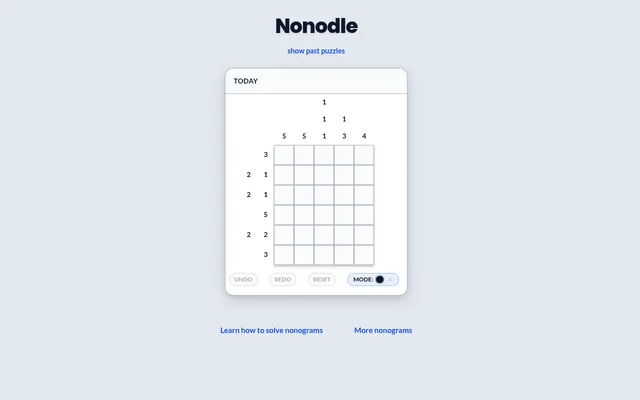
Nonodle
A bite-sized daily nonogram from row and column clues
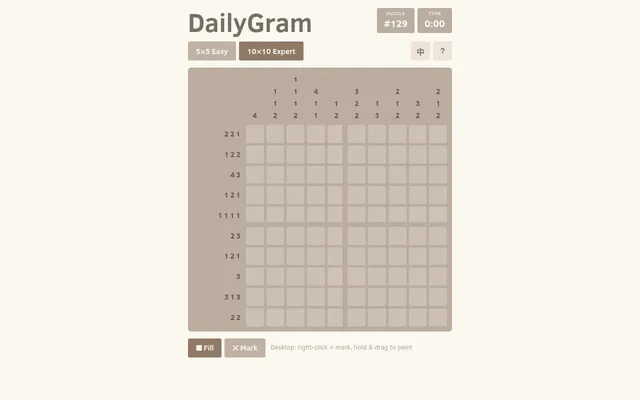
DailyGram
One nonogram a day in a 5x5 and a 10x10 size, solvable without guessing
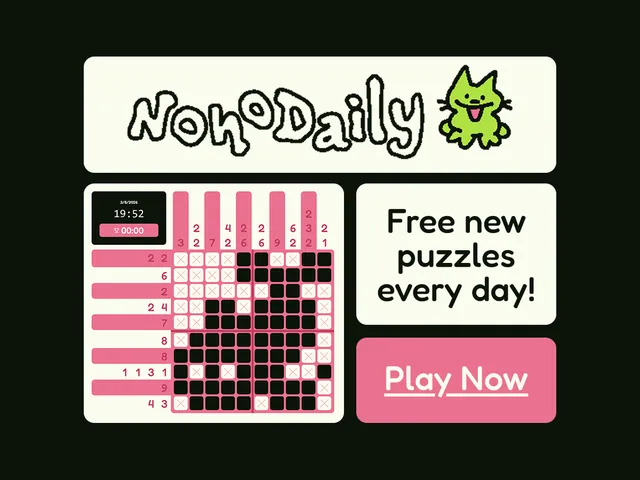
NonoDaily
A daily picross that turns into a small pixel-art picture, like Mosaic
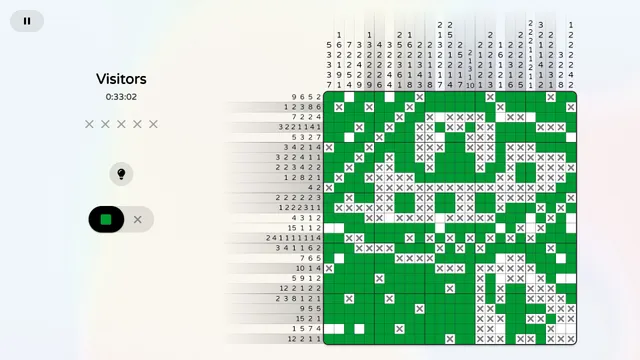
Pixelogic: Nonograms Unlimited
Two human-made daily nonograms and a long archive
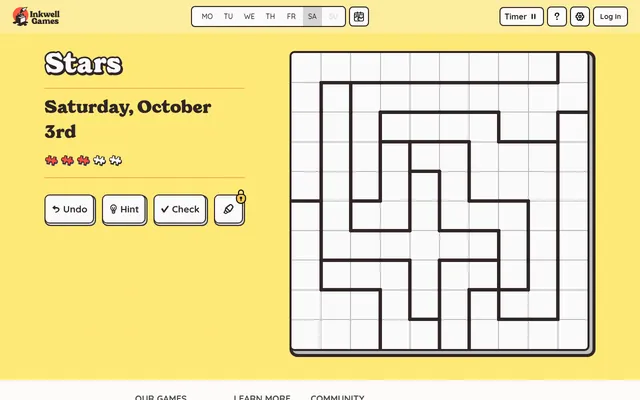
Stars (Inkwell Games)
Inkwell Games' daily star-placement grid
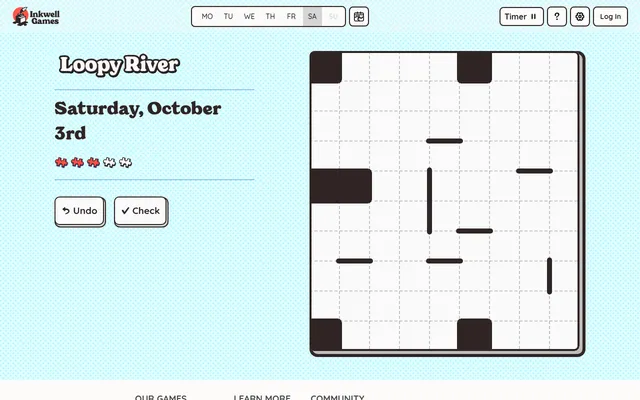
Loopy River (Inkwell Games)
Inkwell Games' daily loop puzzle
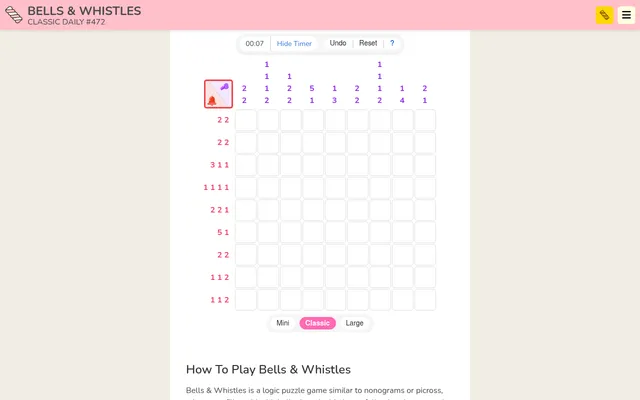
Bells & Whistles (Puzzmallow)
Fill a grid with bells and whistles: row clues count the bells, column clues the whistles.
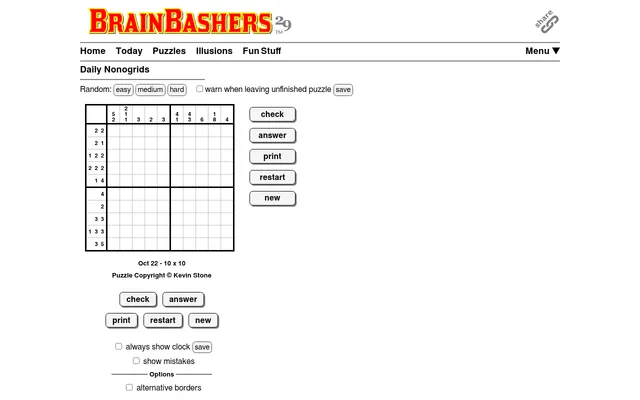
Nonogrids (BrainBashers)
Shade the blocks in each line from the run lengths given beside it.