Gerrymandle
Rate itDraw the district lines so your party wins the election.
on gerrymandle.com
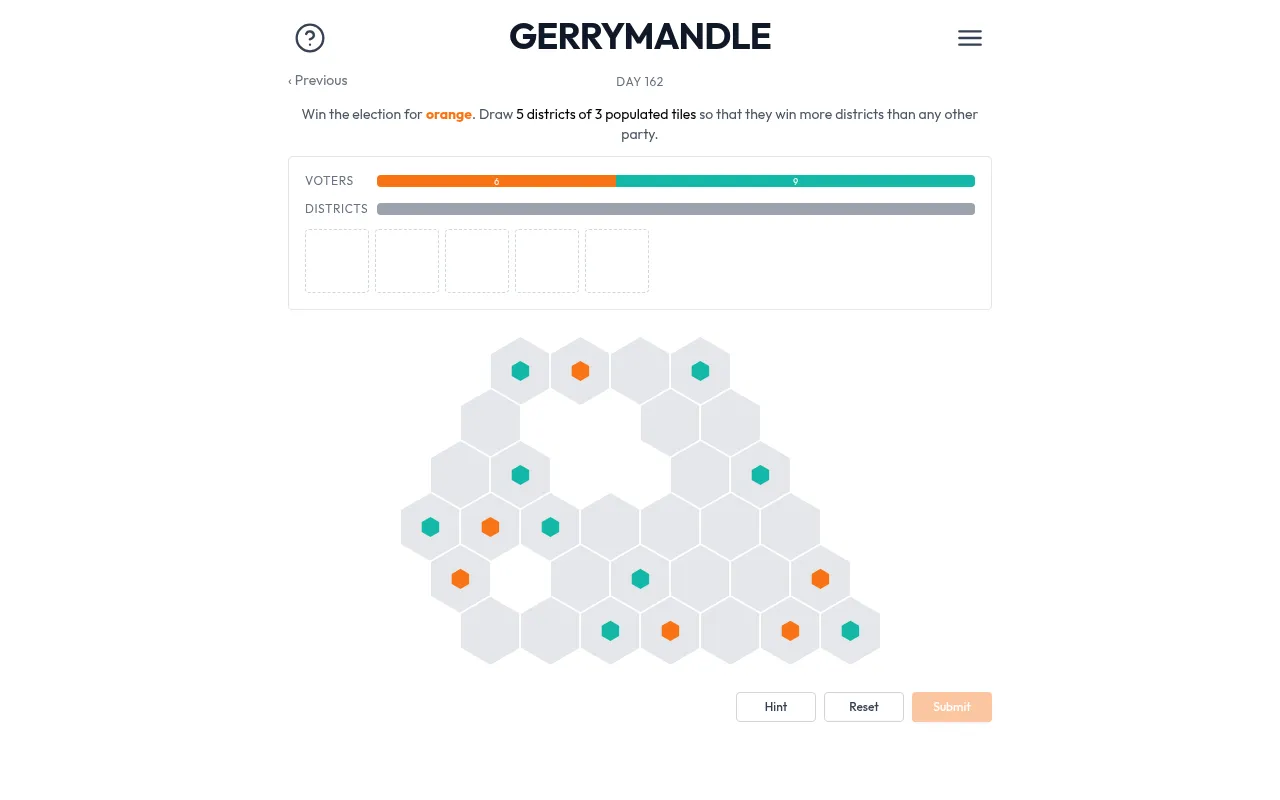
Gerrymandle is a daily puzzle about gerrymandering. Each day's hex map holds houses of two parties, and you group tiles into connected districts with the same number of populated tiles each, so that your party wins more districts than the other, often with fewer voters. Past days, community puzzles and real US maps to redraw are there too.
About Gerrymandle
In Gerrymandle you draw the district lines. Each day's puzzle is a numbered map of hexagonal tiles, some empty and some holding an orange or teal house. The prompt names your party and the task, for example five districts of three populated tiles each. You click neighbouring tiles to group them; each district must be one connected shape, every house must end up in a district, and a party wins a district by holding more of its houses. A tie wins nobody the seat.
The trick is that your party usually has fewer voters than the other. One October map gave orange 6 houses against teal's 9, and the bars above the board show the vote and the seats as you draw. To win you pack the other party into a few districts it wins easily and crack the rest of its voters across districts where it falls one house short. A Hint button and a Reset button sit under the board, and a tutorial walks through the rules.
Gerrymandle went live on 10 May 2026 and has been updated often since: community puzzles and a puzzle maker in June, optional player accounts to sync results, Real Maps in July, which rebuild real gerrymandered US maps from precinct data, and learn and news sections on the history and effects of gerrymandering. The daily needs no account. Supporters on Ko-fi play without ads.
It suits players who like region-splitting logic puzzles such as Shikaku, and anyone curious about how district lines can decide an election.
How to play Gerrymandle
- Read the prompt above the board: which party is yours, how many districts to draw and how many populated tiles each holds.
- Click neighbouring hexagons to group them into a district; each district must be one connected shape.
- Put every house into a district, with the same number of populated tiles in each.
- Watch the Districts bar: your party takes a district by holding more houses in it, and a tie gives it to nobody.
- Press Submit once your party wins more districts than the other; use Hint if you are stuck or Reset to start over.
Screenshots


Tips
- Pack the other party: give it one or two districts full of its own houses.
- Crack the rest of its voters so each remaining district has one more of your houses than theirs.
- A tie wins nobody the seat, which can be enough to take a district away from the other party.
- Settle awkward corners and thin necks of the map first, since districts must stay connected.
- Empty tiles do not count toward a district's size, so use them to join houses that sit far apart.
Questions
Is there a new Gerrymandle every day?
Yes. Each day brings one new numbered map, the same for everyone, and the Previous link and the puzzle archive open past days.
How does a party win a district?
By having more houses in it than the other party. A tie means nobody wins that district.
Do I need an account?
No. The daily plays without one. An optional account keeps your results in step across devices.
Does Gerrymandle have ads?
The free game loads Google ads. Players who support it on Ko-fi play without ads.
Are there real maps?
Yes. Real Maps rebuild gerrymandered US maps, such as North Carolina's, from real precinct results for you to redraw.
Ratings and reviews
Games like Gerrymandle
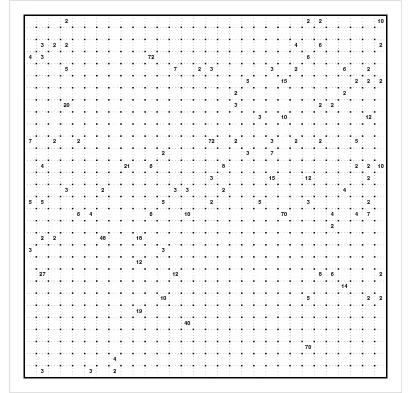
Daily Shikaku
Divide a grid into regions under strict size rules, the same partition logic behind drawing districts.
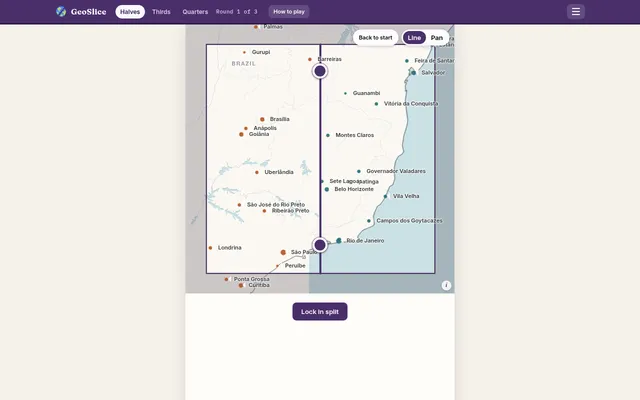
GeoSlice
Draw a line across a map to split its population, another puzzle about dividing people by area.
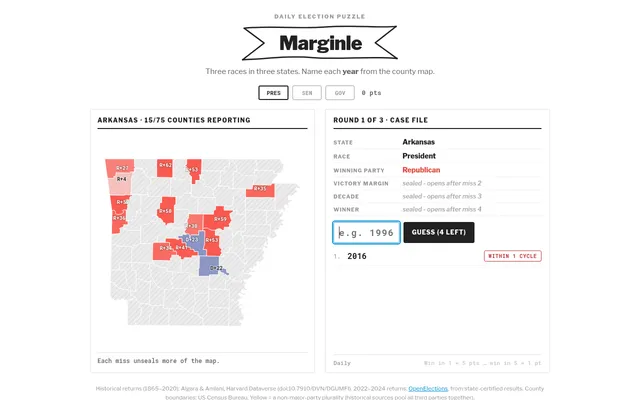
Marginle
Name the year of US elections from their county maps, for players drawn to Gerrymandle's election maps.
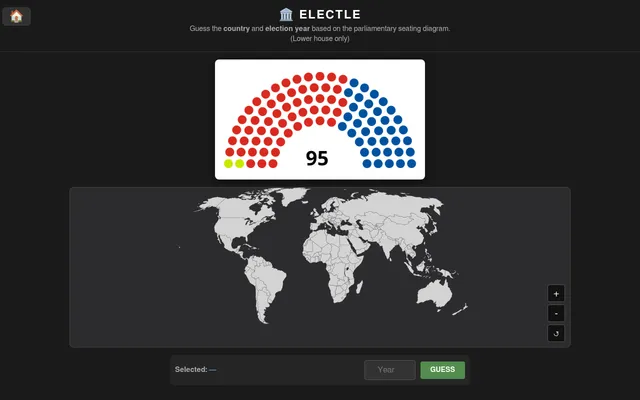
Electle
Name the country and election year from a parliament's seat chart.
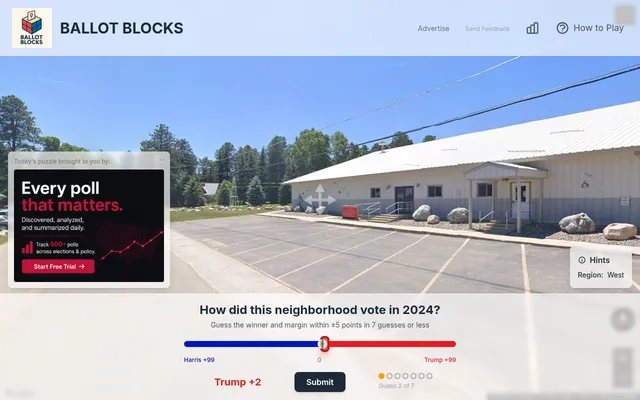
Ballot Blocks
Look around a US neighbourhood and guess how it voted.
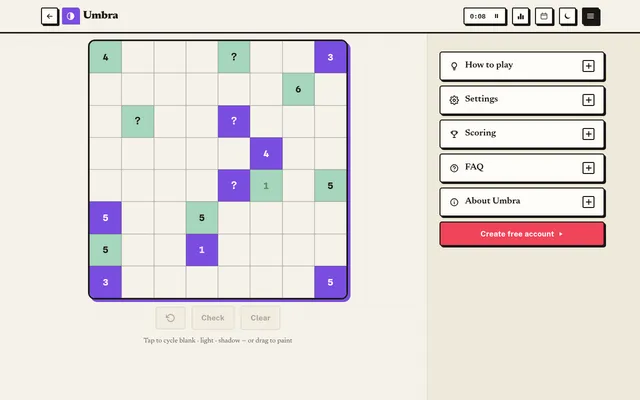
Umbra
Split the grid into regions of the right sizes.
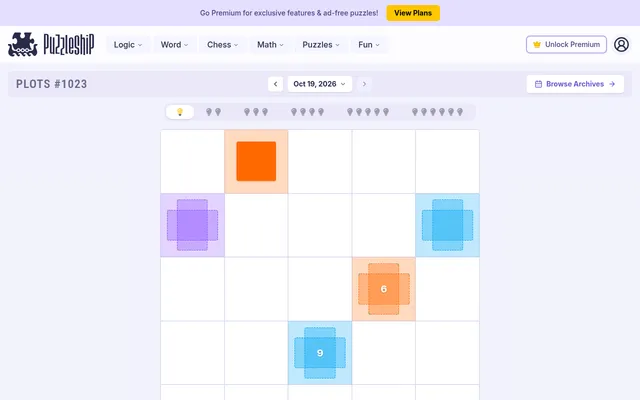
Plots (Puzzleship)
Cut the grid into rectangles that match their clues.
3Doku
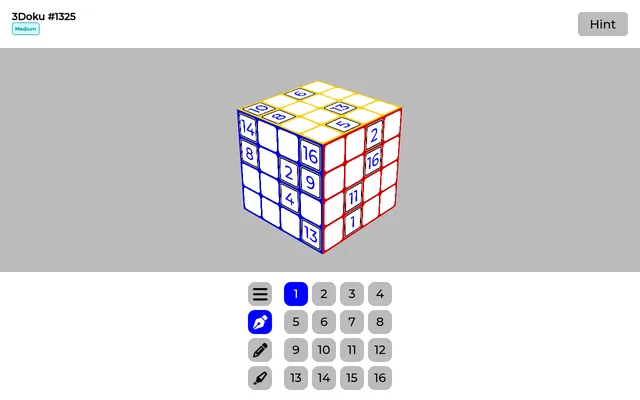
A sudoku wrapped around a cube, using the numbers 1 to 16.