Word Ladder (wordladder.com)
Rate itClimb from one word to another a letter at a time, at three levels each day.
on wordladder.com
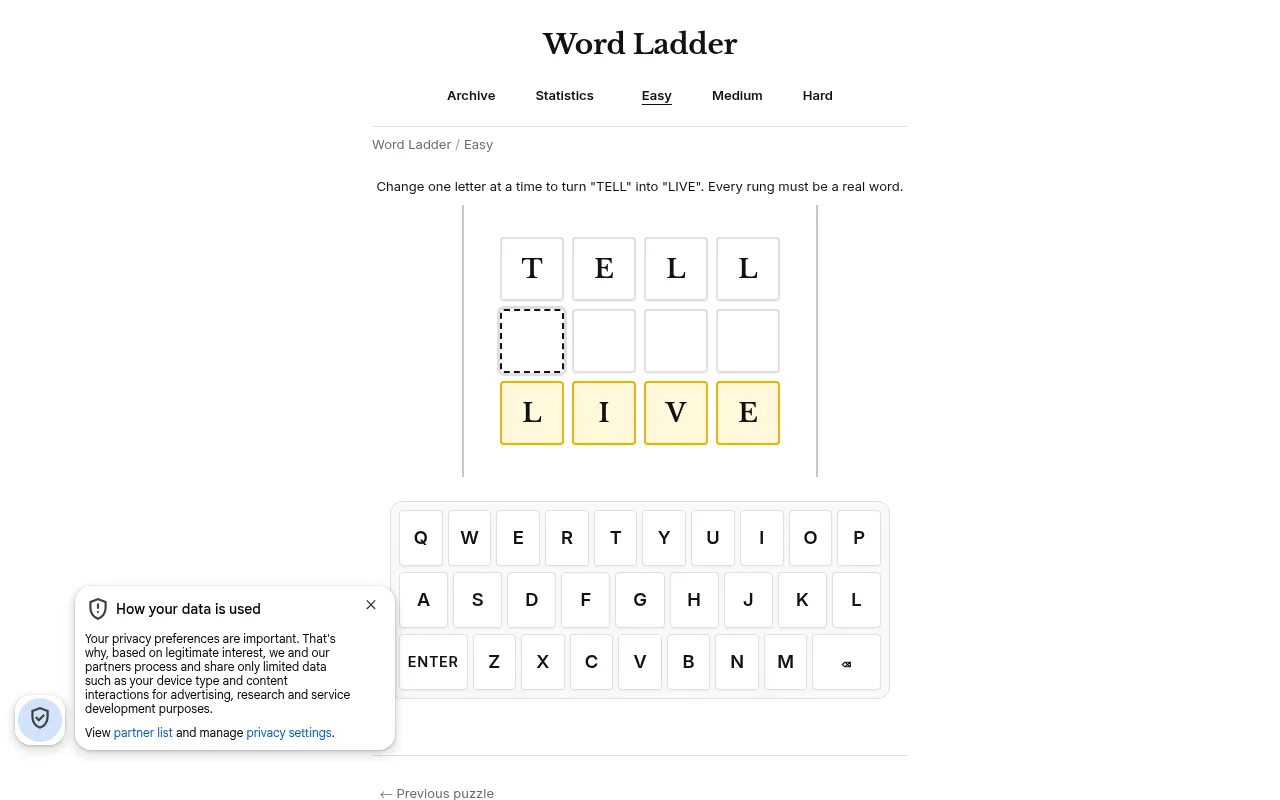
Word Ladder at wordladder.com posts three numbered word ladders a day, easy, medium and hard, with longer words at the harder levels. You change one letter per rung, every rung must be a real word, and you try to reach the end word in as few steps as you can.
About Word Ladder (wordladder.com)
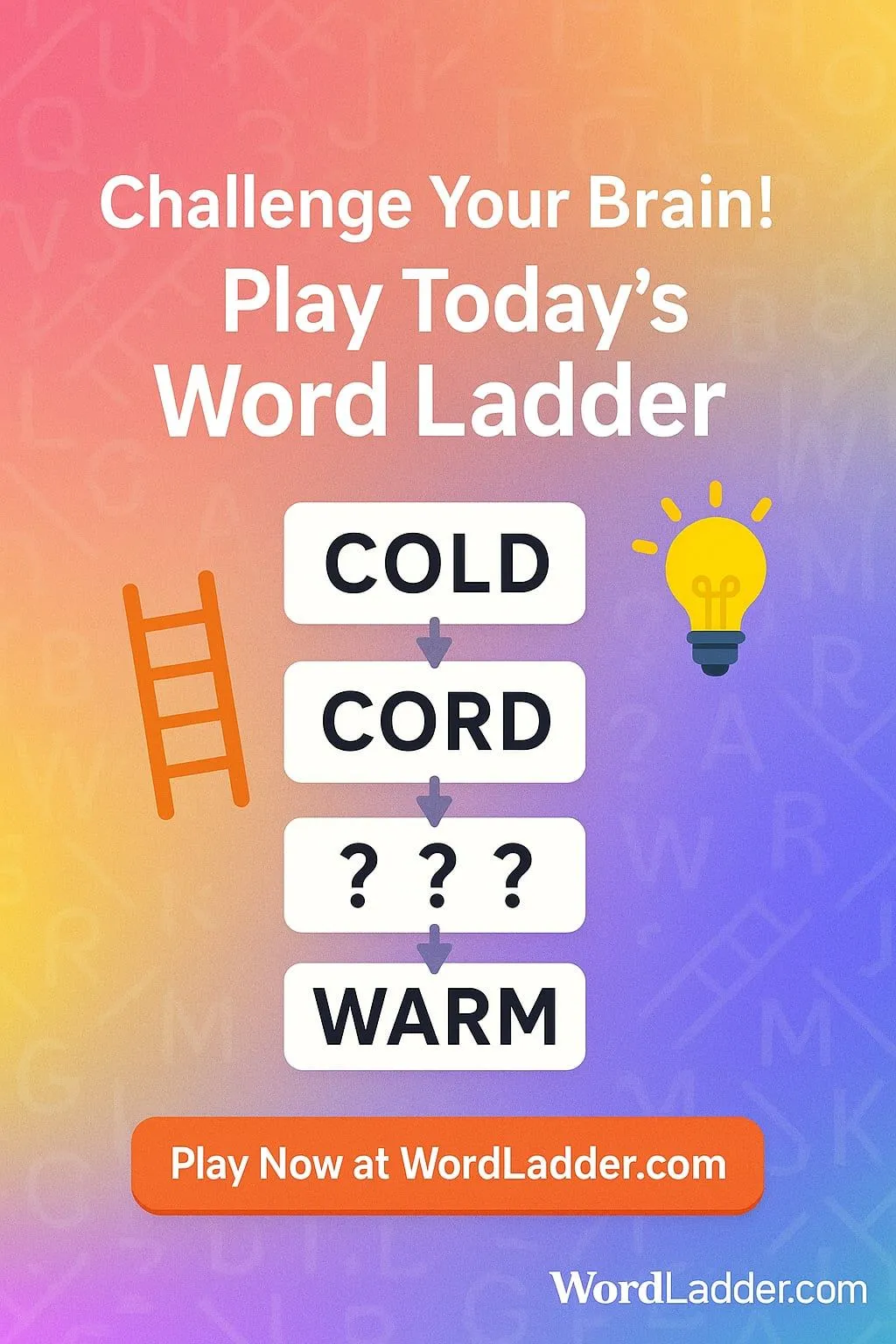
Word Ladder is a daily take on the puzzle Lewis Carroll invented in 1877 and called Doublets. You get a start word and an end word of the same length and climb from one to the other by changing a single letter at a time. You cannot add or remove letters, and every word along the way has to be a real English word. The site's own example turns COLD into WARM by way of CORD, WORD and WORM.
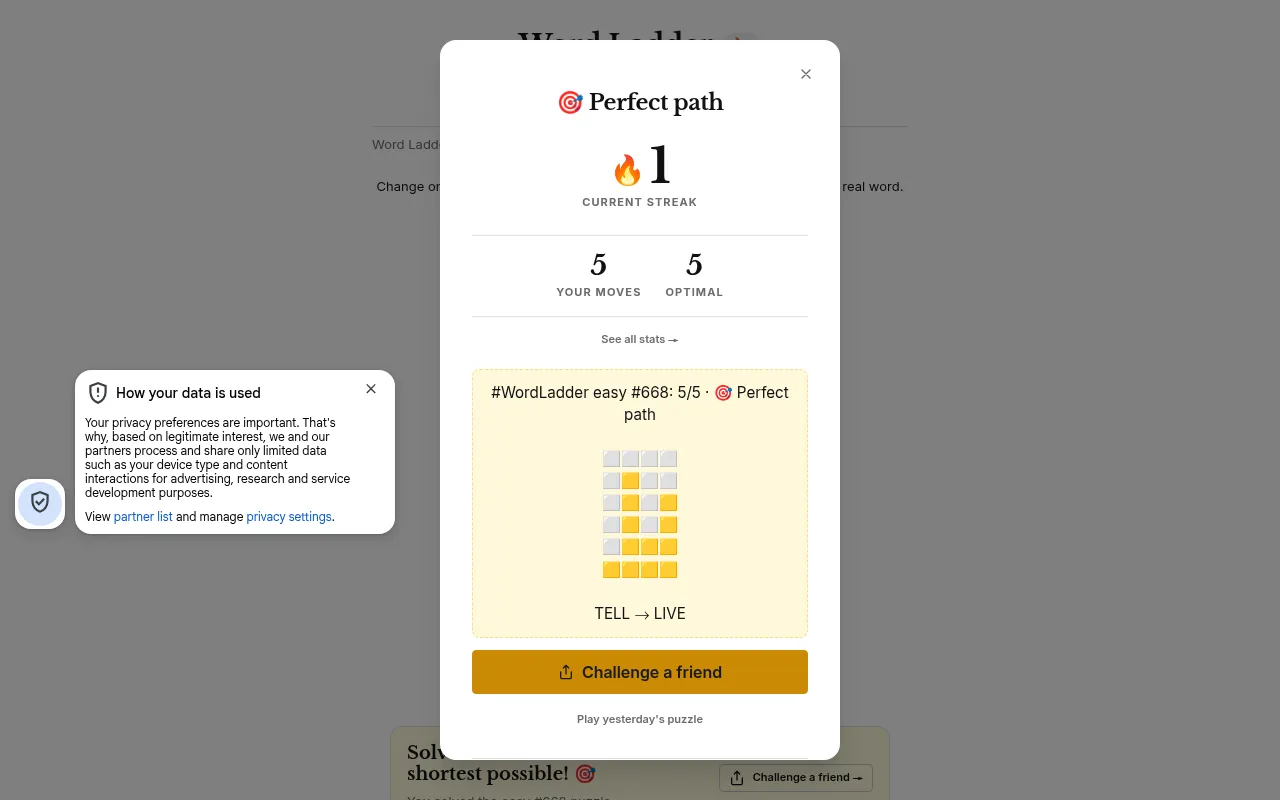
Each day has one puzzle number and three ladders. On 2 October 2026, number 640, the easy ladder ran from JUST to LOST, the medium one from START to STONE and the hard one from SISTER to WONDER. The longer the words, the fewer neighbours each one has, so the hard ladder asks for more planning. On 30 October 2026, number 668, the easy ladder went from TELL to LIVE and the hard one from CANNOT to MASTER.
Every ladder has a known shortest solution. When you reach the end word, a card shows your moves beside the optimal count, marks a perfect path when they match, keeps a streak and gives a grid of coloured squares to share. Puzzle number 1 came out on 1 January 2025.
You type each rung on the on-screen keyboard and can undo a step at any time. An archive calendar lets you go back and play any earlier day, marking the ones you have solved or left in progress, and a statistics page keeps your record in the browser. The About page covers the puzzle's history and variants.
The game is free, needs no account and is available in English, Spanish, Italian and Portuguese. It comes from Ana Puzzle, which also runs other small daily puzzles linked at the foot of the page.
How to play Word Ladder (wordladder.com)
- Open Word Ladder and pick Easy, Medium or Hard.
- Read the start word at the top and the target word at the bottom.
- Type a word that changes exactly one letter of the word above it and press Enter. You cannot add, remove or reorder letters.
- Keep climbing, each rung a real word, until you reach the target.
- If you hit a dead end, press the delete key on an empty row to take back your last word.
- Compare your moves with the optimal count on the finish card, then try the other levels or the archive.
Screenshots

Tips
- Work from both ends: think about which words lie one letter away from the end word.
- Vowel changes often open up more options than consonant changes.
- On the hard ladder, look for common endings such as ER or ED that stay fixed while you change the front.
- If you hit a dead end, undo two or three rungs rather than one.
Questions
How many puzzles are there each day?
Three: an easy, a medium and a hard ladder under one puzzle number.
Can I add or remove letters?
No. You can only change one letter per step, and every step must be a real word.
Can I play past puzzles?
Yes. The archive has a calendar of earlier days.
Who invented word ladders?
Lewis Carroll, who called them Doublets and published them in Vanity Fair from 1879, as the site's About page explains.
Ratings and reviews
Games like Word Ladder (wordladder.com)
Weaver
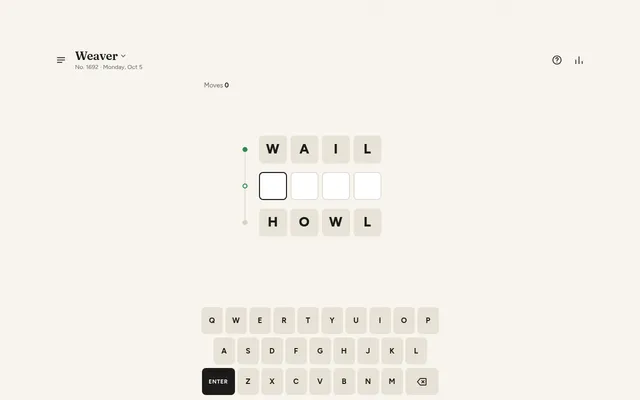
The best-known daily ladder: one pair of words a day, linked one letter at a time in as few steps as you can.
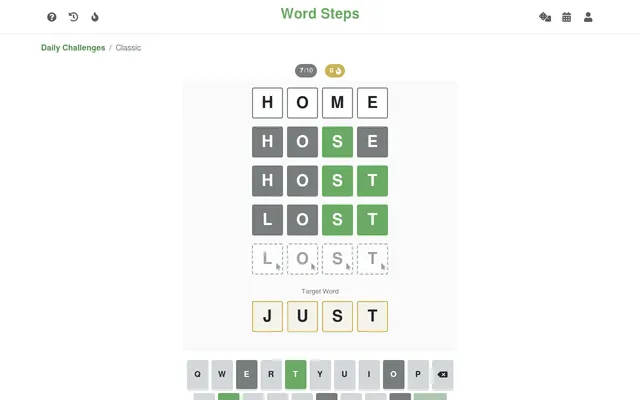
WordSteps
Also three ladders a day, with 3, 4 and 5 letter words and a set number of attempts.
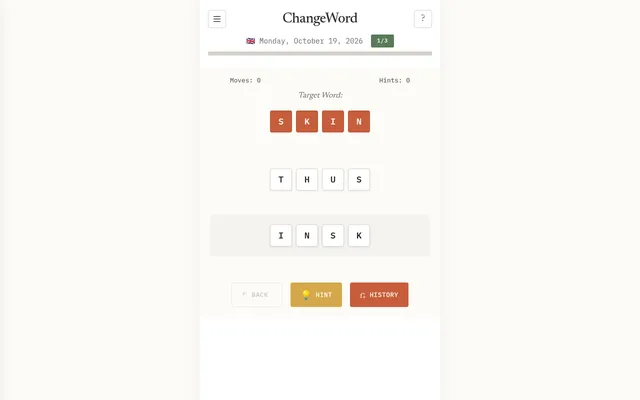
ChangeWord
Three stages a day as here, but you may insert letters as well as replace them.
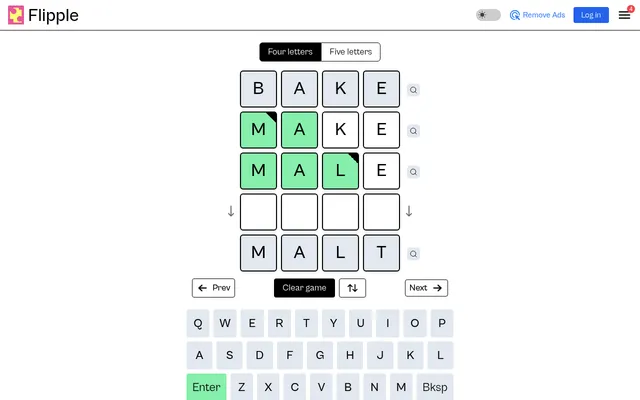
Flipple
Two numbered ladders daily, a four-letter one and a five-letter one.
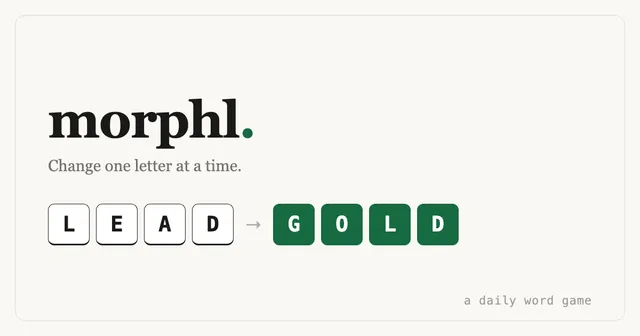
Morphl
Four levels of the same idea, scored against par like golf, for players who want to chase the shortest path.
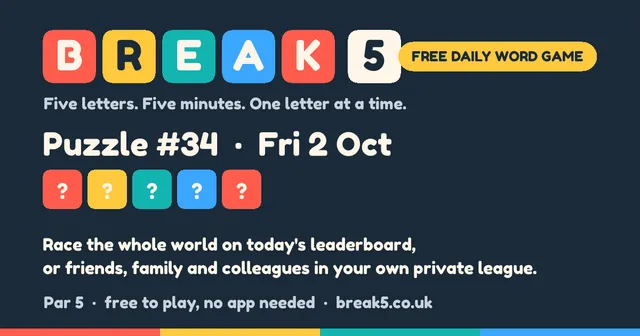
Break 5
A single five-letter ladder with a par of steps and a par time.

Crossclimb
LinkedIn's ladder, where trivia clues give you the rungs and you put them in order.
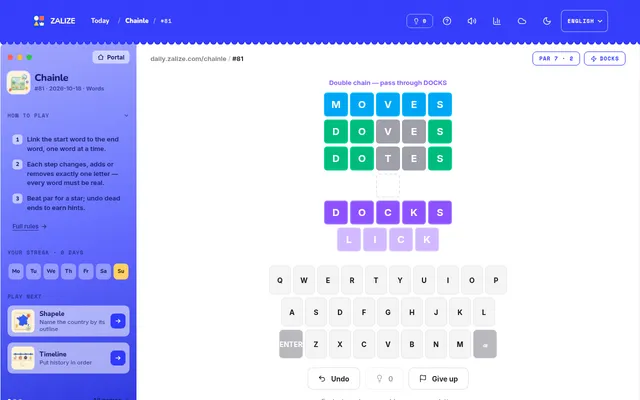
Chainle
Link the day's start word to its end word, changing, adding or removing one letter a step.