Reel Haiku
Rate itName the film from a haiku, one line at a time, three times a day.
on reelhaiku.com

Reel Haiku is a free daily film puzzle in three lines. Each day brings three haiku, each written about a film from 1940 on; you see one line, guess the film, and get the next line after each miss. When you are done you can keep the poem as a printable poster, and older days can be replayed from the archive.
About Reel Haiku
Reel Haiku is a film guessing game by Mike Linsey and Nathan Haslewood, who also make the daily fiction games on novlr. Its own description is short: a daily film puzzle in three lines.
Every day there are three puzzles, the same three for every player, and they change at midnight UTC. Each puzzle is a haiku about one film. The first line appears in large type, and you type a film title and choose it from the list. A wrong guess, or pressing Next clue, brings in the next line; after three lines without the answer the puzzle is missed. The films are drawn from 1940 onward, and where two films share a title, naming the right title with the wrong year costs you nothing.
At the end of each puzzle you see the film and its year and a row of three squares showing on which clue you solved it, ready to share. When all three are done, the page counts down to the next day's set and keeps your streak in the browser. The finished poem can be printed or saved as a poster in a clean view.
The set of haiku is fixed: 600 poems, three for each of 199 films, shuffled once and dealt three a day, so each film turns up three times with a different poem, and the whole set comes round again after 200 days. A week after a day has passed it joins the archive, which lists each day's films and lets you play any of its puzzles again.
It suits film fans who like a riddle more than a stills or cast quiz: the lines hint at plot, setting and mood rather than show the film.
How to play Reel Haiku
- Open Reel Haiku and read the first line of the day's first haiku.
- Type a film title and pick it from the list that appears.
- If you are wrong, or press Next clue, the next line of the haiku appears.
- Name the film within three lines to solve it; your result shows which clue you got it on.
- Play the day's other two haiku, then share your squares or save the poem as a poster.
Screenshots


Tips
- The first line is often about the setting or a famous scene, so think of iconic moments before plots.
- Skipping with Next clue costs the same as a wrong guess, so guess when you have a real candidate.
- Titles shared by a remake and an original are both in the list; the right title with the wrong year does not count as a miss.
- Only films from 1940 on are used, which rules out the silent era.
Questions
How many puzzles does Reel Haiku have each day?
Three, the same three for every player.
When do new puzzles appear?
At midnight UTC; the page shows a countdown once you have finished the day.
How many guesses do I get?
Each wrong guess reveals another line; after the third line the puzzle is over.
Is it free?
Yes. It plays free in the browser with no account.
Can I play past days?
Yes. The archive lists each day's three films and haiku once the day is a week old, with a link to play each puzzle again.
Ratings and reviews
Games like Reel Haiku

Novlr
The same makers' twin: three haiku a day revealed a line at a time, naming a book or story instead of a film
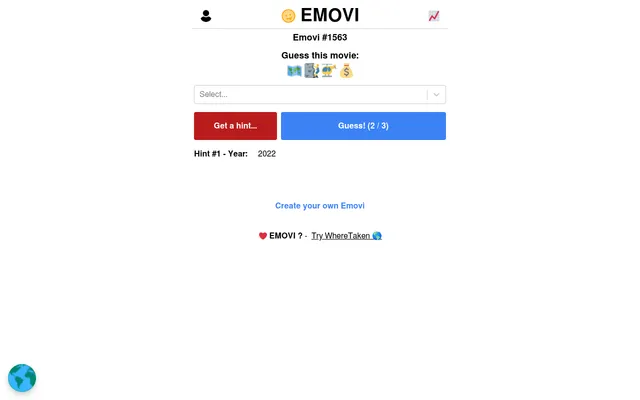
Emovi
Name the day's film from a short coded clue, a string of emoji instead of a haiku, with three tries

Framed
Name the day's film from one still, with another frame after each wrong guess or skip, up to six

Plot-hole
Name a film from written clues that give more away each time, counted down from a vague setup to the cast

KINO
Name a film or show from up to five clues and a hand-made picture that sharpens after each miss

Screenplaydle
Three films a day too, each named from its cast as the actors are revealed

Three Clue
Five films a day, each named from up to three one-word clues, scored by how early you get it
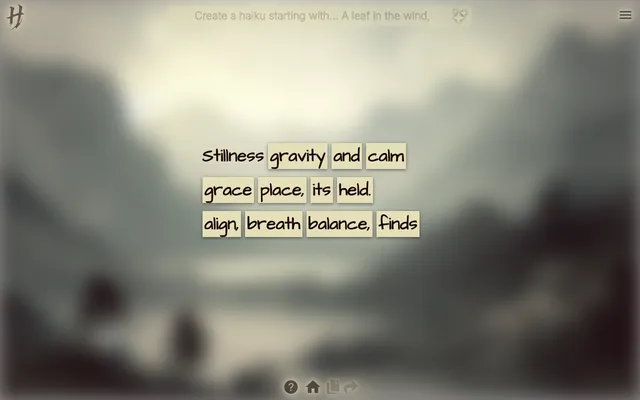
Haikudle
A daily haiku of its own: drag the shuffled words back into order to reveal the poem