Jaardle
Rate itGuess the year of the day's historic event in six tries.
on jaardle.com

Jaardle shows you an event from history each day, along with two more facts from the same year, and you type years until you hit the right one. Each guess is coloured by how far off it is, hints such as the century or the last digit cost points, and the day's score runs from 100 down.
About Jaardle
Jaardle is a year-guessing game, its name taken from the Dutch word for year. Each day's card shows an event drawn from Wikipedia, and two more facts from the same year sit beside it in a carousel from the start. You type a year on the number pad, with a minus key for dates BC, and have six guesses to find it.
A guess is coloured by distance, not direction: green for exact, purple for one or two years out, then yellow, orange, red, brown, white and black as the gap grows past 600 years. Whether you were too early or too late stays hidden unless you spend points on the Direction hint, which shows the arrow for your latest guess. Other hints show an event from a hundred years later, the century, or the last digit. You start on 100 points; each miss costs more the further off it is, and each hint has its own price. A loss still scores up to ten points, based on your closest guess.
The daily puzzle turns over at midnight Amsterdam time, and the first one went out on 6 June 2026. If you miss a day, the last three days can still be played. New game gives endless practice rounds, and signing in adds a leaderboard, weekly podiums and achievements. The game runs in English, Dutch, German, Spanish and Portuguese.
Because the colours do not say which way to move, Jaardle plays less like a higher-or-lower game and more like closing in from both sides. It suits players of Yeardle or Timeline from The Think who want a scoring system that rewards a near miss.
How to play Jaardle
- Read the day's event and swipe through the two extra facts from the same year.
- Type a year on the keypad (use the minus key for BC) and press Guess.
- Check the colour: it shows how many years off you are, but not whether too early or too late.
- Buy a hint if you need one: an event a century later, the direction, the century or the last digit.
- Find the year within six guesses; your score starts at 100 and drops with each miss and hint.
- Share your result, or start a New game for endless practice.
Screenshots
Tips
- Read all three facts before the first guess; the extra two often date the year more tightly than the main one.
- Two guesses far apart tell you more than two close together, since the colour gives only distance.
- The Direction hint is the cheapest; buy it after a guess that lands in yellow or orange.
- Guesses already ruled out by your board are rejected without costing a turn, so use the hint it gives about which years remain.
Questions
When does Jaardle reset?
At midnight Amsterdam time (Central European Time). A countdown shows how long until the next puzzle.
How many guesses do I get?
Six. Your score starts at 100 and goes down with each wrong guess and each hint.
Do the colours say if I am too high or too low?
No, only how far off you are. The Direction hint shows the arrow for your latest guess.
Can I play a missed day?
Yes, for the last three days. There is also an endless practice mode.
What languages is Jaardle in?
English, Dutch, German, Spanish and Portuguese.
Ratings and reviews
No ratings yet. Be the first to rate Jaardle.
Games like Jaardle
Yeardle
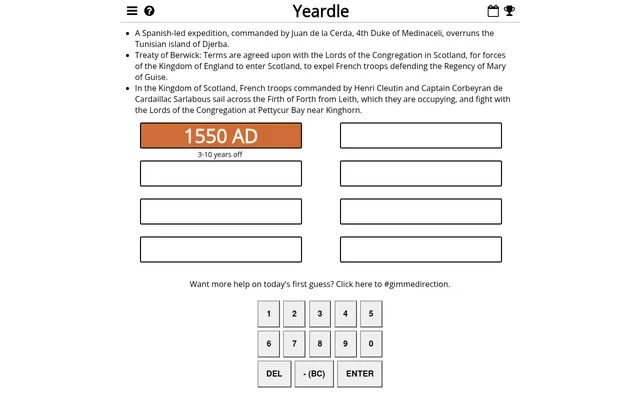
Three events from one year of history to date, the closest match to Jaardle's three facts.
Timeline (From The Think)
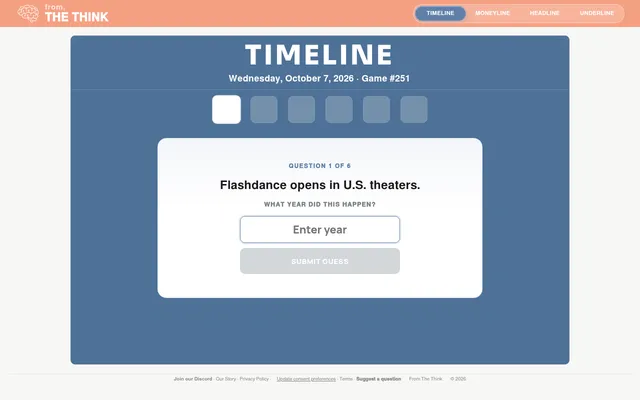
Guess the year of six events as closely as you can, scored on how near you get.
Chronophoto
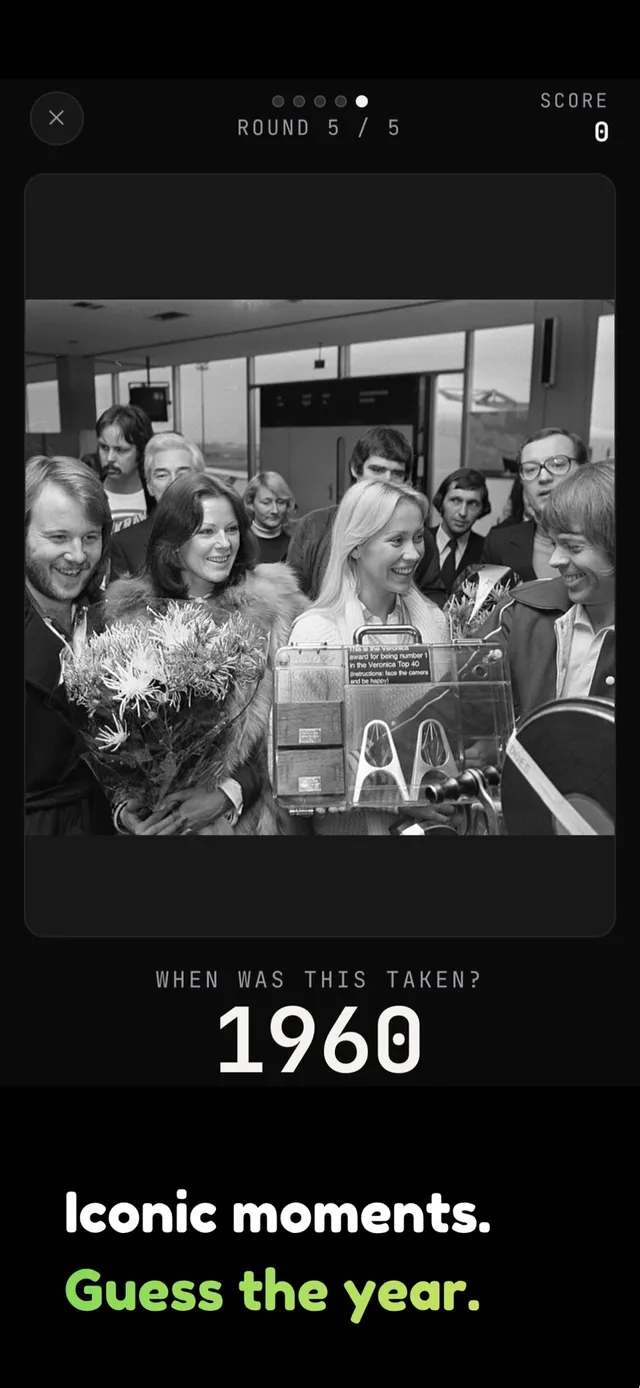
Dates a photograph instead of an event, with points for a near miss.
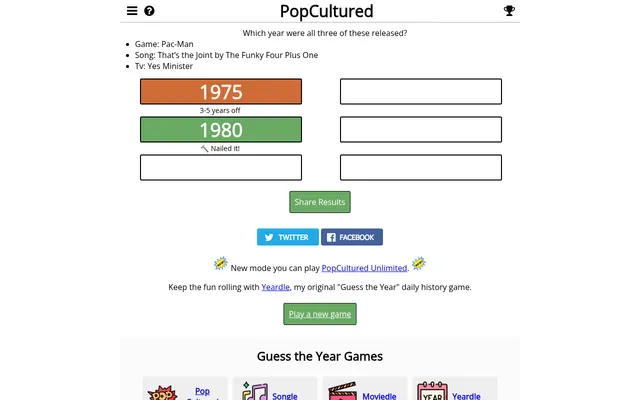
PopCultured
A film, a song and a book from one year: the same guess-the-year idea through culture.
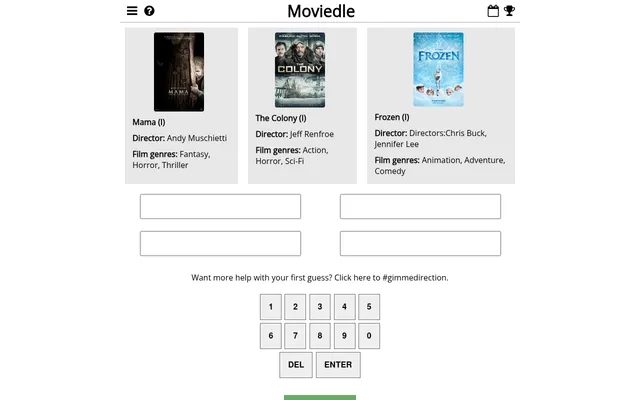
Moviedle (Histordle)
Three films from the same year, for when you want a pop culture version.
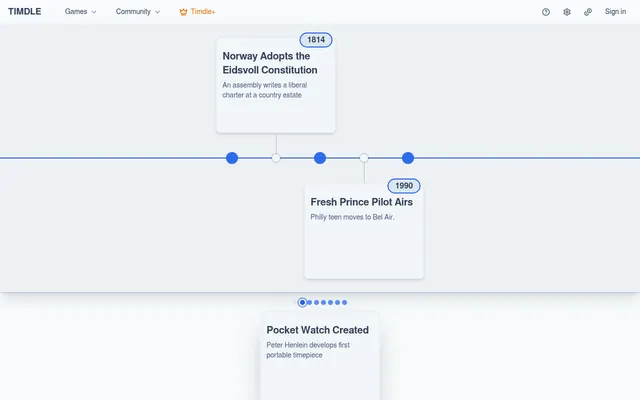
Timdle
Places events on a timeline rather than naming exact years, for a different kind of history daily.
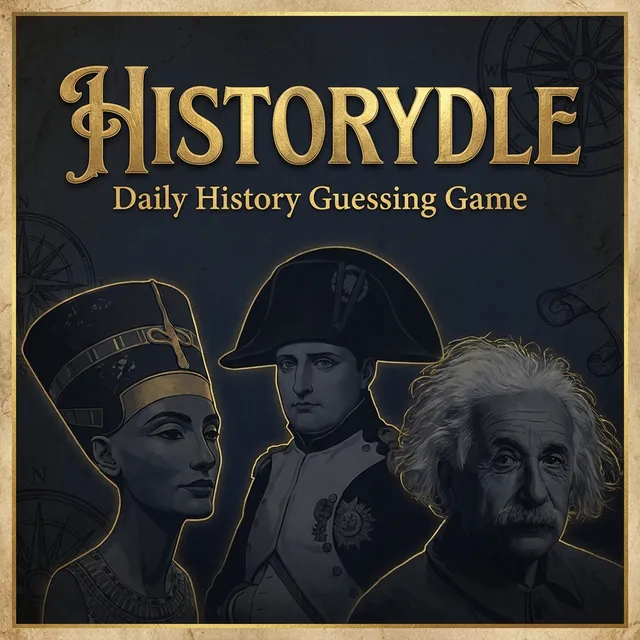
Historydle
A history daily that asks who rather than when, with era and region clues.
Baffle
Look at an odd museum object with no label and say what it is.