How wide? roughly.
Rate itResize one city's outline against another until the built-up area matches.
on howwide.roughly.is
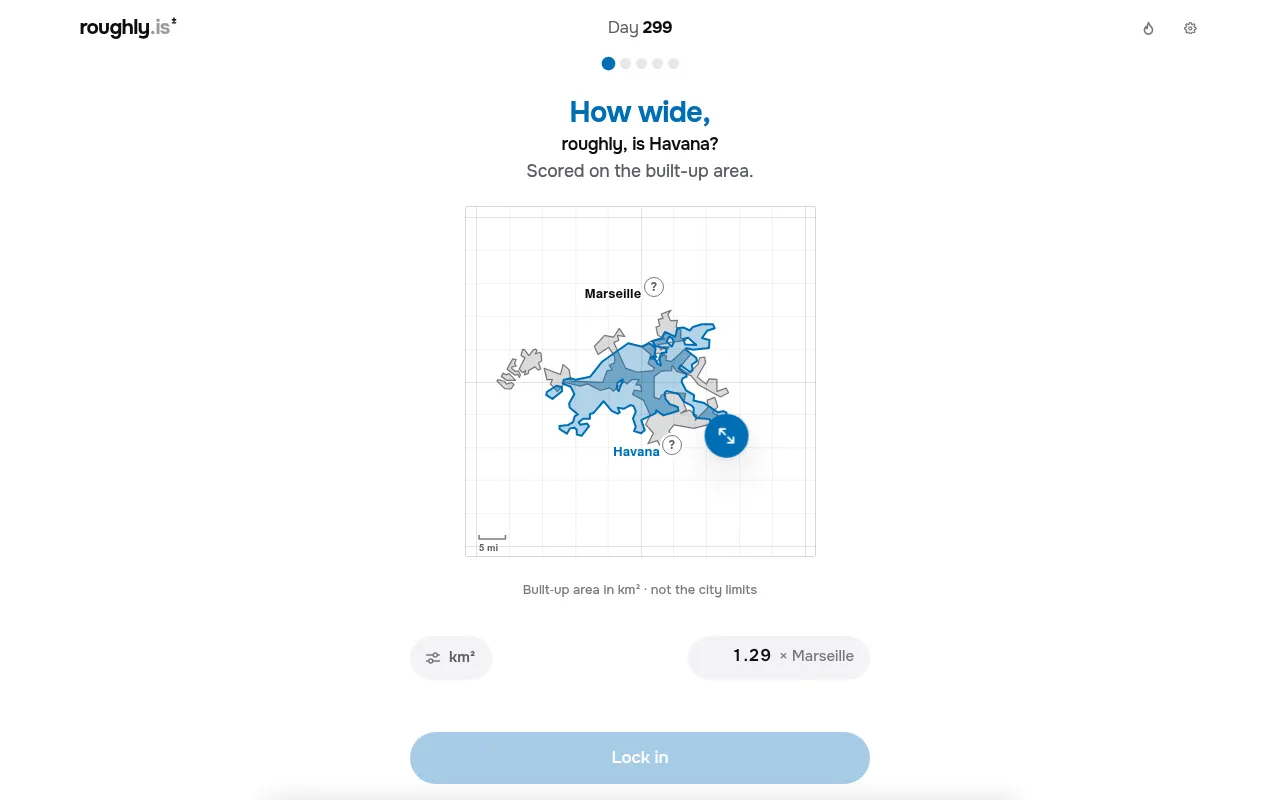
How wide? roughly. lays two city shapes over each other, such as Havana and Marseille. The grey one is shown at true scale. You drag the other to the size you think its built-up area really is, then see the real area and how many times off you were.
About How wide? roughly.
How wide? is one of the daily guessing games from roughly., a small site by Hired Hands Games where every game asks for an estimate rather than an exact answer. Here the question is how much ground a city covers, measured as its continuous built-up area rather than its official city limits.
Each day brings five pairs of cities, the same for every player and numbered from 1 January 2026. On Day 299 the first round set Havana against Marseille. The reference city appears as a grey outline at its real size. You drag the second city's outline bigger or smaller over it, or type how many times larger or smaller you think it is. One hint a day tells you the reference city's area and its length at the longest point.
After you lock it in, the game shows both areas, the factor between your guess and the truth, a strip of other guesses with the share you beat, and a short napkin calculation that boxes the city in and estimates how much of the box is built up. The areas come from the European Commission's Global Human Settlement Layer for 2020, in 100 metre cells, so every city is measured by the same rule.
New rounds arrive at midnight UTC. Today's five rounds are free and need no account. One past day a day can be replayed for free, and the paid roughly+ pass ($4.99 once) opens the whole archive and removes ads. You can challenge a friend or play with friends in a room, in English or German, with areas in square kilometres or square miles.
How to play How wide? roughly.
- Look at the grey outline of the reference city, shown at its real size.
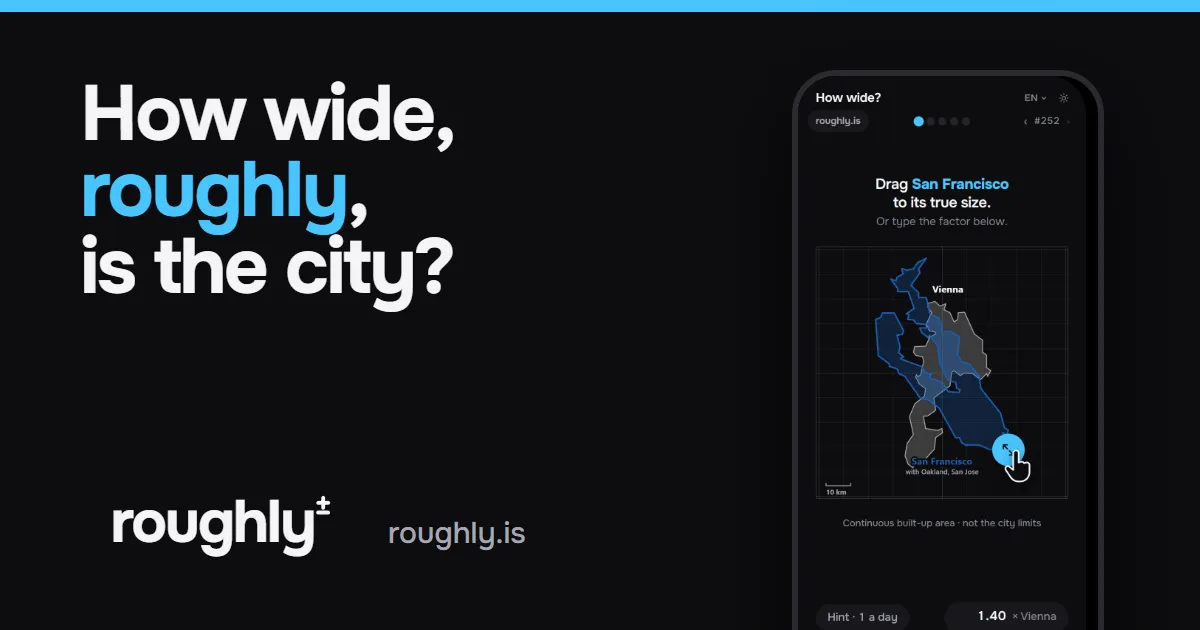
- Drag the round handle on the second city's outline until you think its built-up area is right, or type the factor.
- Press Lock in to see both areas and how many times off you were.
- Read the napkin math, then press Next for the following pair.
- After five pairs, share your average miss or challenge a friend.
Screenshots
Tips
- Population is a poor guide: some large cities are packed tight and some smaller ones sprawl.
- Area grows with the square of width, so a city twice as wide covers about four times the ground.
- Only continuous built-up land counts, so a city split by water or open land may be smaller than you expect.
Questions
When does How wide? roughly. reset?
New pairs arrive every day at midnight UTC, five per day, the same for everyone.
What counts as the size of a city?
Its connected built-up area in the Global Human Settlement Layer for 2020, not its official city limits.
How is it scored?
By how many times too big or too small your guess was. The day's result is your average miss across the five pairs.
Is it free?
Yes. Today's rounds are free and need no account, and one past day a day can be replayed for free. The roughly+ pass opens every past day for a one-time $4.99.
Ratings and reviews
Games like How wide? roughly.
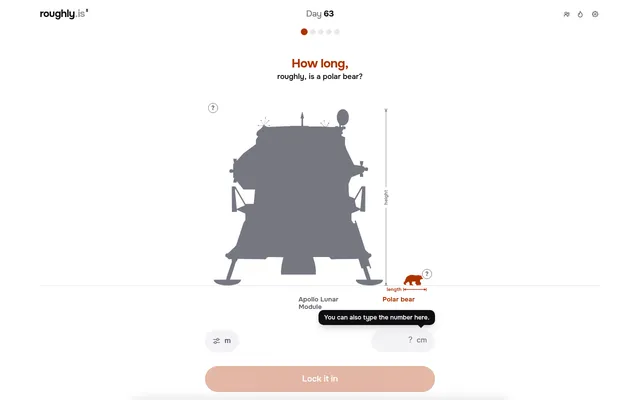
How big? roughly.
The same site's resizing game, with everyday things in place of cities
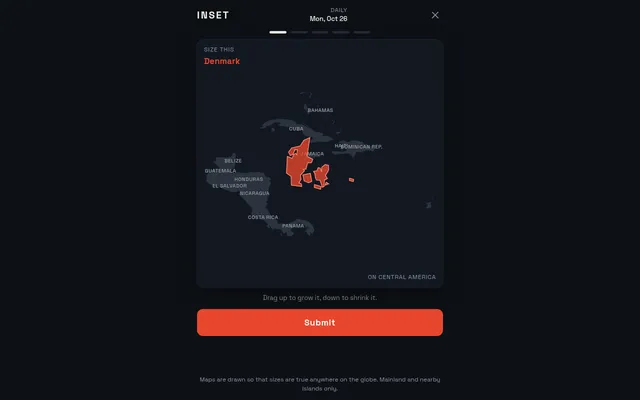
INSET
Drag a country to its true size on an equal-area map, five a day
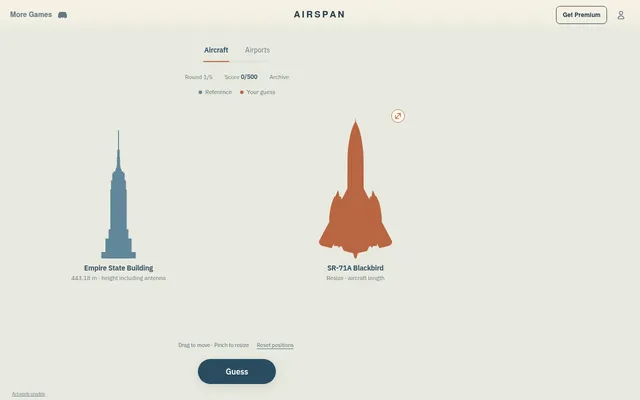
Airspan (FlightQ)
Resize planes and airports against each other to their real size, five rounds a day
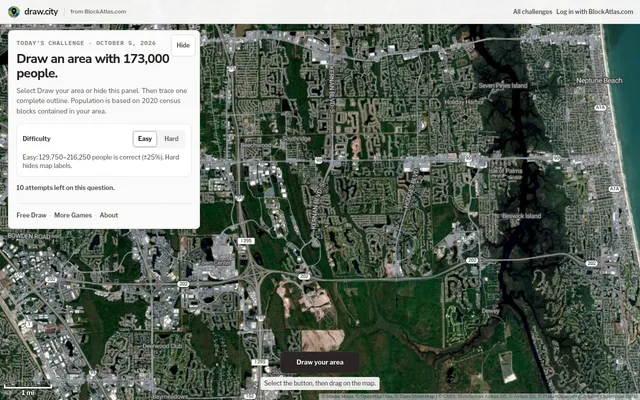
draw.city
Another way to judge how much ground people take up: draw an area on the US map holding a target population
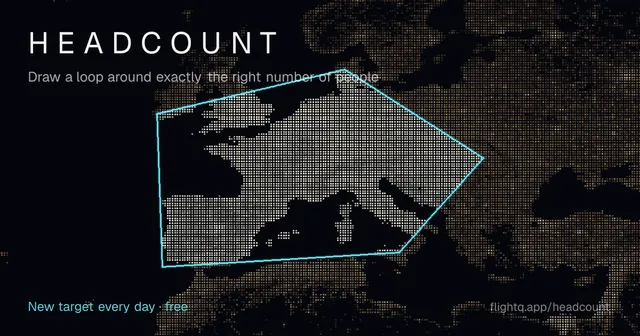
Headcount (FlightQ)
Draw a loop on the world map to capture a target population, five a day
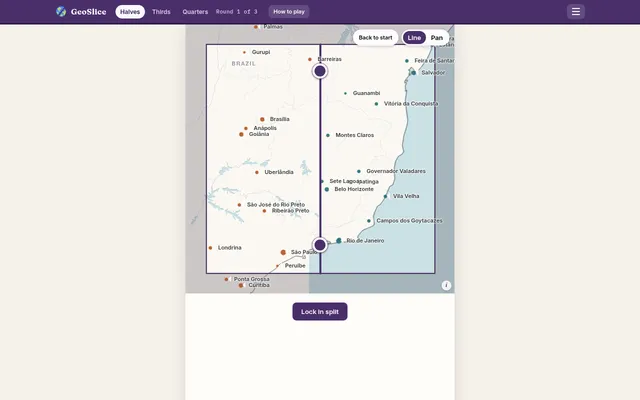
GeoSlice
Split three places a day by their population, scored against WorldPop data
Which way? roughly.
The same site's map game: draw rivers and mountain ranges on a map with no borders
Where? roughly.
The same site's world map game: move the map under a crosshair to where each animal lives