Equations
Rate itSplit a grid of numbers into groups of three that add, multiply or raise to a power.
on equations-game.com
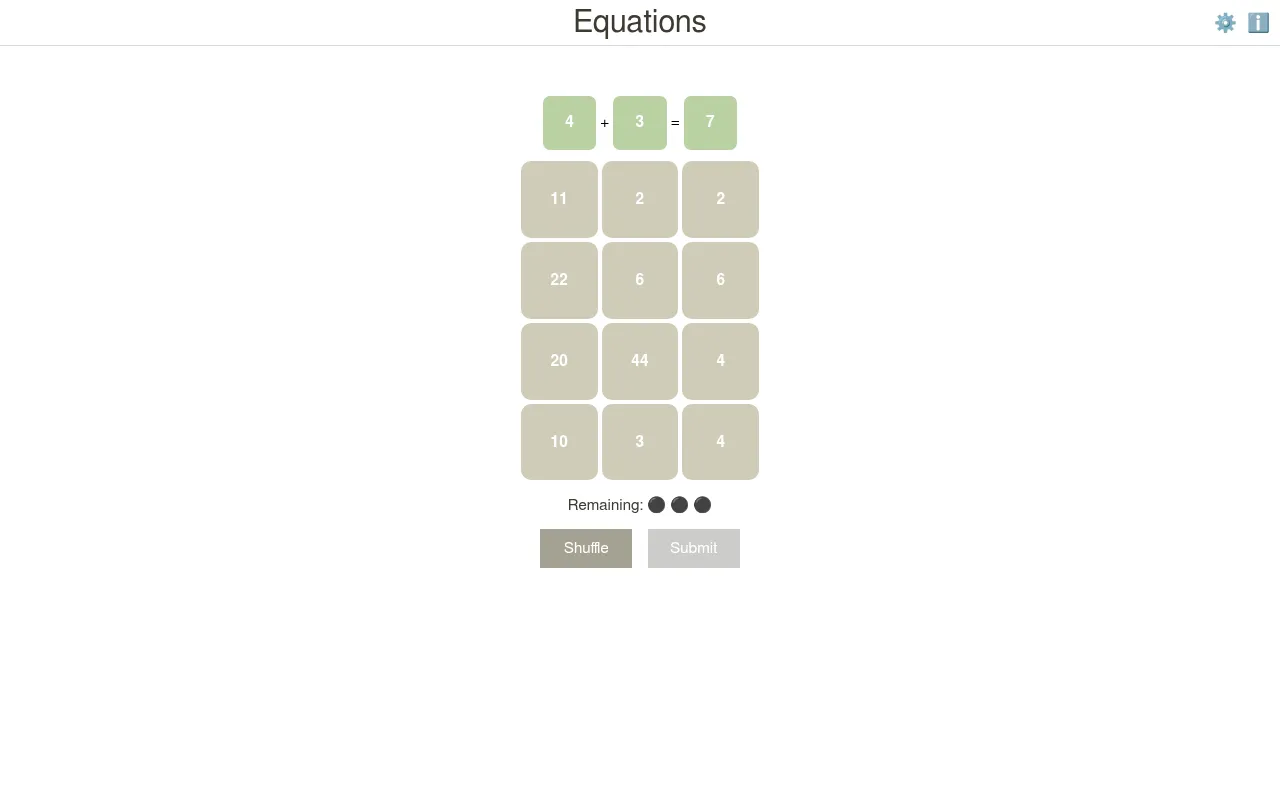
Equations is a free daily numbers game in the browser. Each day you get fifteen numbers and sort them into five groups of three, where two numbers add up to the third, multiply to it, or one raised to the other gives it. Only the day's own split counts, so a true equation that strands the rest of the grid costs one of your three mistakes.
About Equations
Equations calls itself a daily numbers game. Each day brings one numbered board of fifteen numbers in five rows of three, the same for everyone who plays that day. When you finish, a result card shows the puzzle number, your result and a countdown to the next board.
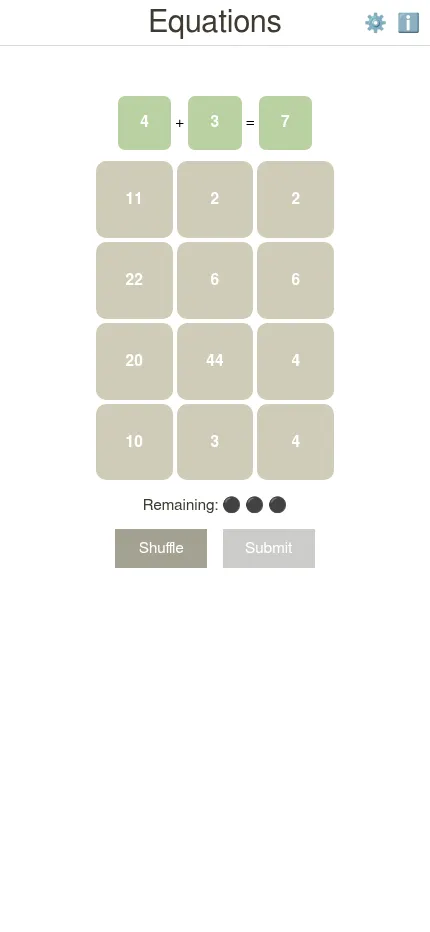
The goal is to split the board into five groups of three, each a true equation of one of three kinds: addition (two numbers add up to the third), multiplication (two numbers multiply to the third) or exponential (one number raised to the power of another equals the third). Every number belongs to exactly one group. You pick three tiles and press Submit; a correct group moves to the top as a written equation, and a wrong one costs one of three mistakes.
The catch is the red herrings. The 20 October 2026 board held 2, 11 and 22, and 2 x 11 = 22 is true, but it is not part of the day's split (that board needs 4 x 11 = 44 and 20 + 2 = 22), so it counts as a mistake. The rules also say the boards get harder through the week.
The game has no sign-up and no ads, and a Shuffle button rearranges the tiles when you are stuck. It suits players who like Connections-style grouping but would rather work with numbers than words, and anyone who enjoys quick mental arithmetic with some planning ahead.
How to play Equations
- Open the game and press Start The Puzzle to see the day's fifteen numbers.
- Look for three numbers where two add up to the third, multiply to it, or one raised to the other gives it.
- Select the three tiles and press Submit; a correct group moves to the top as a written equation.
- Check that the numbers left over can still form groups, since a true equation outside the day's split costs one of your three mistakes.
- Clear all five groups, then share or copy your result from the result card.
Screenshots
Tips
- Start with the largest numbers; they are usually results, which limits their partners.
- Big round powers such as 1024 or 32 almost always come from an exponent.
- Duplicated numbers (two 4s or two 6s) often belong to different groups.
- When a number fits two equations, work out which choice leaves the rest of the board solvable before you submit.
- Use Shuffle to see the tiles in a new order when the grid stops suggesting anything.
Questions
Is the puzzle the same for everyone?
Yes. There is one numbered board per day, the same for every player, with a countdown to the next.
When does a new puzzle come out?
At midnight on your device's local date. The result card shows a countdown to the next board.
Which operations count?
Addition, multiplication and exponents. Subtraction and division appear only as the same equations read backwards.
Why was a true equation marked wrong?
Only the day's own split into five groups counts. A true equation that is not part of it is a red herring and uses up one of your three mistakes.
Does it get harder?
Yes. The rules say difficulty increases throughout the week.
Is it free?
Yes. It plays free in the browser with no sign-up and no ads.
Ratings and reviews
Games like Equations
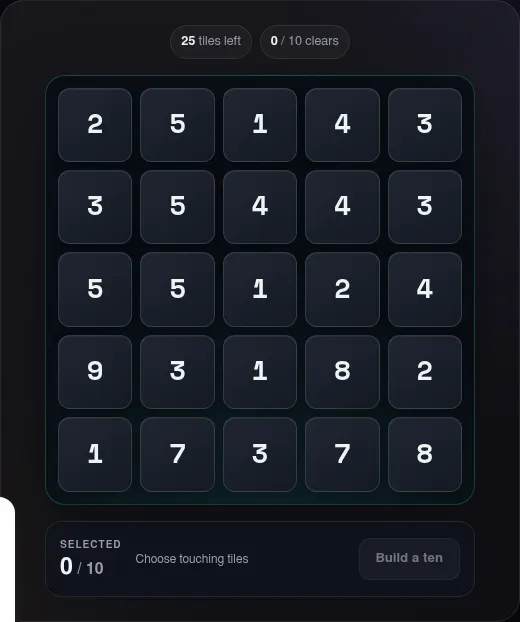
Tenfold (Puzzle Round)
Another daily board cleared in small groups of numbers, here two or three tiles that add up to ten
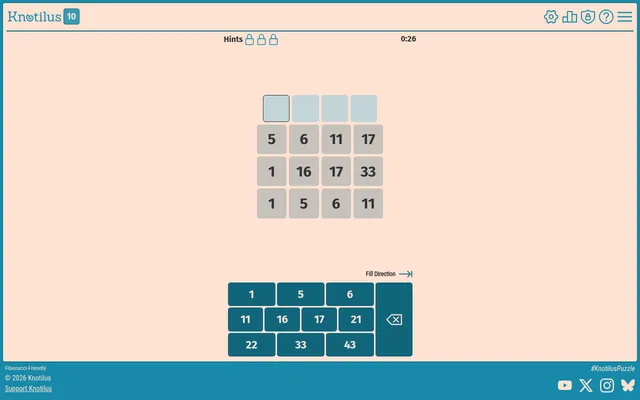
Knotilus
Also builds groups from the day's set of numbers, chaining them into Fibonacci-like sequences
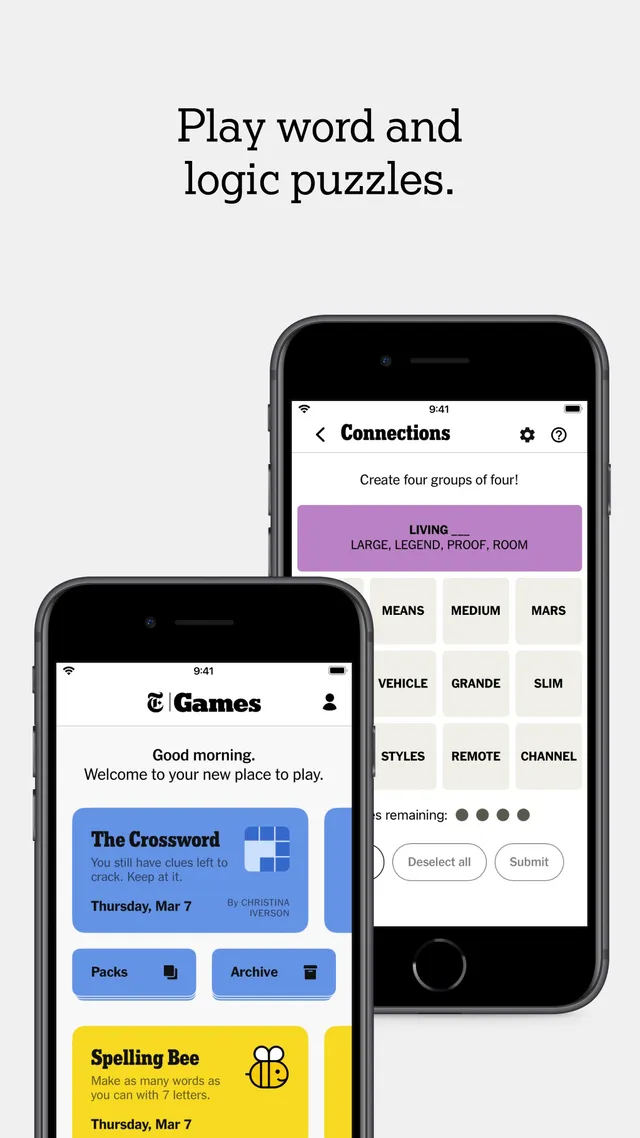
Connections
The word game Equations borrows from: sort the day's sixteen words into four groups, with four mistakes…
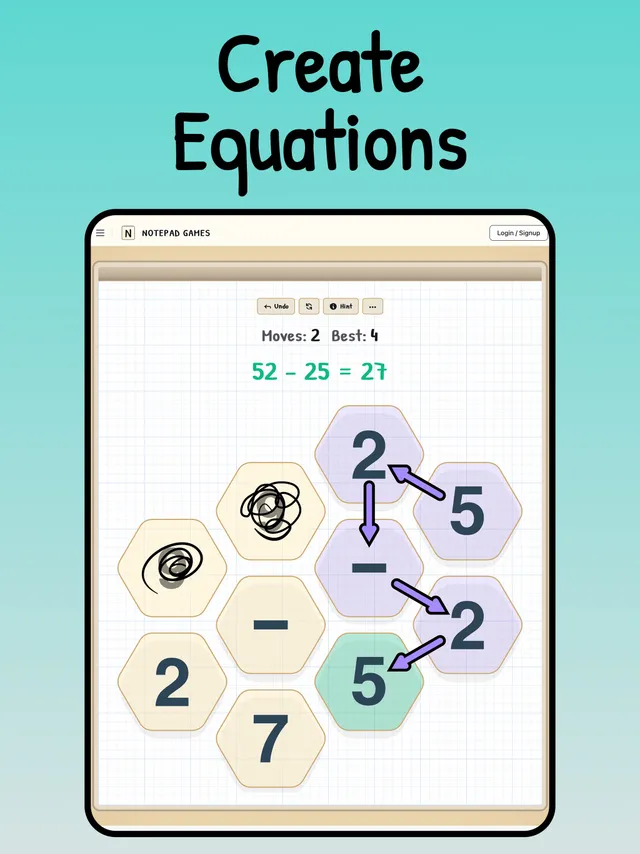
Equatara (Notepad Games)
A daily hex board of numbers and operators that you clear by building equations
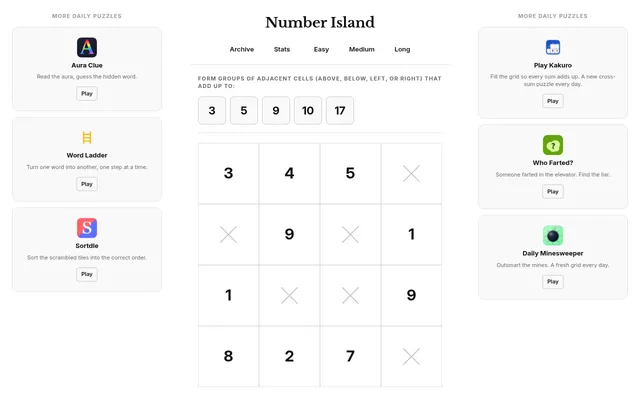
Number Island
Group neighbouring numbers into islands that hit target totals, with dated boards each day
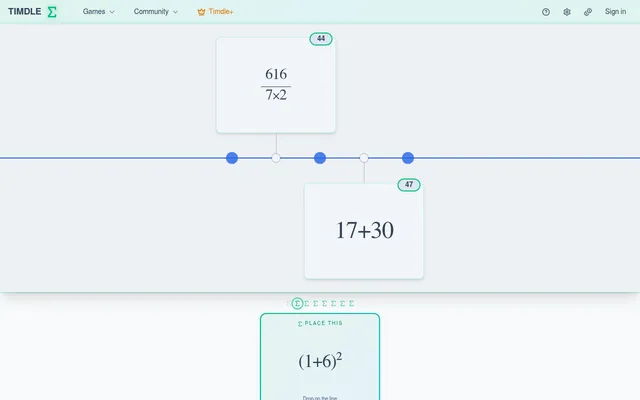
Timdle Math
Quick daily mental maths: sort nine expressions from smallest to largest without a calculator
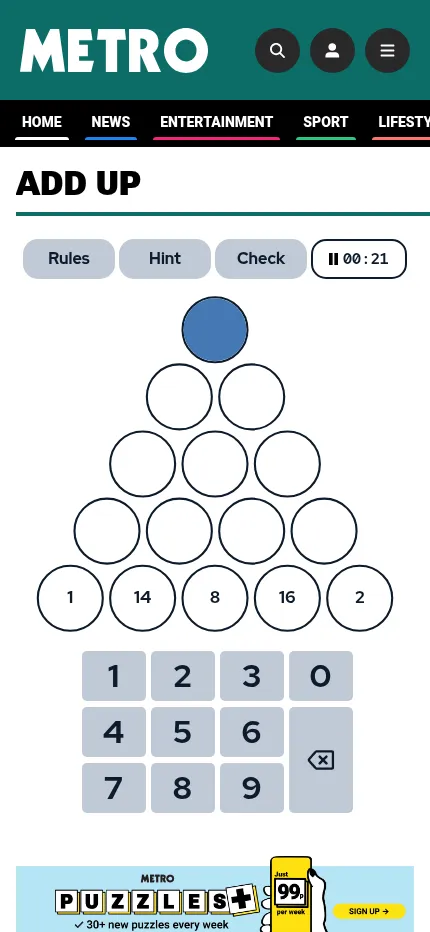
Add Up (Metro)
Build a number pyramid where each cell is the sum of the two below it.
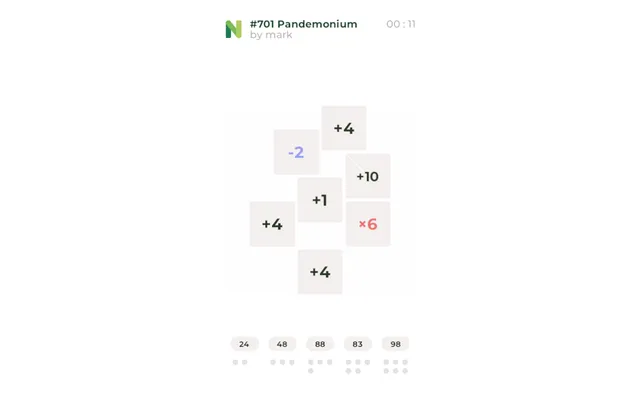
Number Salad
Swipe through number tiles to hit five target totals, with a new shaped puzzle each day.