Baffle
Rate itLook at an odd museum object with no label and say what it is.
on baffle.games
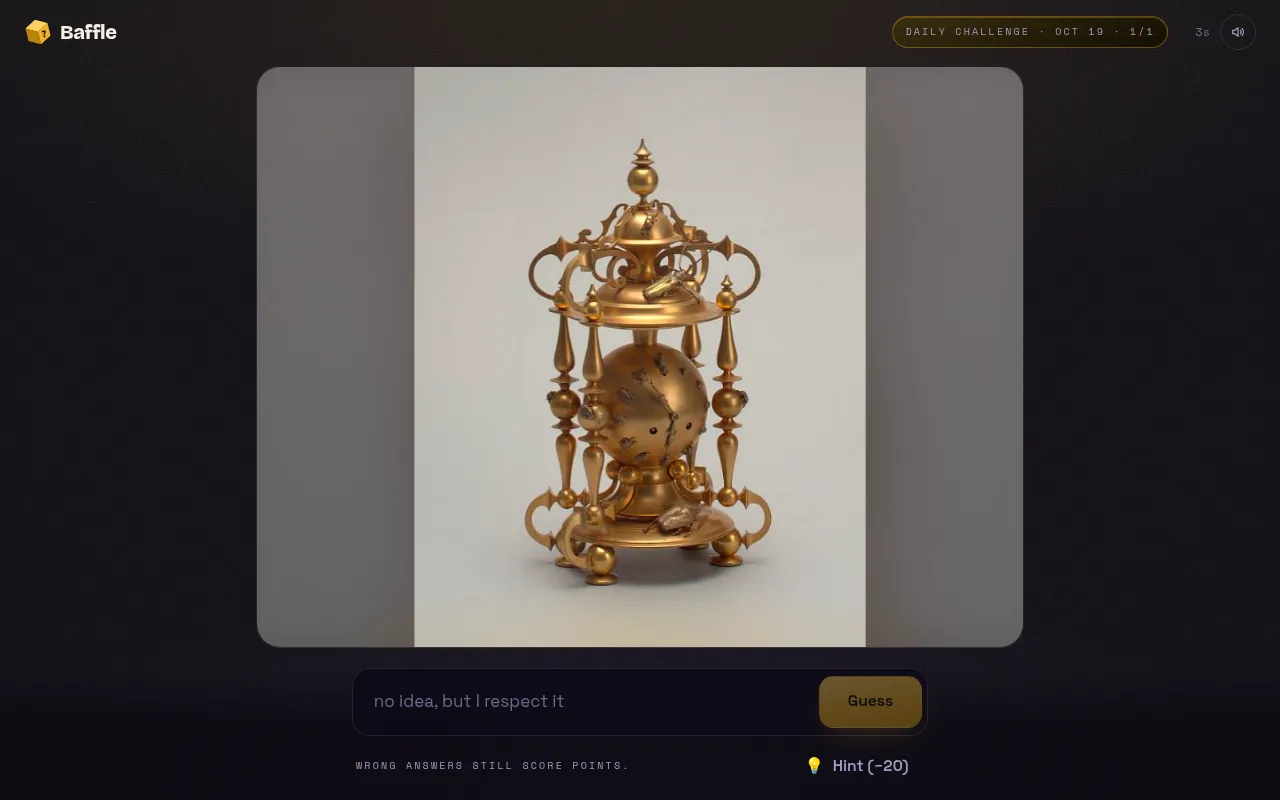
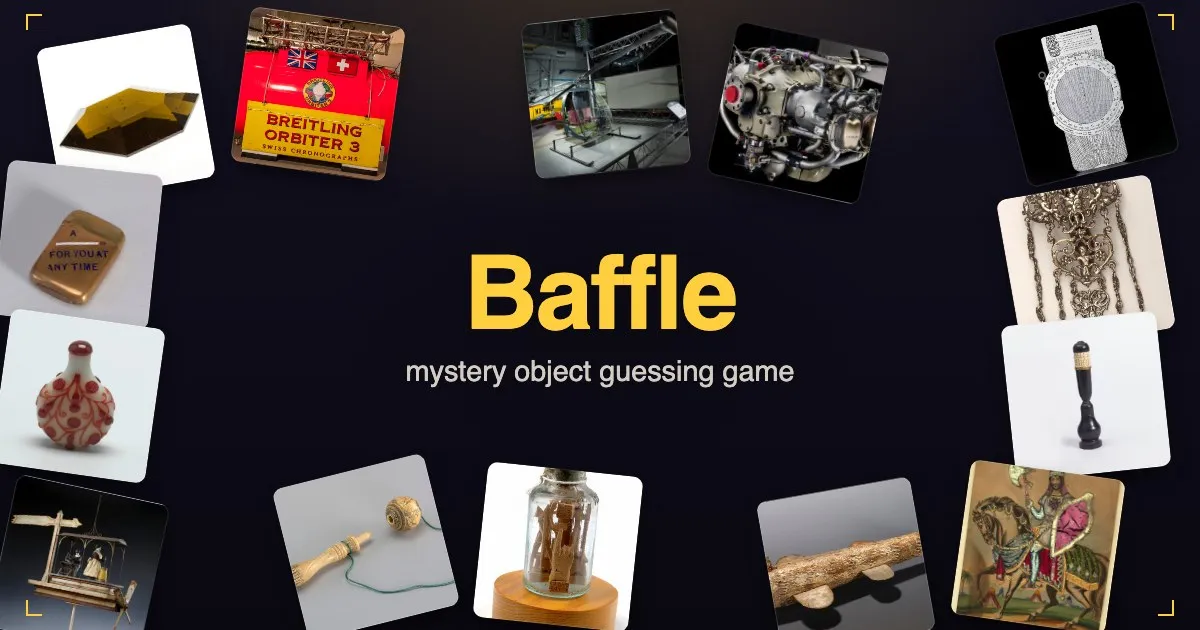
Baffle shows a photo of a real object from a museum archive, with no label or context, and you type what you think it is. Your answer is scored on how closely it matches the museum's own description, then the real answer is revealed. The Daily Challenge gives everyone the same object once a day, with a daily leaderboard.
About Baffle
Baffle is built around the stranger corners of museum collections. Each round shows one photographed object, with no caption, no date and no hint about where it came from. You type what you think it is, in any words you like: a name, a description, or a wild guess if it means nothing to you.
The answer is then scored out of 100 on how well it identifies the object. The site uses AI to compare your guess with the museum's description, so close counts even if your wording is vague, and adding correct details lifts the score. The result card shows what the object really is, whether you got its type, subject and function, how many players you beat and the most common guesses, with a link to the museum's own record. The objects come from public museum collections, including the Smithsonian Open Access program and The Met.
The Daily Challenge is one object a day, the same for everyone, with one shot at it, a timer, an optional hint that costs 20 points, and daily, weekly and all time leaderboards. Beside it there are practice expeditions of five objects you can play as often as you like, and challenge links to send a friend. There is no account, app or paywall, and the site says it has no ads. A round takes about a minute, and it plays the same on a phone as on a desktop.
How to play Baffle
- Open the Daily Challenge to see the day's mystery object.
- Study the photo; there is no label or context, and a clock counts your time.
- If you are stuck, take the hint, which costs 20 points.
- Type what you think the object is, as a name or a description, and press Guess.
- See your score, the object's real identity and what others guessed, then compare your result on the daily leaderboard.
Screenshots

Tips
- A vague guess still scores, but each correct detail you add (material, use, period) raises it.
- Look at scale clues in the photo, such as handles or wear, to work out what the object was used for.
- If you are stuck, describe what the object seems to do rather than naming it.
- Warm up with a practice round to get a feel for how the scoring rewards detail.
Questions
Is the Daily Challenge the same for everyone?
Yes. Every player gets the same object each day, and scores go on a daily leaderboard.
How is a guess scored?
An AI compares your answer with the museum's description of the object and scores how well it identifies it. More correct details score higher.
Where do the objects come from?
From public museum collections, including the Smithsonian Open Access program and The Met.
Do I need an account?
No. There is no signup, no app and no paywall.
Can I play more than one object a day?
Yes. Beside the one Daily Challenge, Play a round starts a practice expedition of five objects, as often as you like.
Does Baffle have ads?
No. The site says it has no ads, and none showed on the daily or practice pages.
Ratings and reviews
Games like Baffle
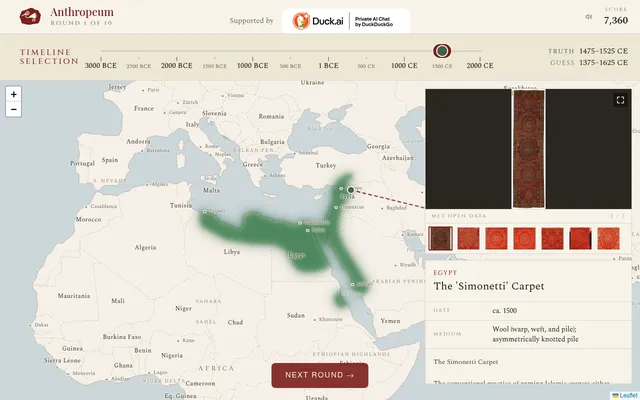
Anthropeum
Ten museum objects a day, but you guess where and when each was made rather than what it is
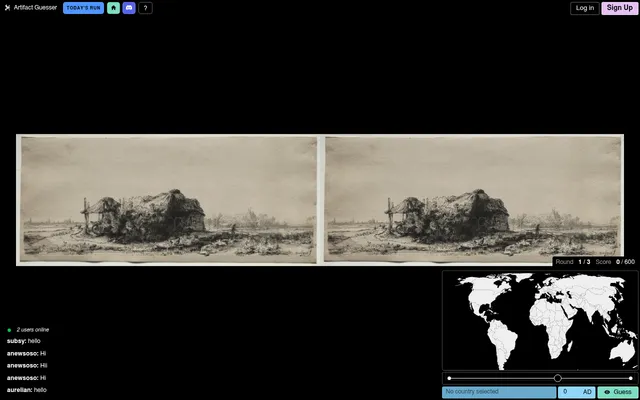
Artifact Guesser
Three museum artifacts a day to place on a map and in time, with a daily leaderboard

WotsThat
Name the object in one photo a day, here an everyday thing seen in extreme close-up
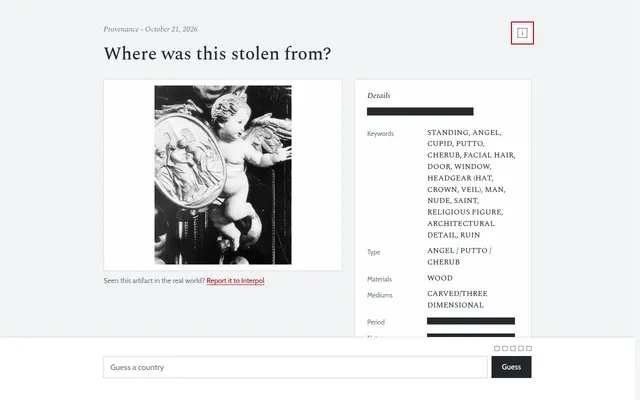
Provenance
One stolen artifact a day from Interpol's database: name the country it was taken from in five guesses
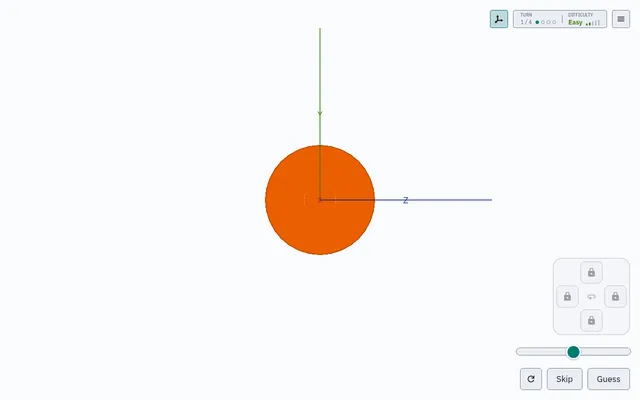
Daily Salami
Name a hidden object from a single odd view of it, a flat slice through a 3D shape
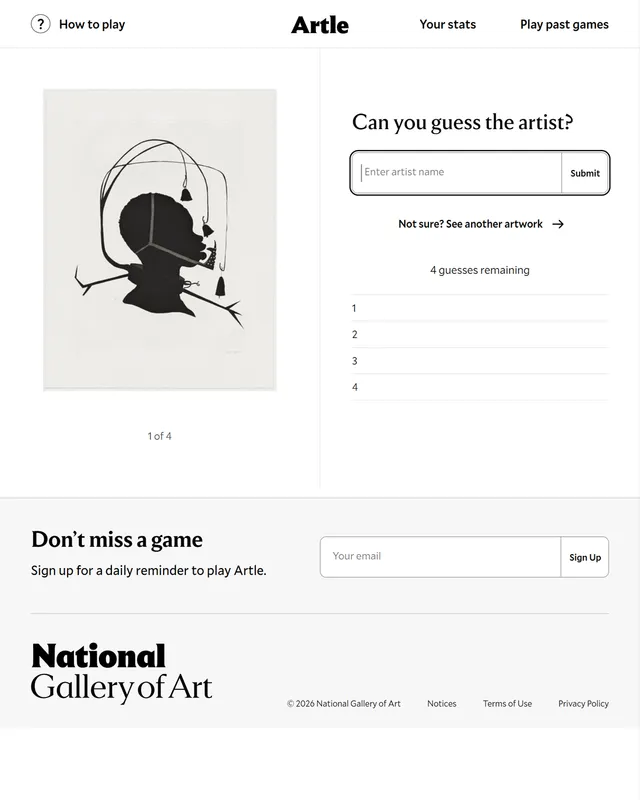
Artle (National Gallery of Art)
Another daily drawn from a museum collection: name the artist from works in the National Gallery of Art

Jaardle
Guess the year of the day's historic event in six tries.

Chronicle Daily
Five historical events a day: slide to the year each one happened and score by how close you land.